Rowing Machine
Activation
Muscles worked
Movement
Cardio
Intermediate · Cardio
Movement pattern
Equipment category
How to perform
- 1
Set up
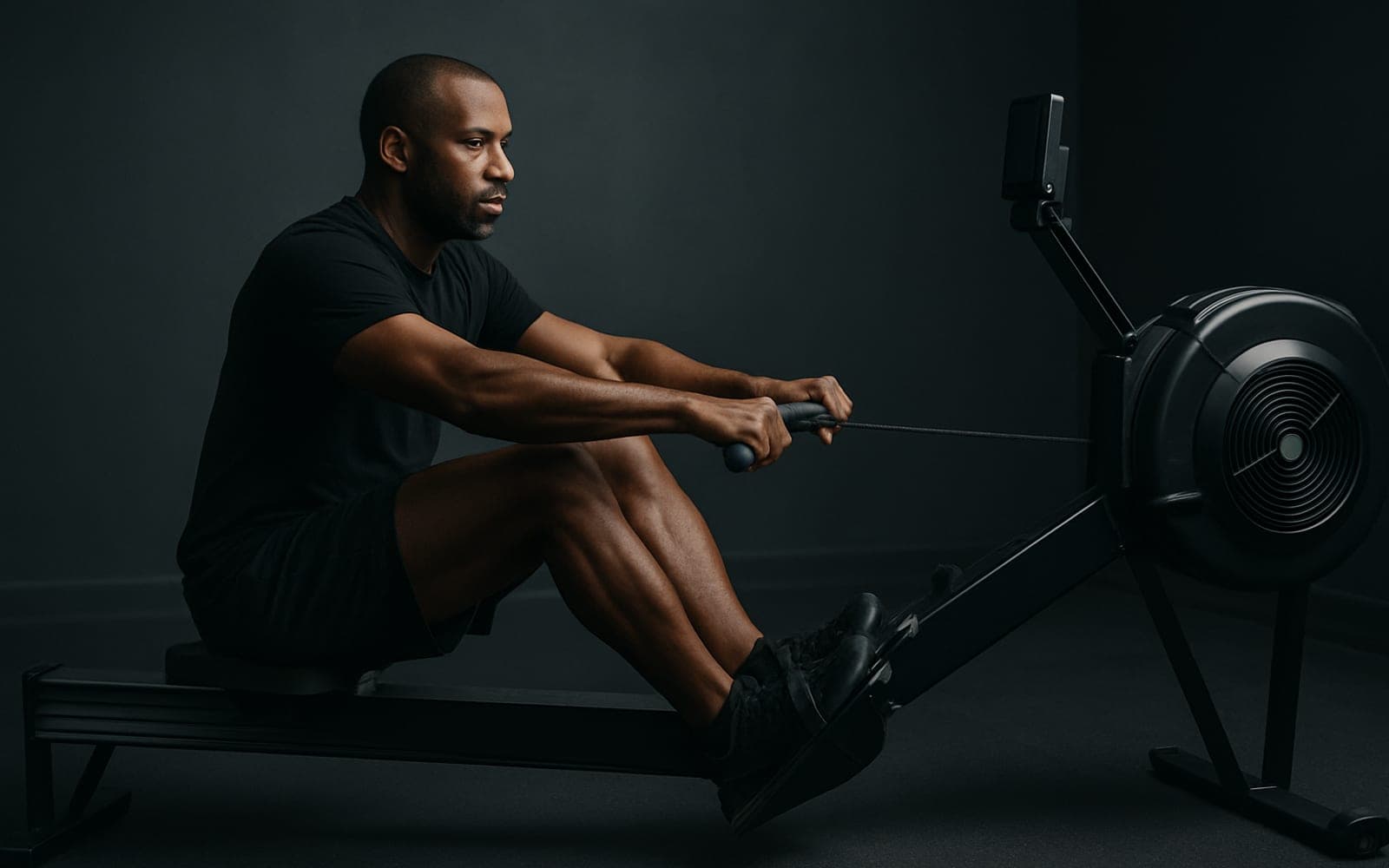
Strap the feet; grab the handle with a light grip.
- 2
Execute the movement
Drive legs → swing back → pull arms; reverse in order. It's ~60% legs.
Common mistakes
- Yanking with the arms first
Make it harder
Make it easier
Accessibility
Substitutions
If a machine is busy or unavailable, these train the same pattern a different way.
Your progress over time
What to expect from training this consistently — everyone progresses at their own pace.
- 1
First few sessions
Learn coordinated stroke sequence (legs → body swing → arms) and timing; build comfort with machine settings and pacing while maintaining a consistent 20–30 minute effort with correct technique.
- 2
Weeks 2–4
Noticeable improvements in work capacity and stroke efficiency: longer intervals at moderate intensity, reduced perceived exertion for the same power, and modest calorie burn leading to initial weight loss when combined with diet.
- 3
Months 2–3
Increased sustained power and cardiovascular fitness — ability to hold higher wattage or faster 2k–5k paces, visible muscular conditioning in legs and upper back, and improved posture and core stability during the stroke.
- 4
6+ months
Substantial gains in aerobic capacity and muscular endurance: higher VO2-related performance (longer steady-state rows and harder intervals), consistent body-composition improvements with continued calorie control, and refined, powerful stroke mechanics.
Benefits of the rowing machine
High-quality cardiovascular conditioning that develops aerobic fitness and improves sustained work capacity.
Efficient calorie-burning, low-impact full-body movement that supports weight loss when paired with sensible nutrition.
Builds leg drive and posterior-chain strength through the powerful leg-dominant portion of the stroke.
Develops back and arm pulling strength and endurance, improving upper-body muscular balance and posture.
Challenges and strengthens the core through stabilization during the drive and recovery phases of each stroke.
Low-impact on joints compared with running, making it a good conditioning option for general fitness and long-term training consistency.
Exercises that pair with this
Same muscles or the same movement pattern — useful for building the rest of the session.
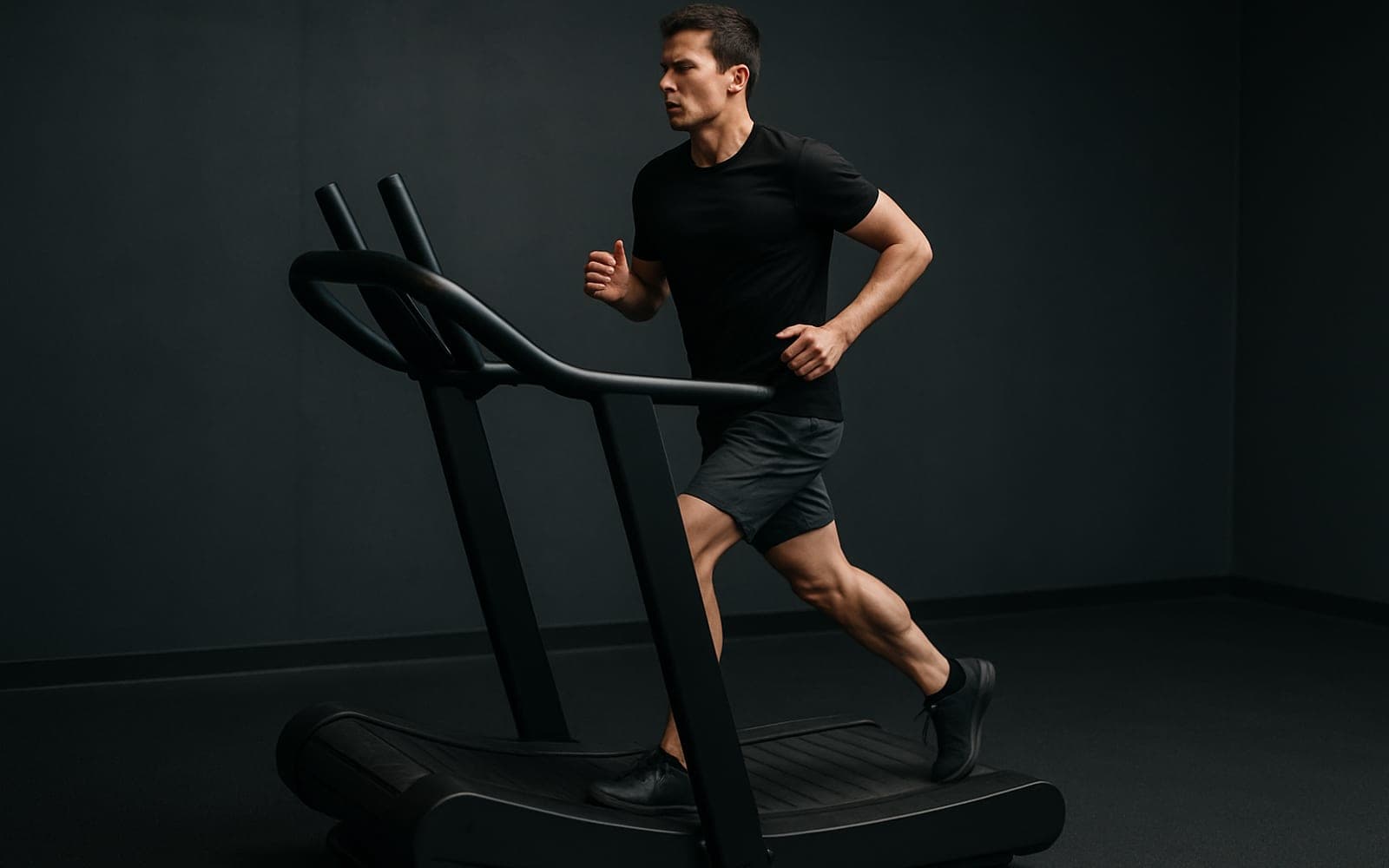
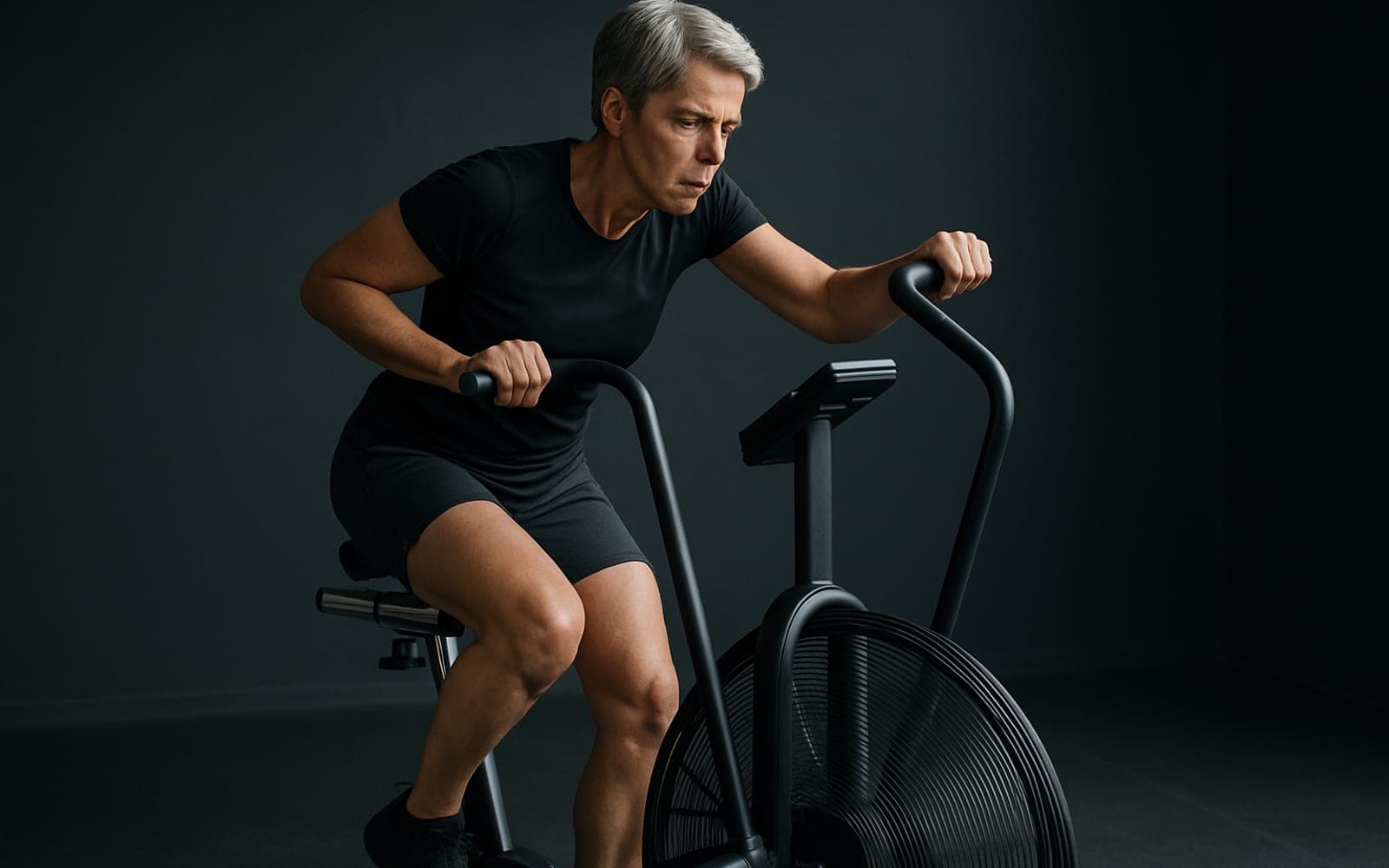
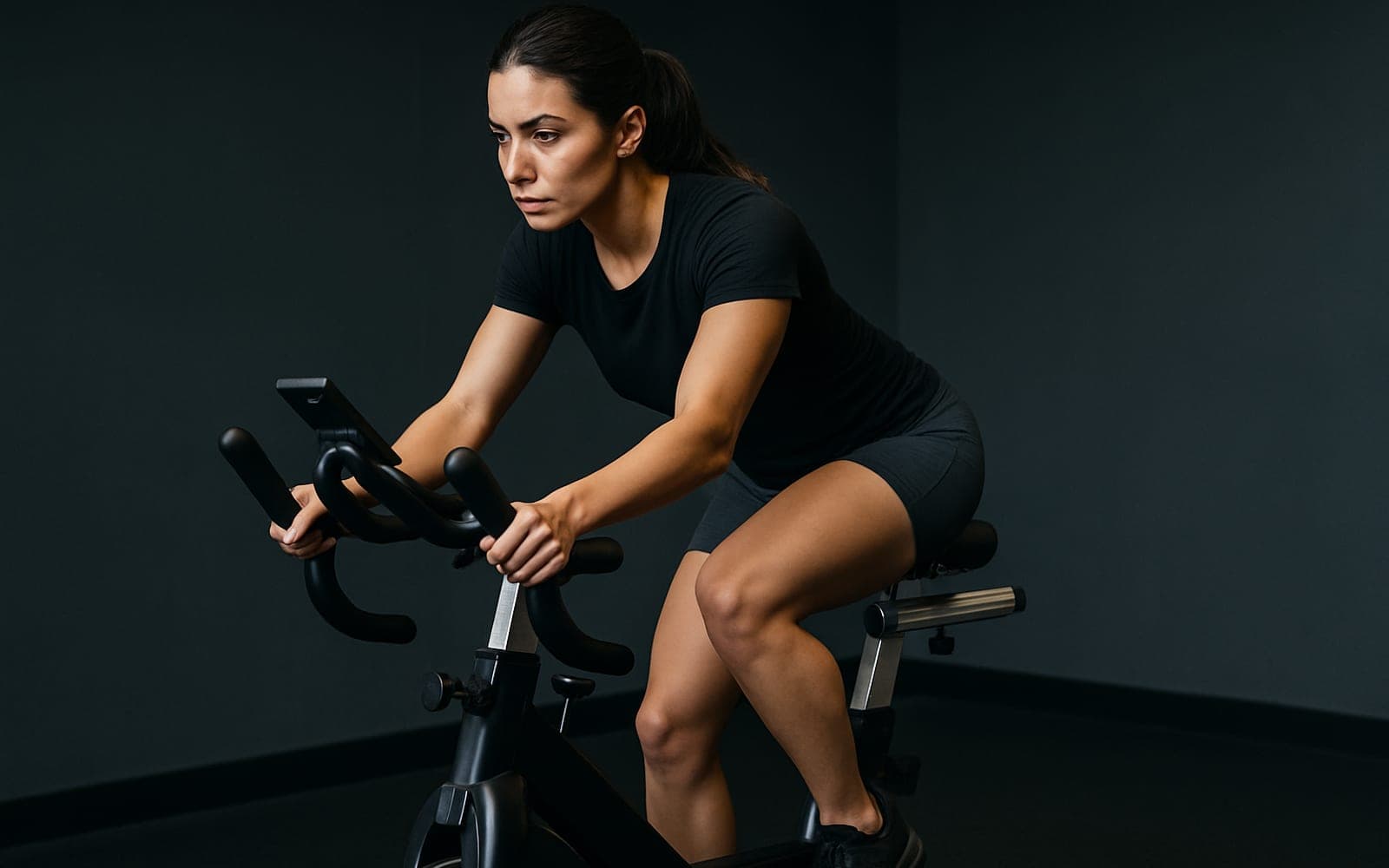
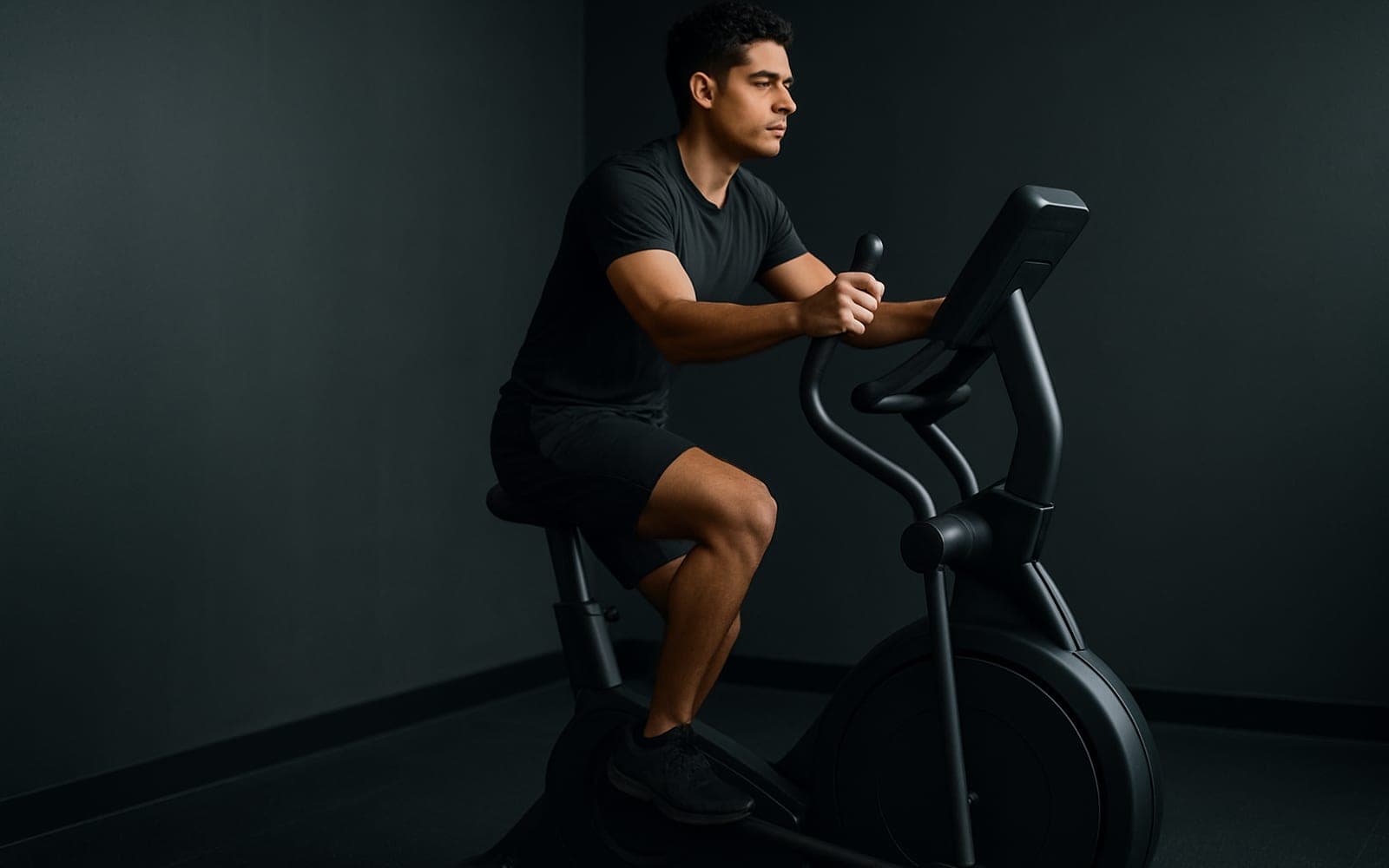

Rowing Machine — questions people ask
What muscles does the rowing machine work?
The rowing machine trains the heart and back and legs as the primary target, with the core, arms working as support. It is a cardio pattern, so it also trains the coordination that pattern needs.
How many sets and reps of the rowing machine should I do?
Work in time, not reps: 20–40 minutes at a conversational pace for base fitness, or 6–10 short hard intervals with equal rest if you are training for speed.
Is the rowing machine good for beginners?
It is a reasonable second step. The rowing machine asks for some control and body awareness. Shorter pieces, lower rate. If it feels like too much, build the pattern on the elliptical trainer first.
What can I do instead of the rowing machine?
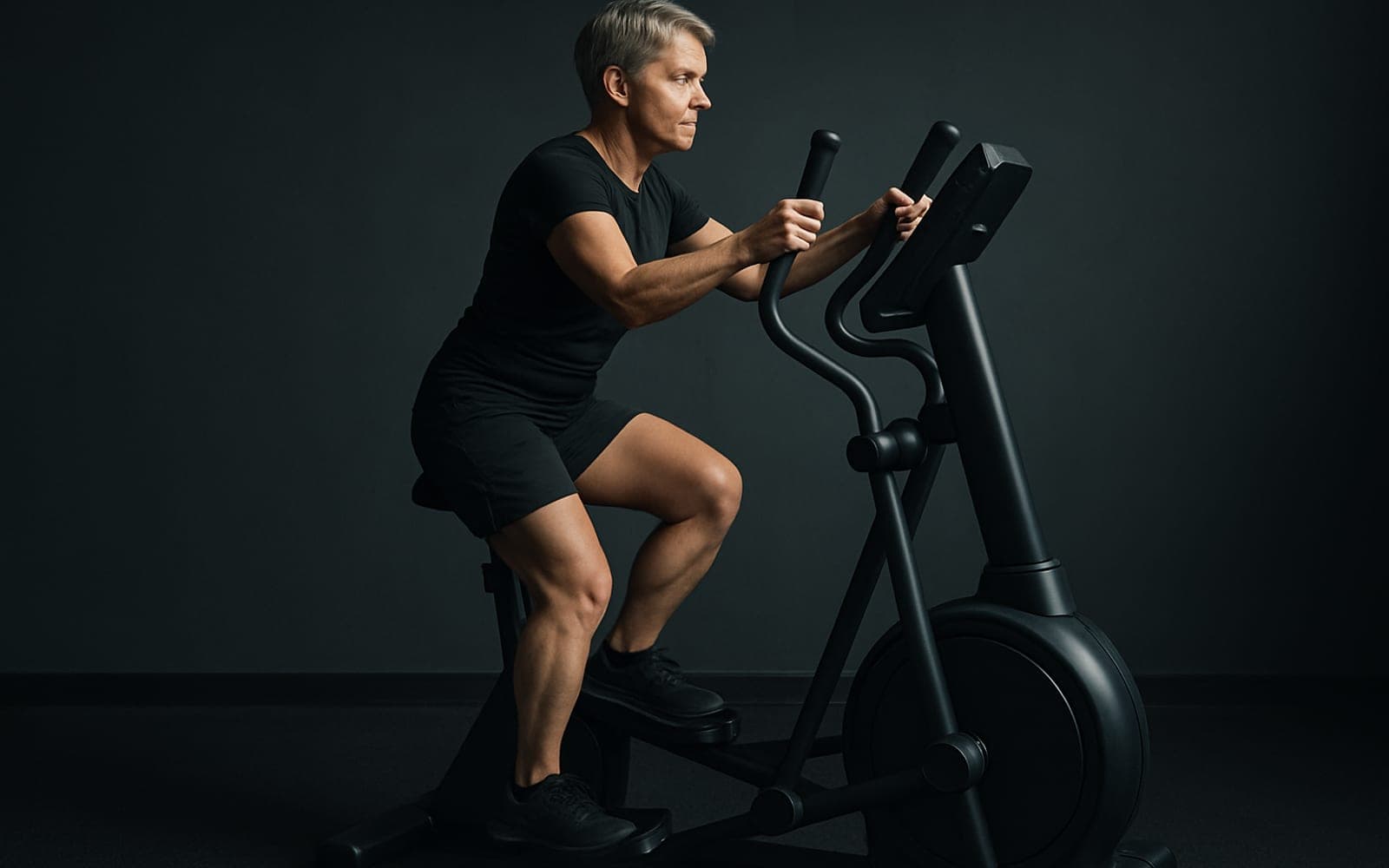
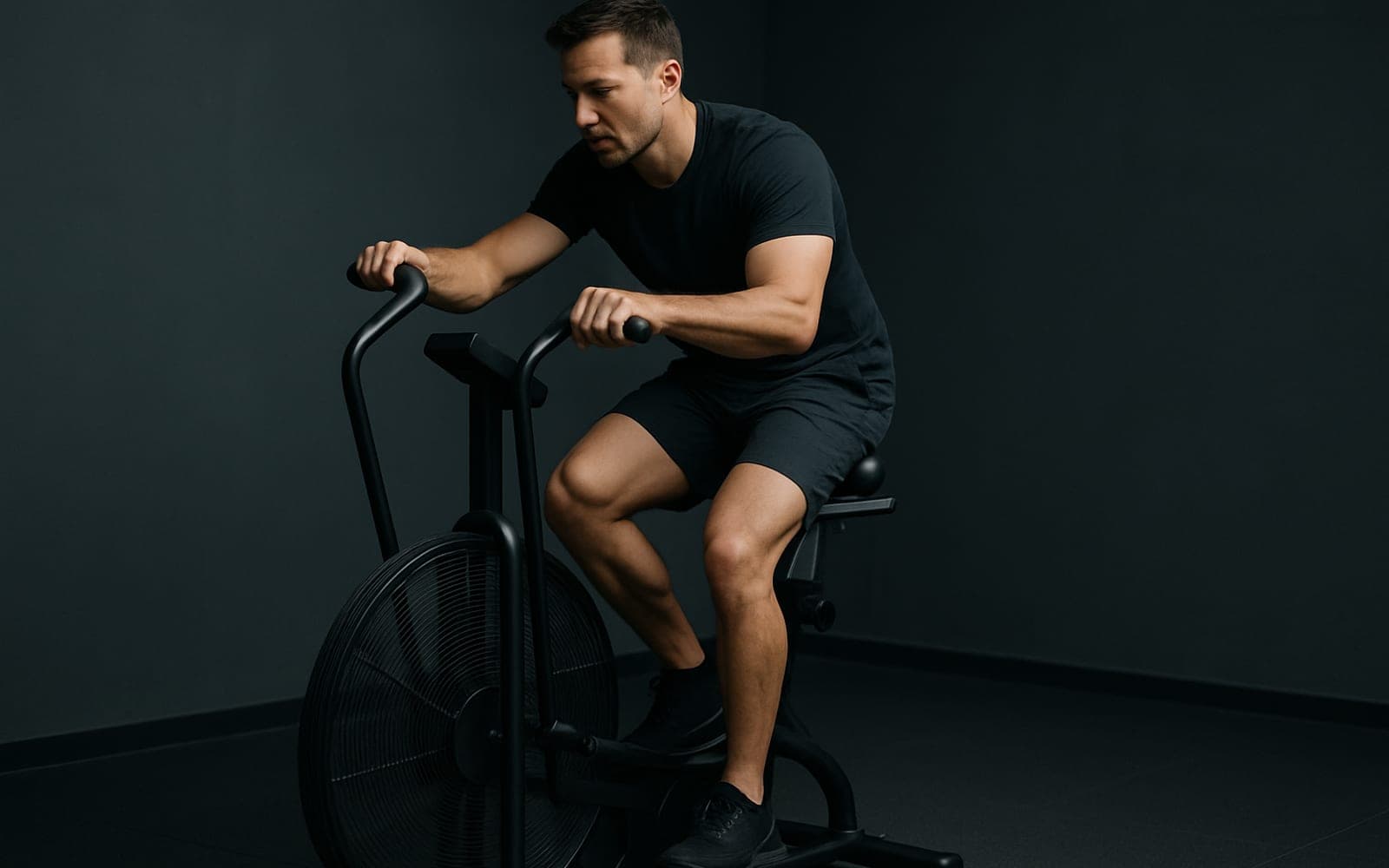
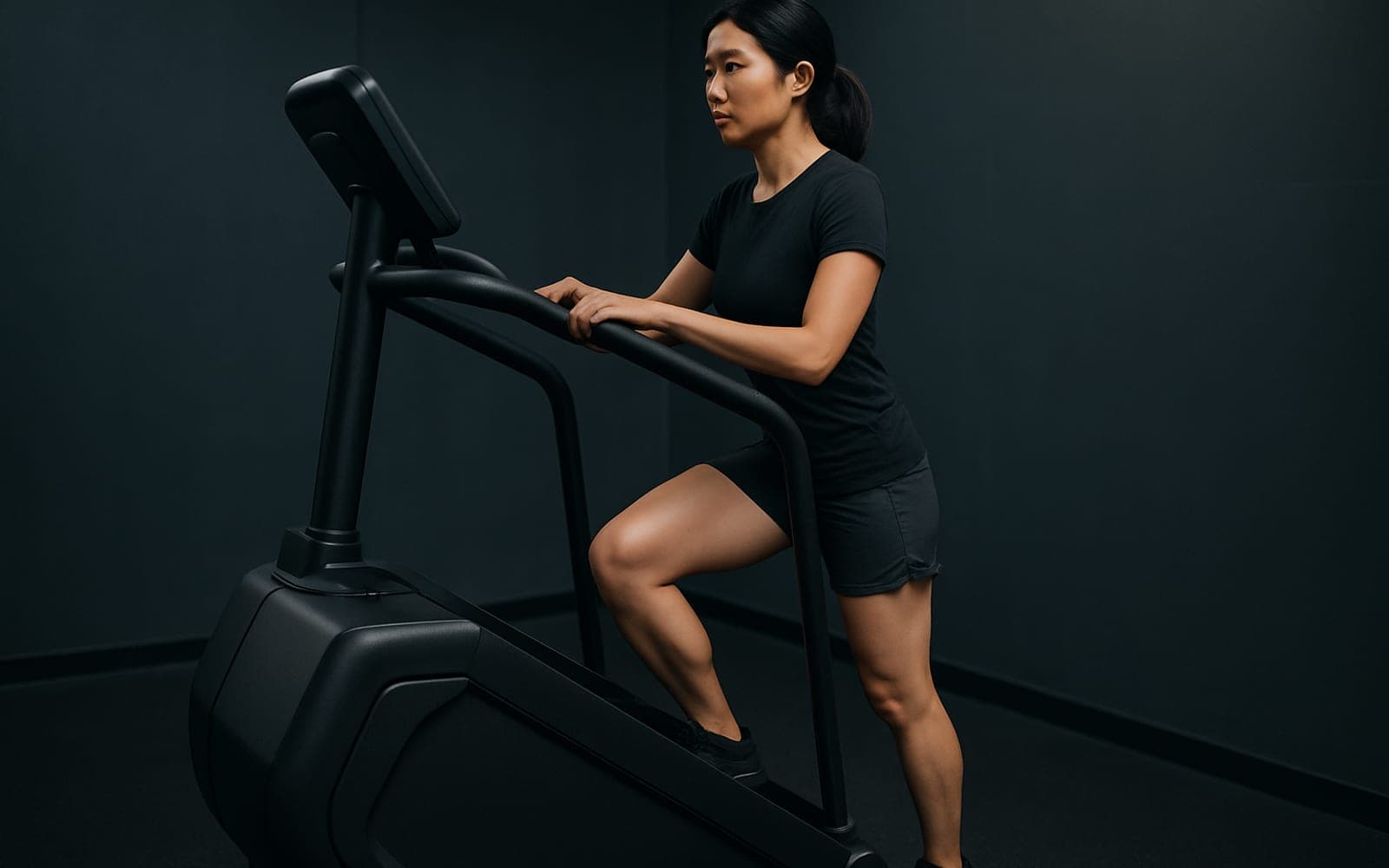
Elliptical Trainer, Stationary Bike all train the same cardio pattern with different equipment, so any of them works when the machine is busy or your gym does not have it.
What are the most common rowing machine mistakes?
Yanking with the arms first. Drive legs → swing back → pull arms; reverse in order. It's ~60% legs.
Can I do the rowing machine at home?
It needs cardio equipment, so it belongs in a gym session rather than a home workout unless you own that equipment.