Stationary Bike

Activation
Muscles worked
Movement
Cardio
Beginner · Cardio
Secondary muscles
Movement pattern
Equipment category
How to perform
- 1
Set up
Set the saddle so the knee is slightly bent at the bottom.
- 2
Execute the movement
Pedal at a steady cadence and resistance.
Common mistakes
- Saddle too low
Make it harder
Make it easier
Accessibility
Substitutions
If a machine is busy or unavailable, these train the same pattern a different way.

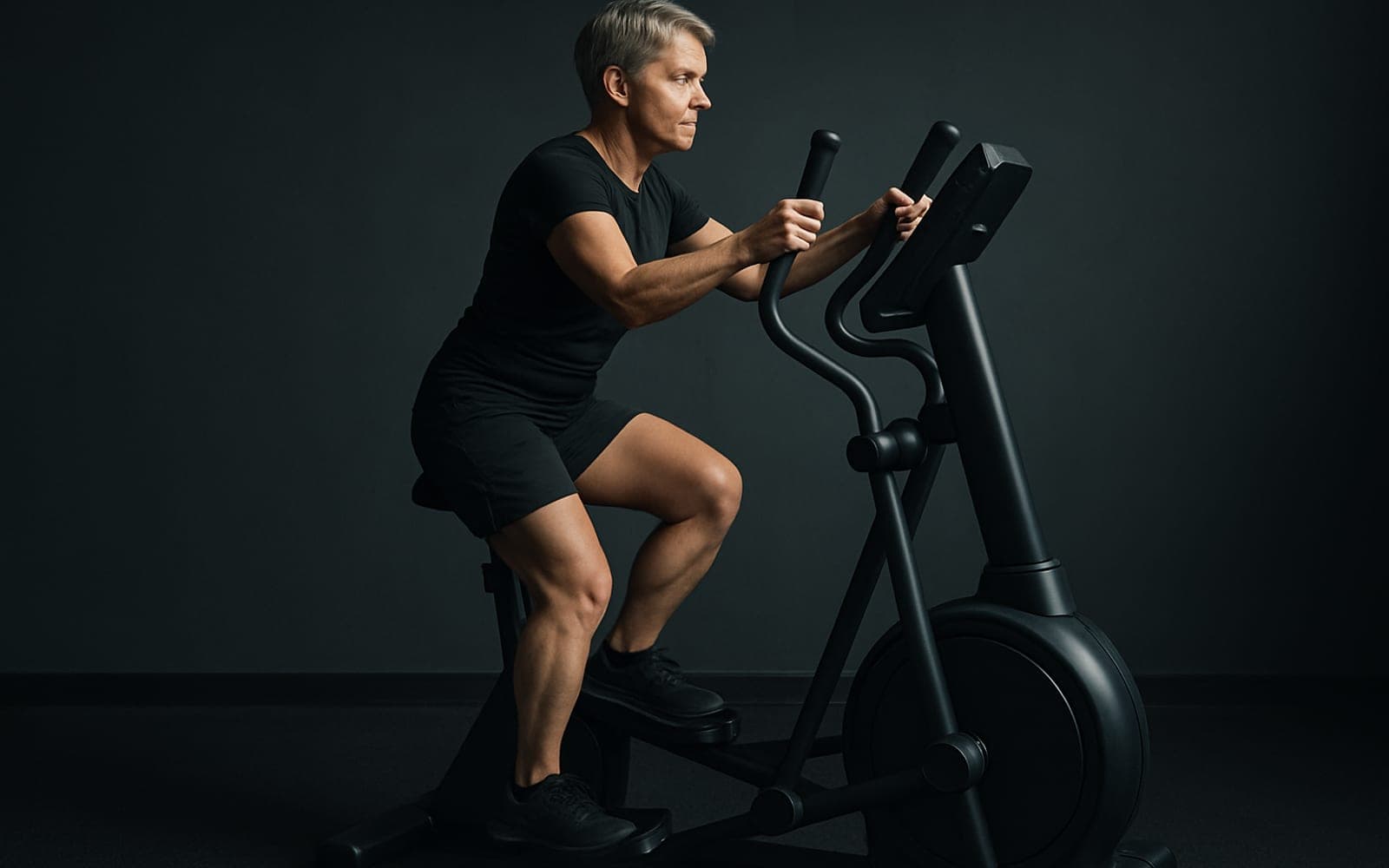
Your progress over time
What to expect from training this consistently — everyone progresses at their own pace.
- 1
First few sessions
Learn proper setup (seat height, cadence) and pacing; 15–30 minute sessions feel challenging but manageable and you recover within a day.
- 2
Weeks 2–4
Begin to ride longer or slightly harder with less perceived effort; steady 30–45 minute sessions become routine and you notice small improvements in stamina and post-workout recovery.
- 3
Months 1–3
Consistent 3–5 sessions per week produces clear aerobic gains: longer rides at same intensity, higher average speed or cadence, and measurable weekly calorie burn supporting gradual weight loss when paired with diet.
- 4
Months 3–6
Sustained training increases leg muscular endurance and aerobic capacity so you can complete longer or hill-simulated sessions; body composition shifts (fat loss, modest leg muscle tone) become more apparent.
- 5
6+ months
Well-established cardio base with reliable endurance, easier recovery between sessions, and the ability to use interval or higher-resistance workouts to further improve fitness or maintain weight loss long-term.
Benefits of the stationary bike
Develops cardiovascular endurance by training the heart and aerobic system through sustained pedaling.
Strengthens leg muscular endurance (quads, hamstrings, glutes, calves) with a low-impact movement pattern.
Supports calorie expenditure and weight-loss goals when combined with an appropriate nutrition plan and consistent sessions.
Low-impact nature reduces joint stress compared with running, making it easier to train frequently and recover.
Easy to scale intensity and duration, allowing straightforward progress tracking and workout variety (steady-state, intervals, resistance).
Accessible for beginners and adaptable for all fitness levels, helping build consistency and general fitness habits.
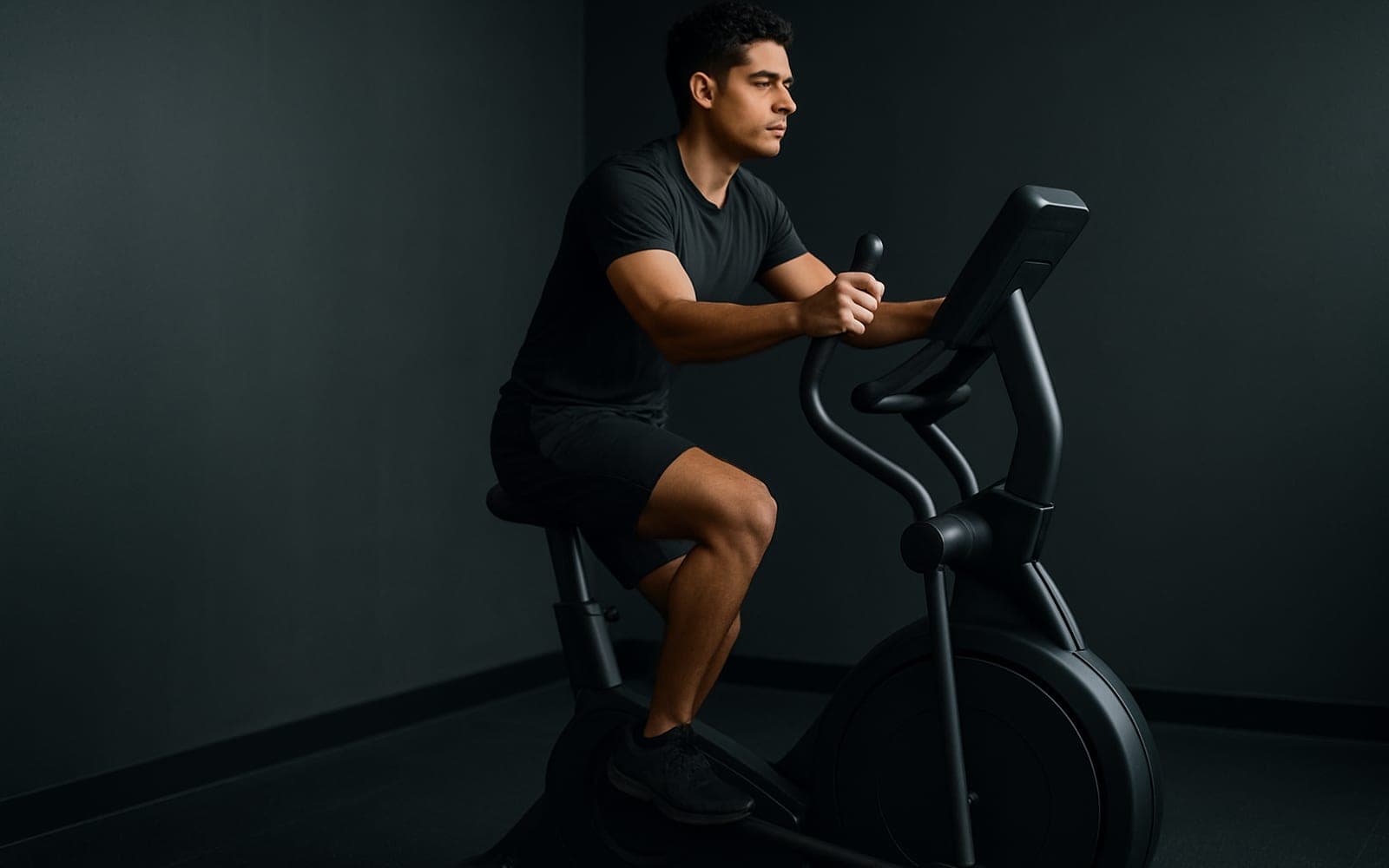
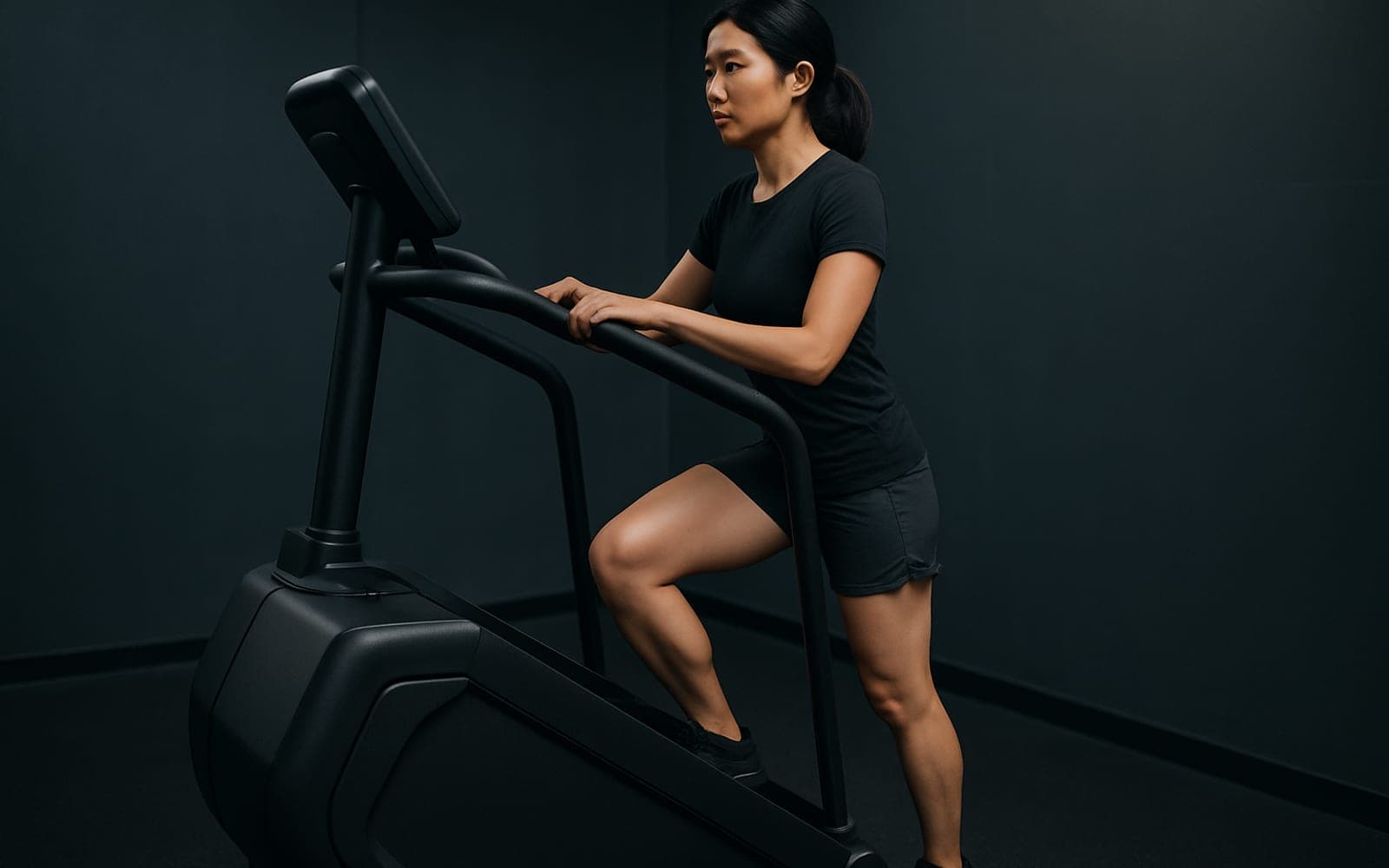
Exercises that pair with this
Same muscles or the same movement pattern — useful for building the rest of the session.




Stationary Bike — questions people ask
What muscles does the stationary bike work?
The stationary bike trains the heart and legs as the primary target. It is a cardio pattern, so it also trains the coordination that pattern needs.
How many sets and reps of the stationary bike should I do?
Work in time, not reps: 20–40 minutes at a conversational pace for base fitness, or 6–10 short hard intervals with equal rest if you are training for speed.
Is the stationary bike good for beginners?
Yes. The stationary bike is a beginner-friendly movement. Reduce resistance. If it feels like too much, build the pattern on the indoor cycling (studio) first.
What can I do instead of the stationary bike?
Indoor Cycling (Studio), Elliptical Trainer all train the same cardio pattern with different equipment, so any of them works when the machine is busy or your gym does not have it.
What are the most common stationary bike mistakes?
Saddle too low. Pedal at a steady cadence and resistance.
Can I do the stationary bike at home?
It needs cardio equipment, so it belongs in a gym session rather than a home workout unless you own that equipment.