Plank
Activation
Muscles worked
Movement
Core
Beginner · Bodyweight
Primary muscles
Movement pattern
Equipment category
How to perform
- 1
Set up
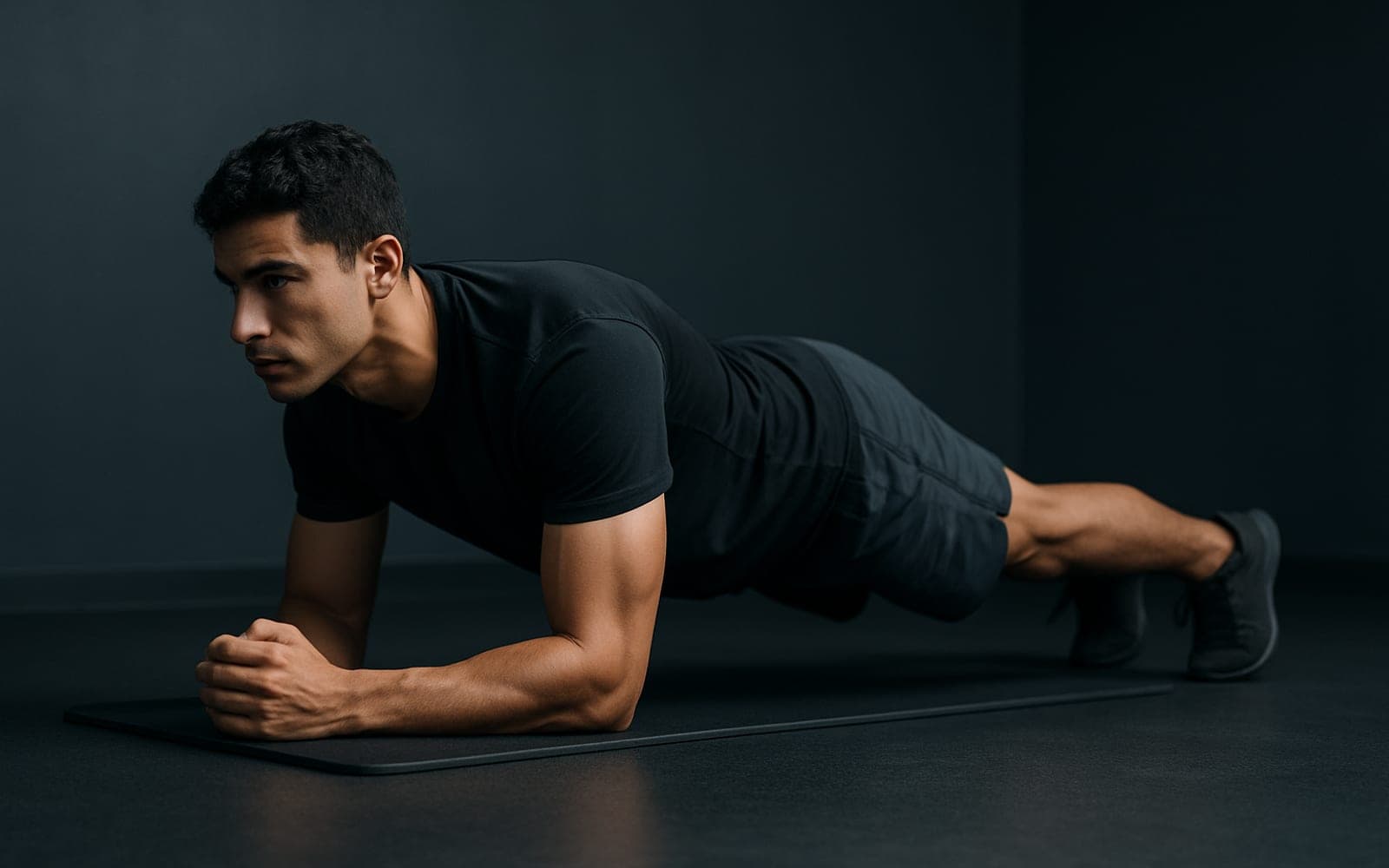
Forearms under shoulders, body in a straight line.
- 2
Execute the movement
Brace the abs and glutes; breathe; hold the line.
Common mistakes
- Hips sagging or piking
Make it harder
Make it easier
Accessibility
Substitutions
If a machine is busy or unavailable, these train the same pattern a different way.
Your progress over time
What to expect from training this consistently — everyone progresses at their own pace.
- 1
First few sessions
Learn proper setup and breathing; hold a strict forearm or high plank with braced abs and glutes for 20–40 seconds without sagging or rib flare.
- 2
Weeks 2–4
Build endurance and motor control to hold clean planks for 45–90 seconds, reduce form breakdown, and begin simple progressions like knee-to-elbow or short side-plank holds.
- 3
Months 2–3
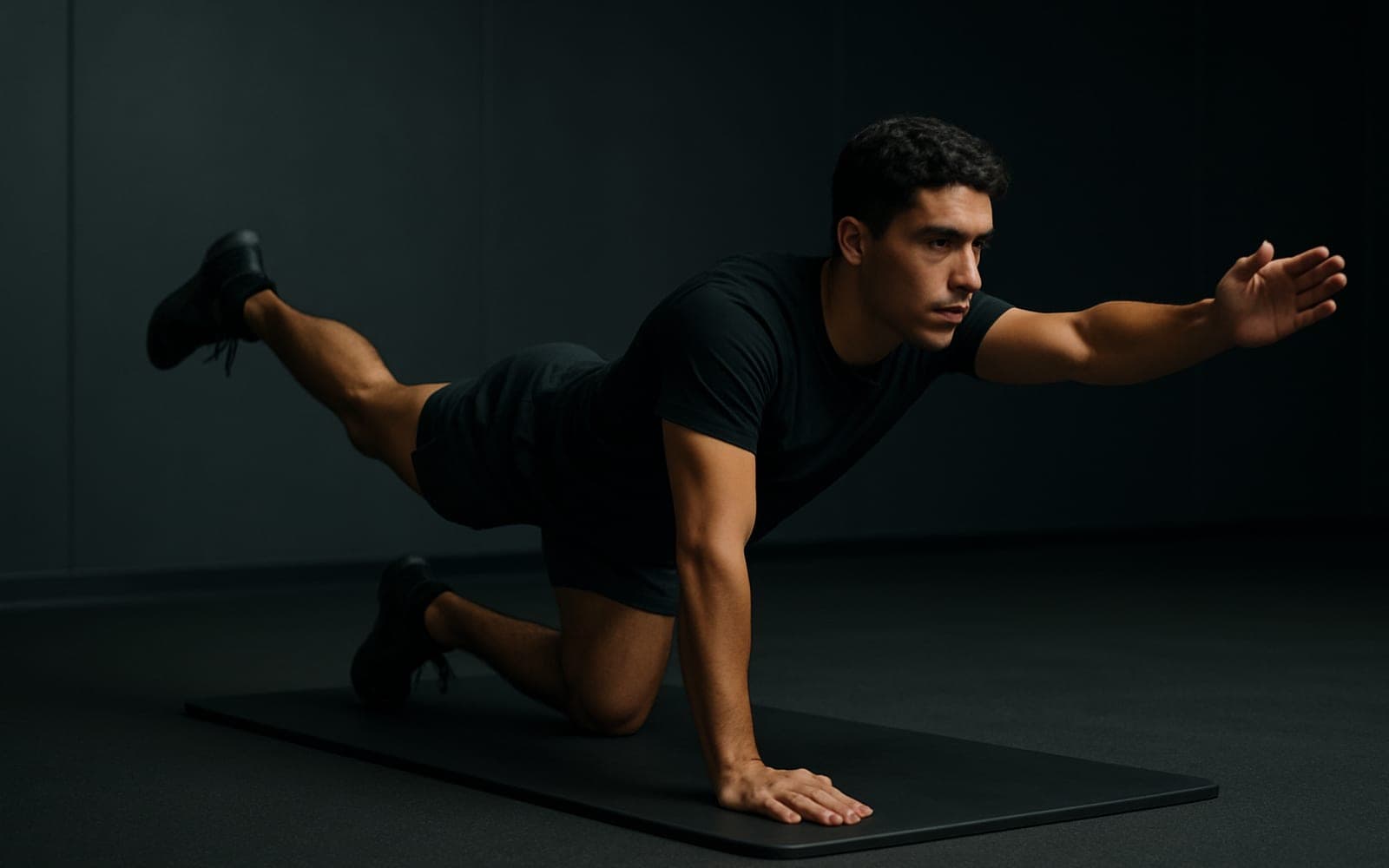
Sustain multiple 60–120 second holds or perform longer cumulative plank work (3–6 minutes total) with maintained breathing and apply variations (side planks, single-arm/leg lifts) for increased challenge.
- 4
Months 4–6
Develop robust anterior and lateral core endurance allowing you to perform loaded or tempo-controlled plank variations, resist rotational forces better, and transfer stability to squats, carries, and running.
- 5
6+ months
Achieve high-level core stability under load and fatigue, comfortably using advanced plank progressions and enjoying reliable carryover to athletic movements and everyday tasks that require trunk control.
Benefits of the plank
Develops isometric core strength and endurance by training the rectus abdominis, obliques, and deep stabilizers to resist spinal flexion and rotation.
Improves shoulder and scapular stabilization because the deltoids and serratus anterior help maintain a stable upper body during the hold.
Strengthens the glutes and posterior chain to preserve a neutral hip position, reducing excessive lumbar extension or pelvic drop.
Enhances breathing control and intra-abdominal pressure awareness, which helps maintain torso stiffness during lifts and sprints.
Provides direct carryover to athletic tasks and daily activities that require bracing under load, such as carrying groceries, resisting contact, or stabilizing during change-of-direction movements.
Requires no equipment and is easy to scale, making it a practical core-training option for general fitness and progressive athletic development.
Exercises that pair with this
Same muscles or the same movement pattern — useful for building the rest of the session.
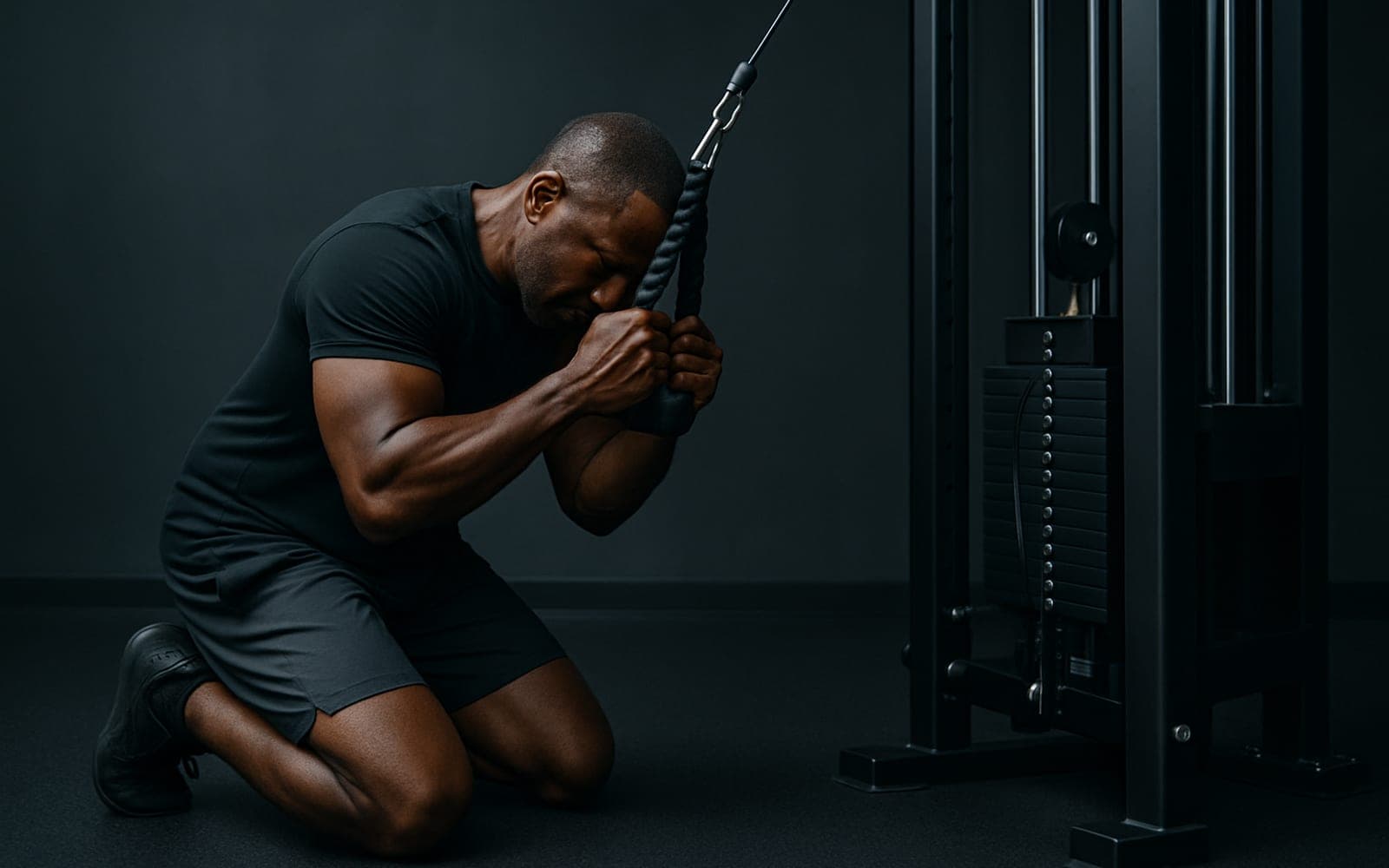
Plank — questions people ask
What muscles does the plank work?
The plank trains the core as the primary target, with the shoulders, glutes working as support. It is a core pattern, so it also trains the coordination that pattern needs.
How many sets and reps of the plank should I do?
Two to four sets of 8–15 reps, or 20–45 second holds. Stop the set when your form breaks, not when the count runs out.
Is the plank good for beginners?
Yes. The plank is a beginner-friendly movement. Drop to the knees. If it feels like too much, build the pattern on the core stability (machine/anti-rotation) first.
What can I do instead of the plank?
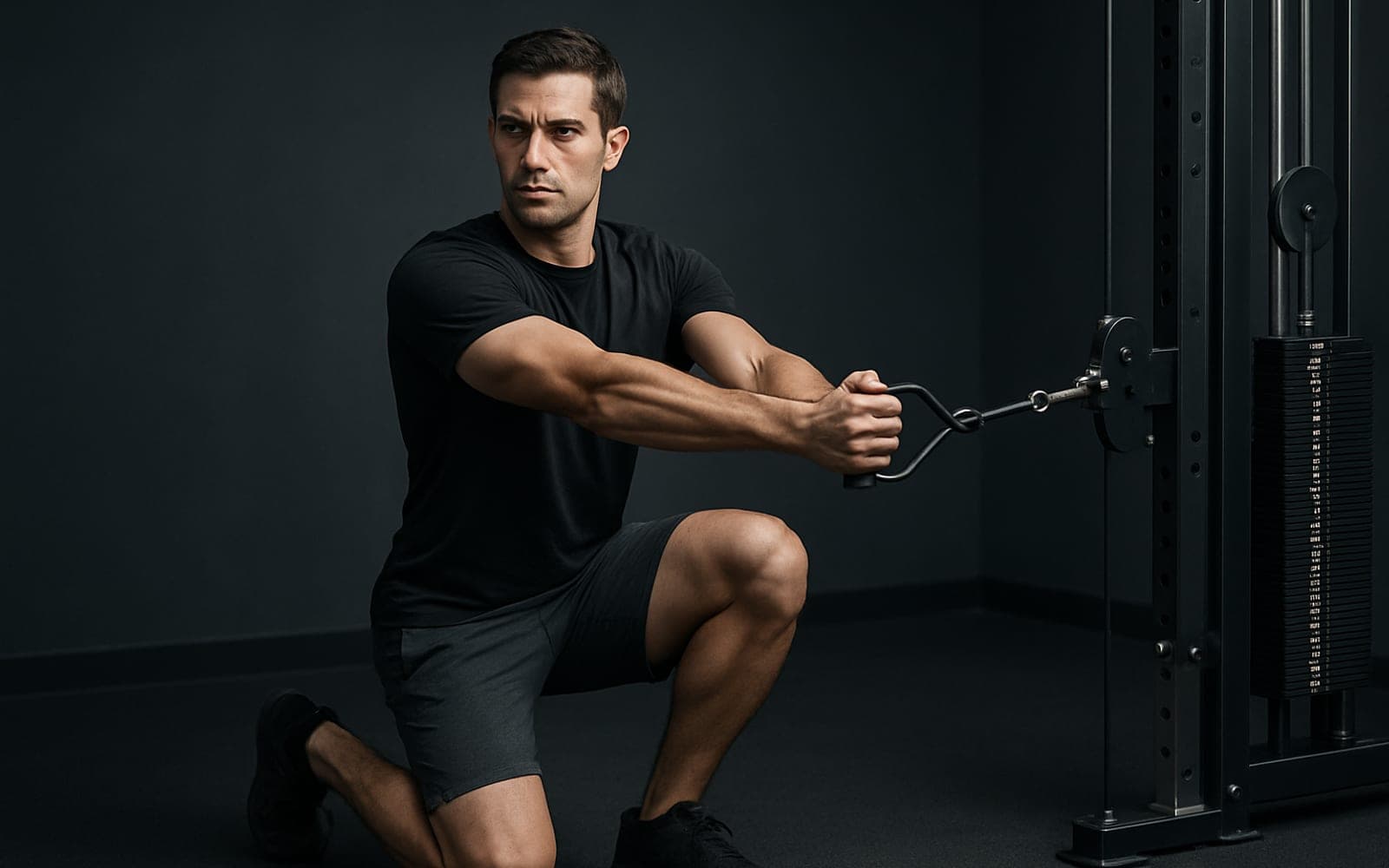
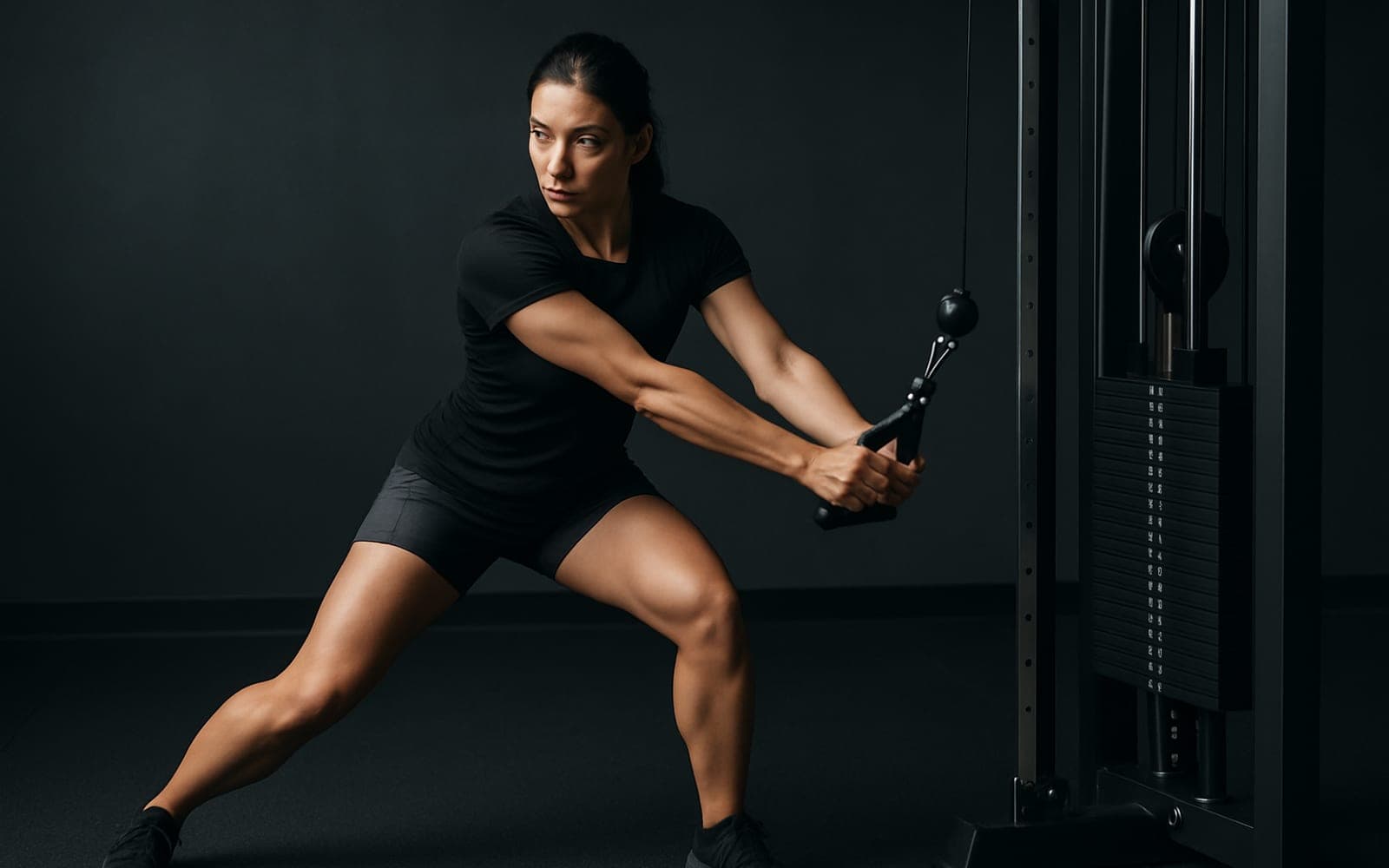
Core Stability (Machine/Anti-Rotation), Cable Woodchop all train the same core pattern with different equipment, so any of them works when the machine is busy or your gym does not have it.
What are the most common plank mistakes?
Hips sagging or piking. Brace the abs and glutes; breathe; hold the line.