Foam Rolling
Activation
Muscles worked
Movement
Mobility
Beginner · Recovery
Primary muscles
Secondary muscles
Movement pattern
Equipment category
How to perform
- 1
Set up
A foam roller.
- 2
Execute the movement
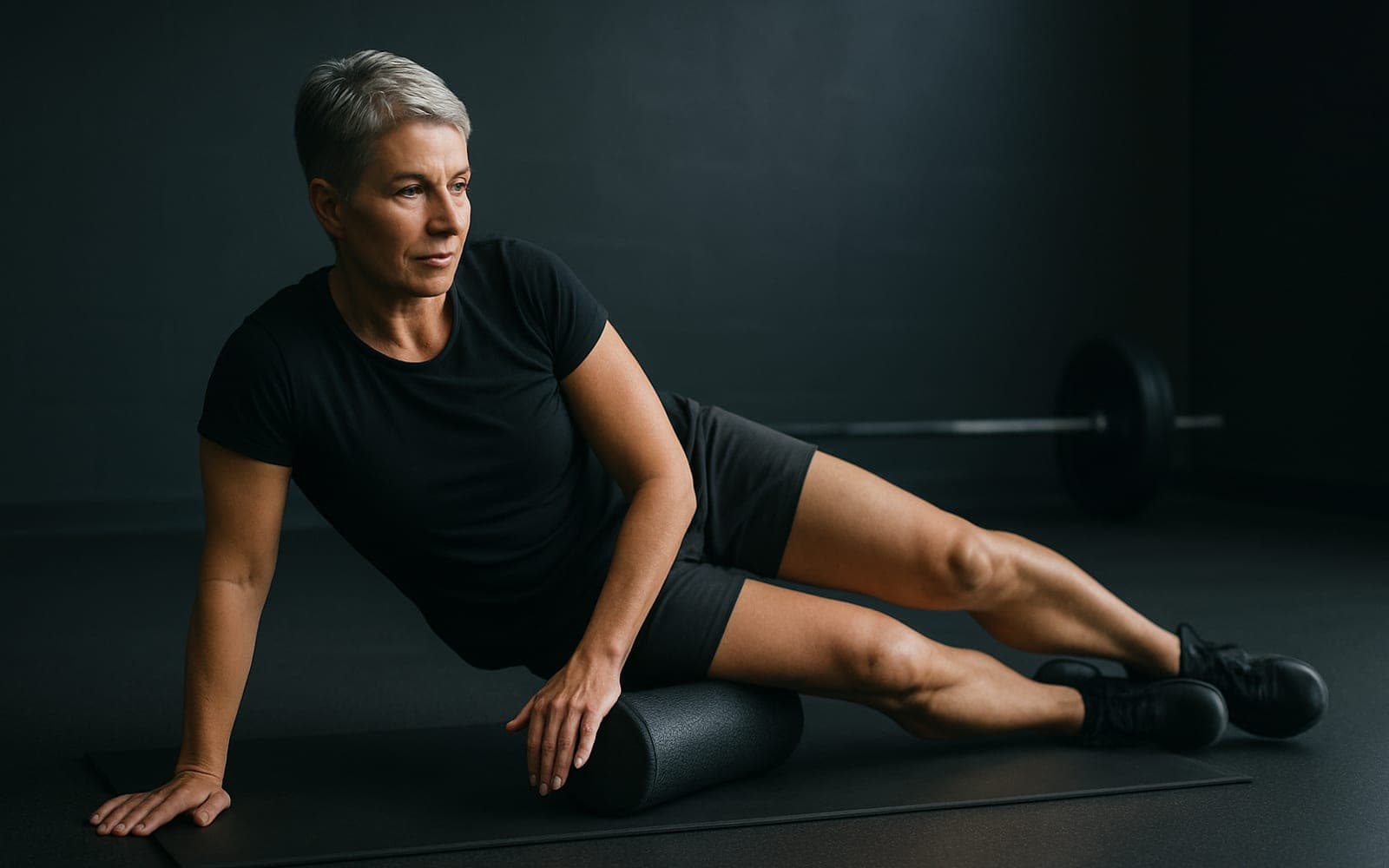
Slowly roll major muscle groups, pausing on tender spots.
Common mistakes
- Rolling directly on joints
Make it harder
Make it easier
Accessibility
Substitutions
If a machine is busy or unavailable, these train the same pattern a different way.
Your progress over time
What to expect from training this consistently — everyone progresses at their own pace.
- 1
First few sessions
Learn basic positioning and tempo; become comfortable with pressure and pausing on tender spots while avoiding joints and bony areas.
- 2
Weeks 1–2
Notice short-term reductions in muscle tightness and post-exercise soreness; sessions become quicker and more targeted as you learn which areas benefit most.
- 3
Weeks 3–6
Consistent rolling produces more durable improvements in range of motion around hips, calves, and thoracic spine and you can use slightly more pressure or specific positions for problem areas.
- 4
Months 2–3
Improved tissue tolerance and movement quality translate into easier performance of mobility drills and smoother execution of daily and training movements.
- 5
6+ months
Foam rolling becomes an effective maintenance tool: helps manage baseline stiffness, supports consistent mobility levels, and complements stretching and strengthening work for long-term flexibility and recovery.
Benefits of the foam rolling
Improves mobility and range of motion in common tight areas (e.g., calves, quads, IT band, thoracic spine) when used regularly.
Reduces transient muscle soreness and helps speed return to comfortable movement after workouts.
Increases body awareness by highlighting tender or restricted spots so you can address them with targeted mobility or strengthening work.
Enhances recovery routines by promoting blood flow and relaxation of soft tissue between training sessions.
Supports better movement quality and posture by easing restrictions that limit joint positions during daily activities and exercise.
Is a low-skill, low-cost self-care tool that can be used frequently to maintain flexibility and complement a broader mobility program.
Exercises that pair with this
Same muscles or the same movement pattern — useful for building the rest of the session.

Foam Rolling — questions people ask
What muscles does the foam rolling work?
The foam rolling trains the full body as the primary target. It is a mobility pattern, so it also trains the coordination that pattern needs.
How many sets and reps of the foam rolling should I do?
Two to three sets, holding 30–45 seconds or moving through 8–10 slow reps. Daily is fine — this is not a movement you need to recover from.
Is the foam rolling good for beginners?
Yes. The foam rolling is a beginner-friendly movement. Lighter pressure. If it feels like too much, build the pattern on the cooldown stretch first.
What can I do instead of the foam rolling?
Cooldown Stretch all train the same mobility pattern with different equipment, so any of them works when the machine is busy or your gym does not have it.
What are the most common foam rolling mistakes?
Rolling directly on joints. Slowly roll major muscle groups, pausing on tender spots.
Can I do the foam rolling at home?
The foam rolling needs recovery equipment, which most home gyms do not have. The cooldown stretch trains the same pattern with nothing more than your bodyweight or a band.