Upright Row
Activation
Muscles worked
Movement
Vertical Pull
Intermediate · Free Weights
Primary muscles
Secondary muscles
Movement pattern
Equipment category
How to perform
- 1
Set up
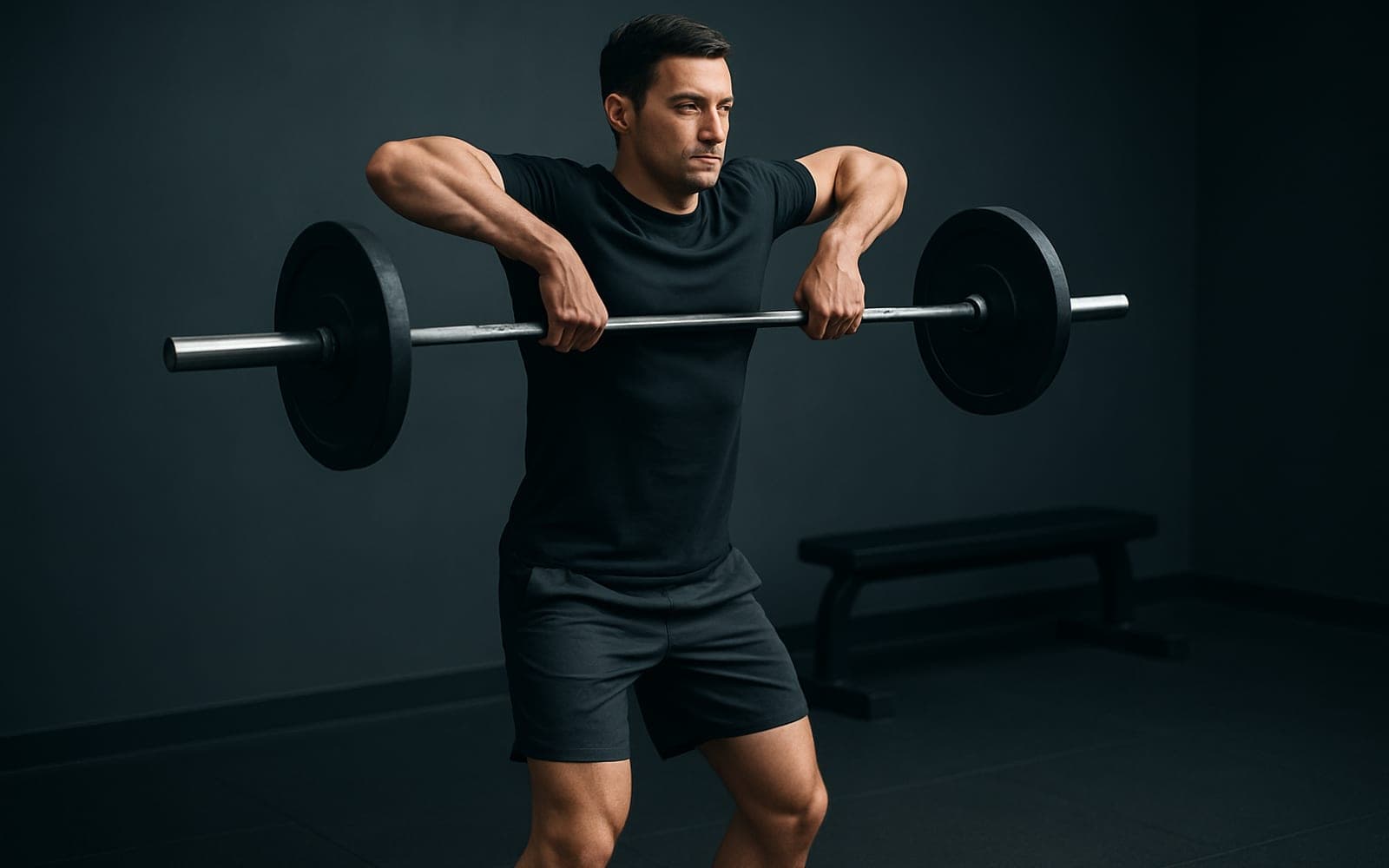
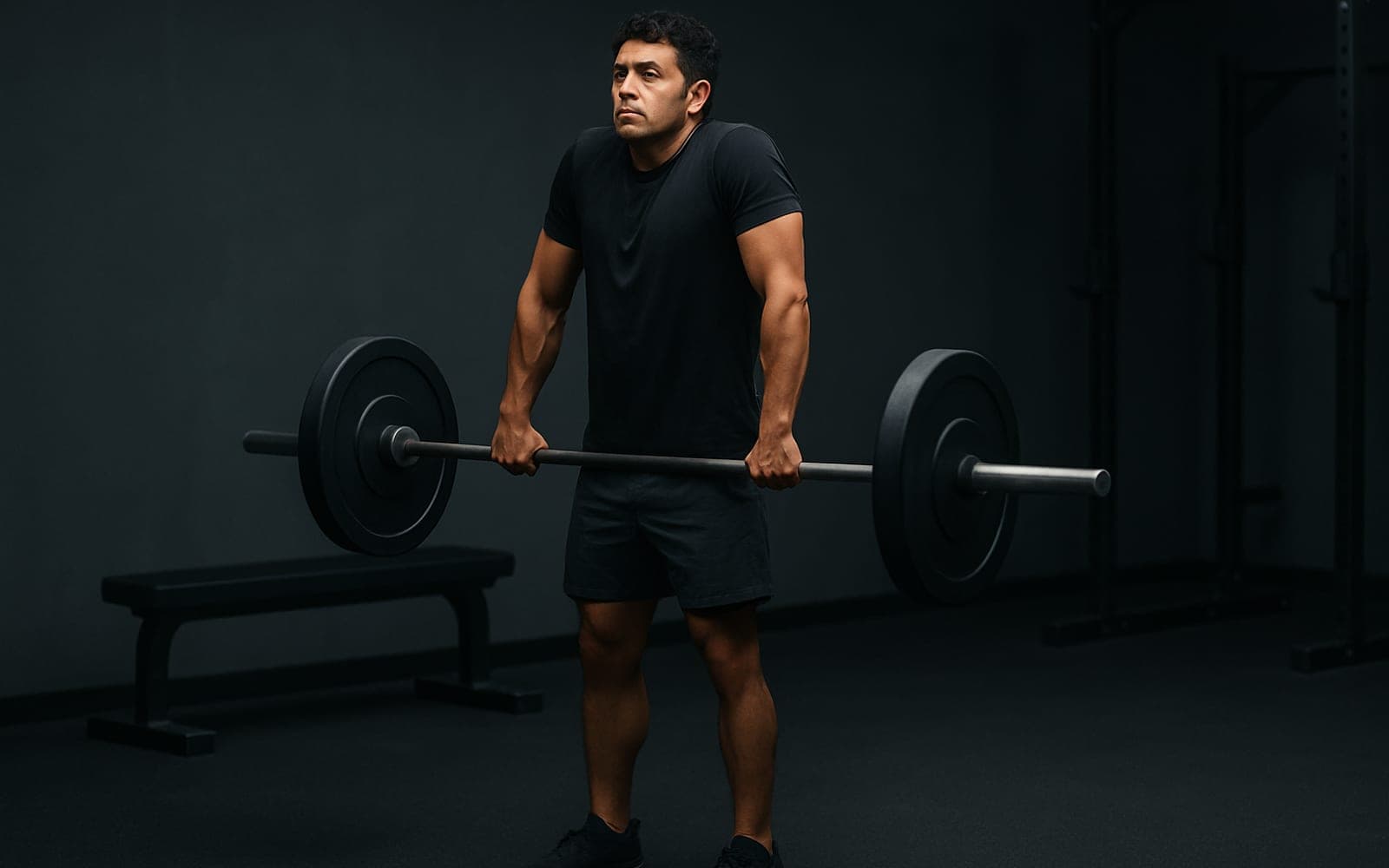
Hold a barbell or dumbbells in front of the thighs, hands about shoulder-width.
- 2
Execute the movement
Lead with the elbows to pull the weight up toward the collarbone; keep it close to the body, then lower under control.
Common mistakes
- Grip too narrow and pulling too high (shoulder impingement risk)
- Using momentum
Make it harder
Make it easier
Substitutions
If a machine is busy or unavailable, these train the same pattern a different way.
Your progress over time
What to expect from training this consistently — everyone progresses at their own pace.
- 1
First few sessions
Learn the movement pattern and timing: lead with the elbows, keep the bar/DBs close to the body, stop around collarbone height, and practice smooth, controlled lowering using light weight to ingrain technique and avoid shoulder discomfort.
- 2
Weeks 2–4
Build coordination and tempo control with moderate loads for higher reps (8–15), reinforcing scapular stability and feeling the deltoids and upper traps working while minimizing compensatory movements.
- 3
Months 2–3
Increase load and set intensity progressively (lower rep ranges 6–10 on some sets) to drive hypertrophy in the lateral deltoids and upper back; expect noticeable size and shape changes if total weekly volume is sufficient.
- 4
Months 4–6
Strength and muscular development consolidate: you can handle heavier sets with strict form, contribute meaningful upper-shoulder mass and improved upper-back thickness, and the exercise becomes a reliable component of your shoulder routine.
- 5
6+ months
Sustained, measurable increases in shoulder and upper-trap size and strength, better shoulder aesthetic and functional pulling capacity, and the ability to modulate load and variation (grip width, dumbbells, cables) to target specific deltoid heads.
Benefits of the upright row
Directly targets the lateral and anterior deltoids and upper trapezius, promoting noticeable shoulder width and upper-back thickness.
Reinforces a vertical pull pattern and scapular control, which transfers to overhead strength and stability work.
Provides secondary biceps engagement, offering additional arm stimulus without needing a separate curl variation every session.
Helps balance anterior-focused pressing work by strengthening the upper posterior chain, reducing appearance imbalances between chest and shoulders.
Can be performed with barbells, dumbbells, or cables to vary stimulus and volume for progressive muscle-building programs.
When performed with strict technique and appropriate load, it’s an efficient accessory for improving upper-body aesthetics and the ability to carry and lift items at chest height.
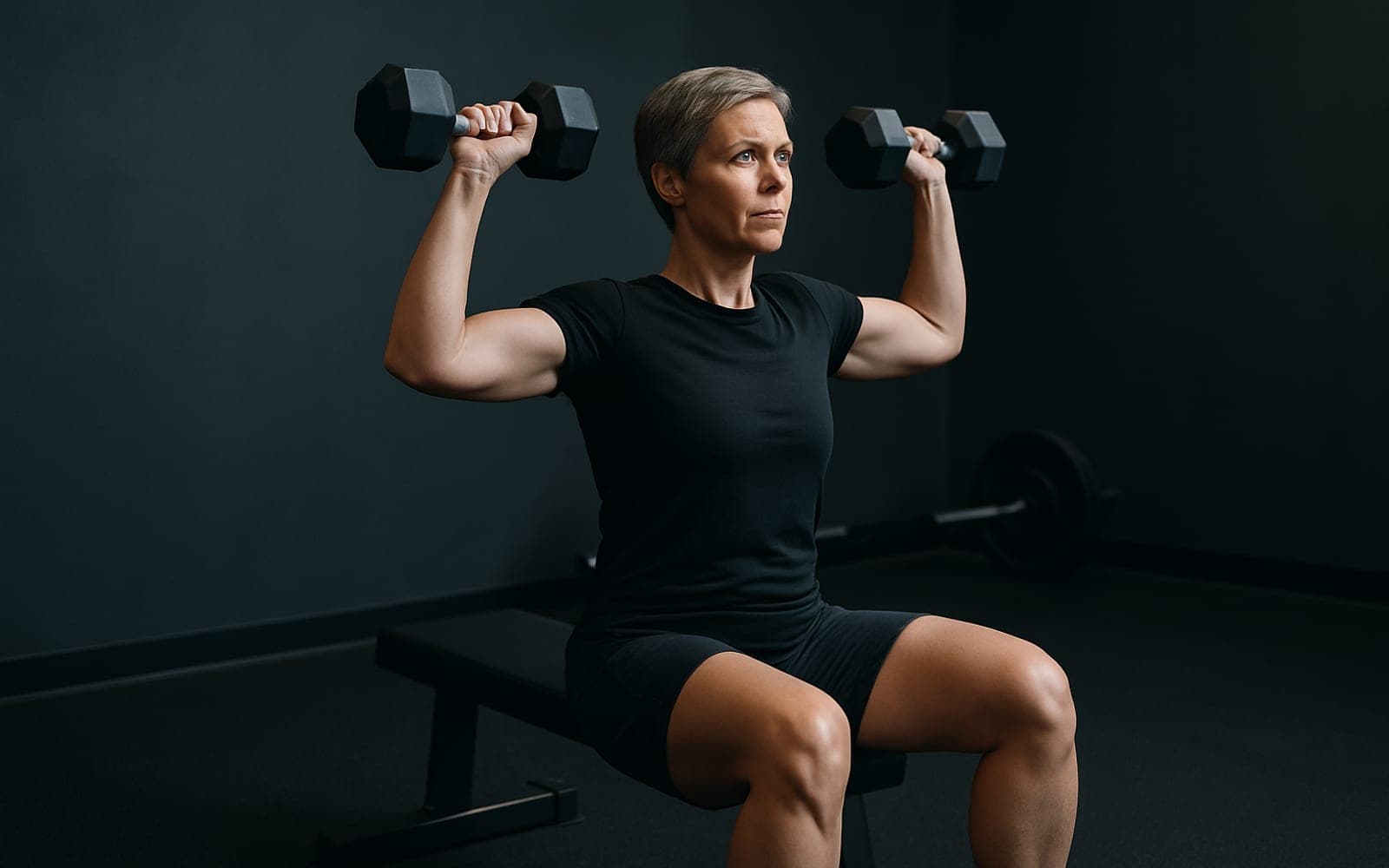
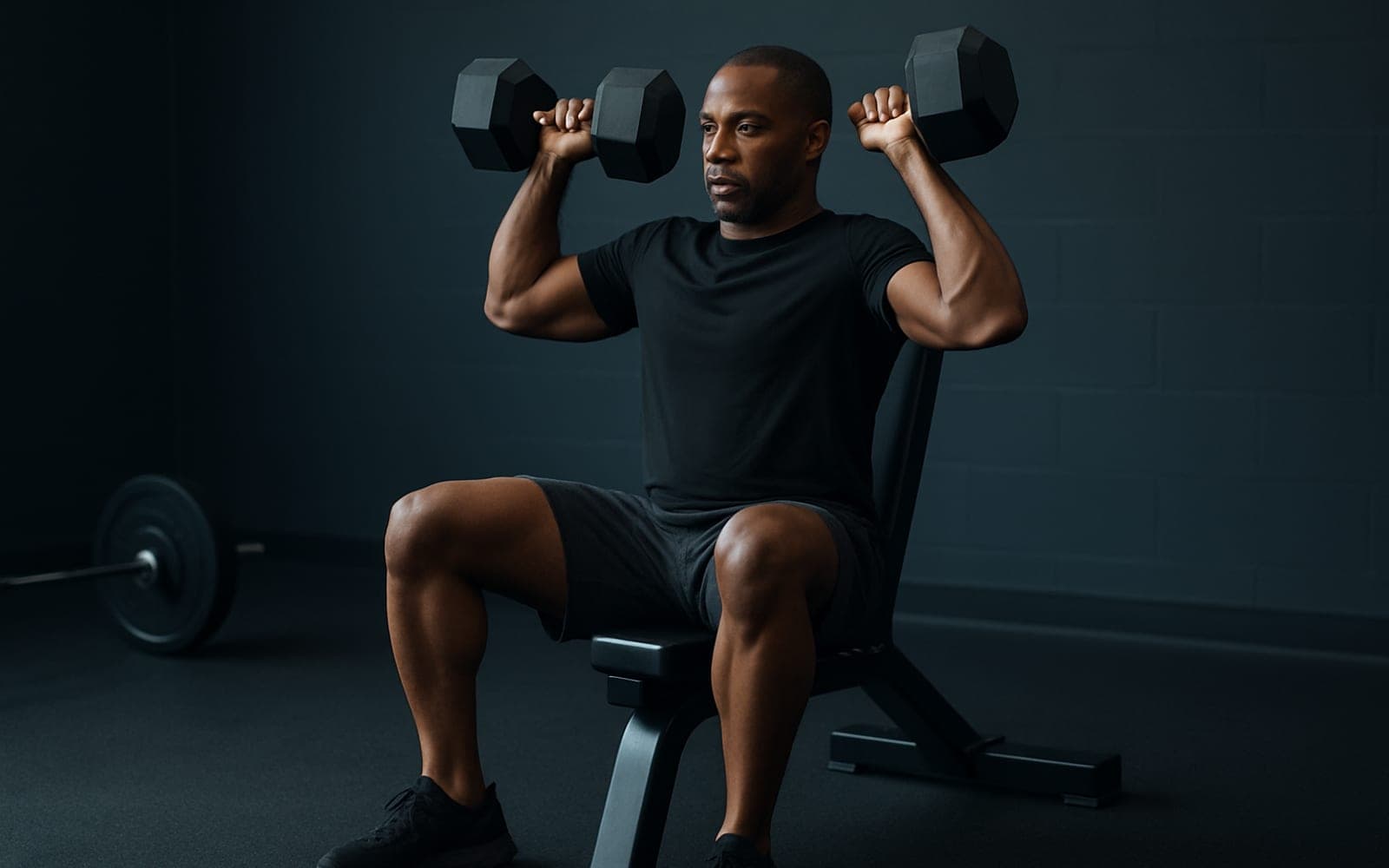
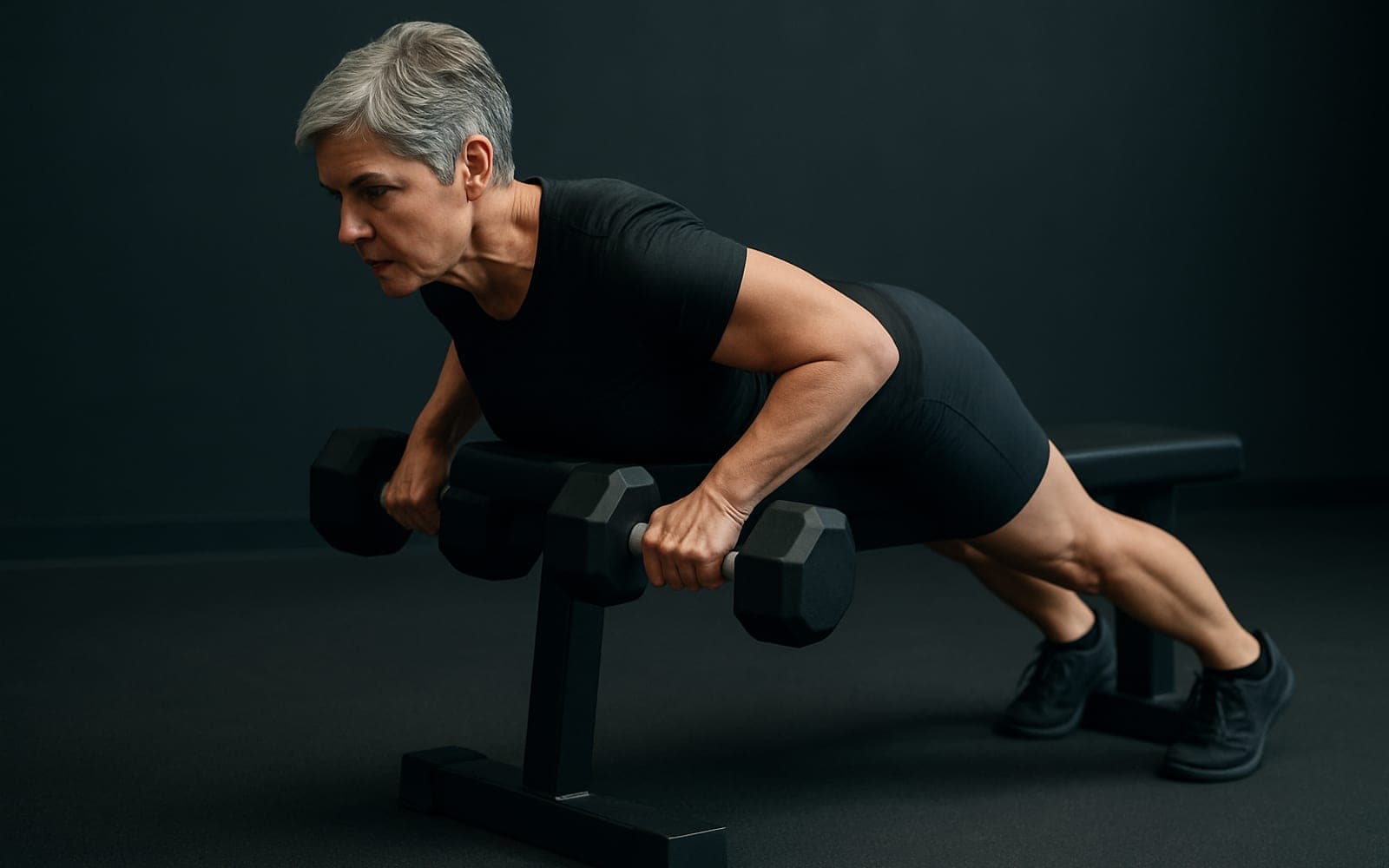
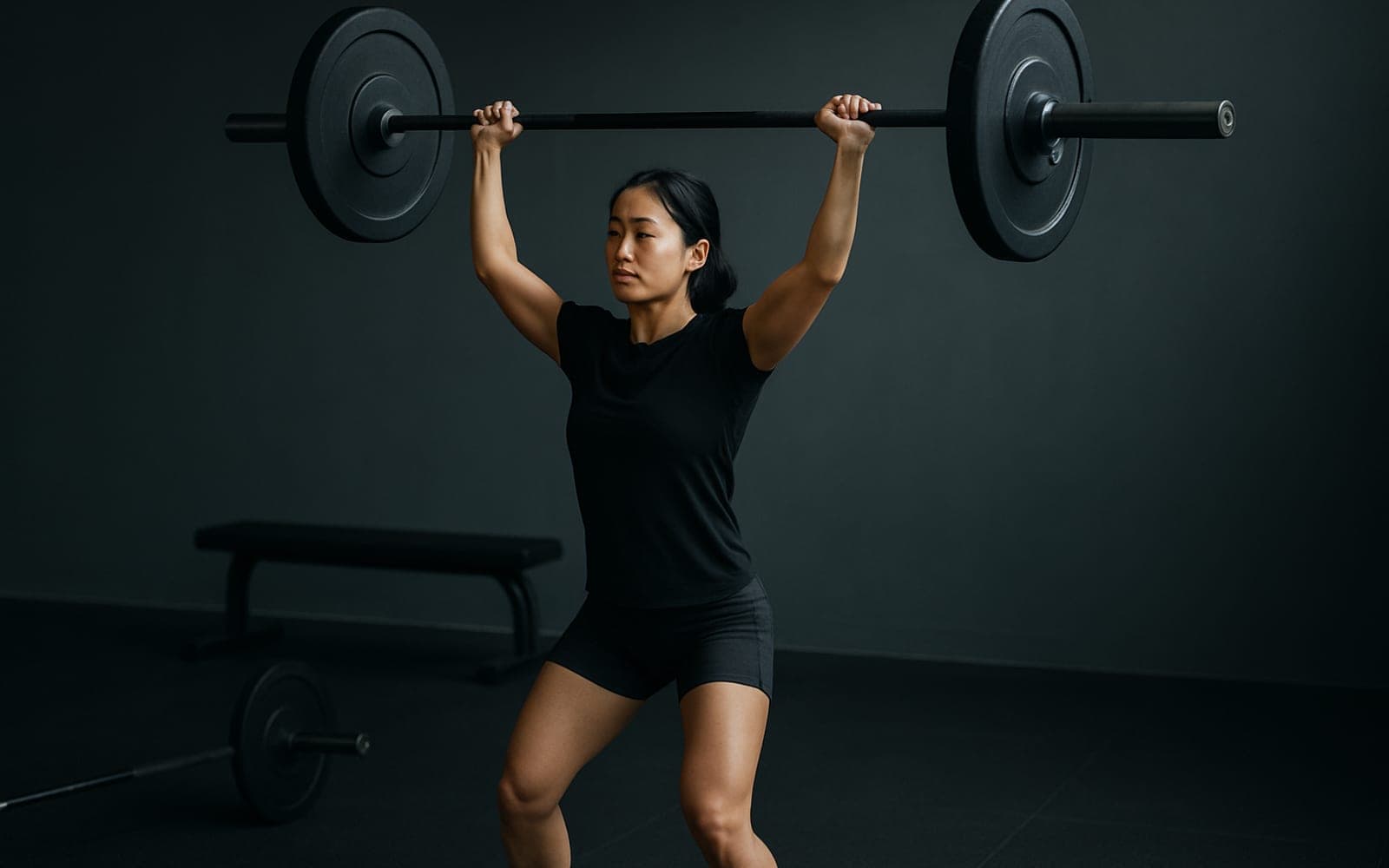
Exercises that pair with this
Same muscles or the same movement pattern — useful for building the rest of the session.
Upright Row — questions people ask
What muscles does the upright row work?
The upright row trains the shoulders and upper back as the primary target, with the biceps working as support. It is a vertical pull pattern, so it also trains the coordination that pattern needs.
How many sets and reps of the upright row should I do?
Three sets of 8–12 reps with about 90 seconds of rest is a reliable default. Increase the weight once the last rep of every set still looks clean.
Is the upright row good for beginners?
It is a reasonable second step. The upright row asks for some control and body awareness. Use a wider grip, lighter weight, or a face pull instead. It is also form-sensitive, so it is worth having a coach or an experienced lifter watch your first few sessions. If it feels like too much, build the pattern on the lateral raise first.
What can I do instead of the upright row?
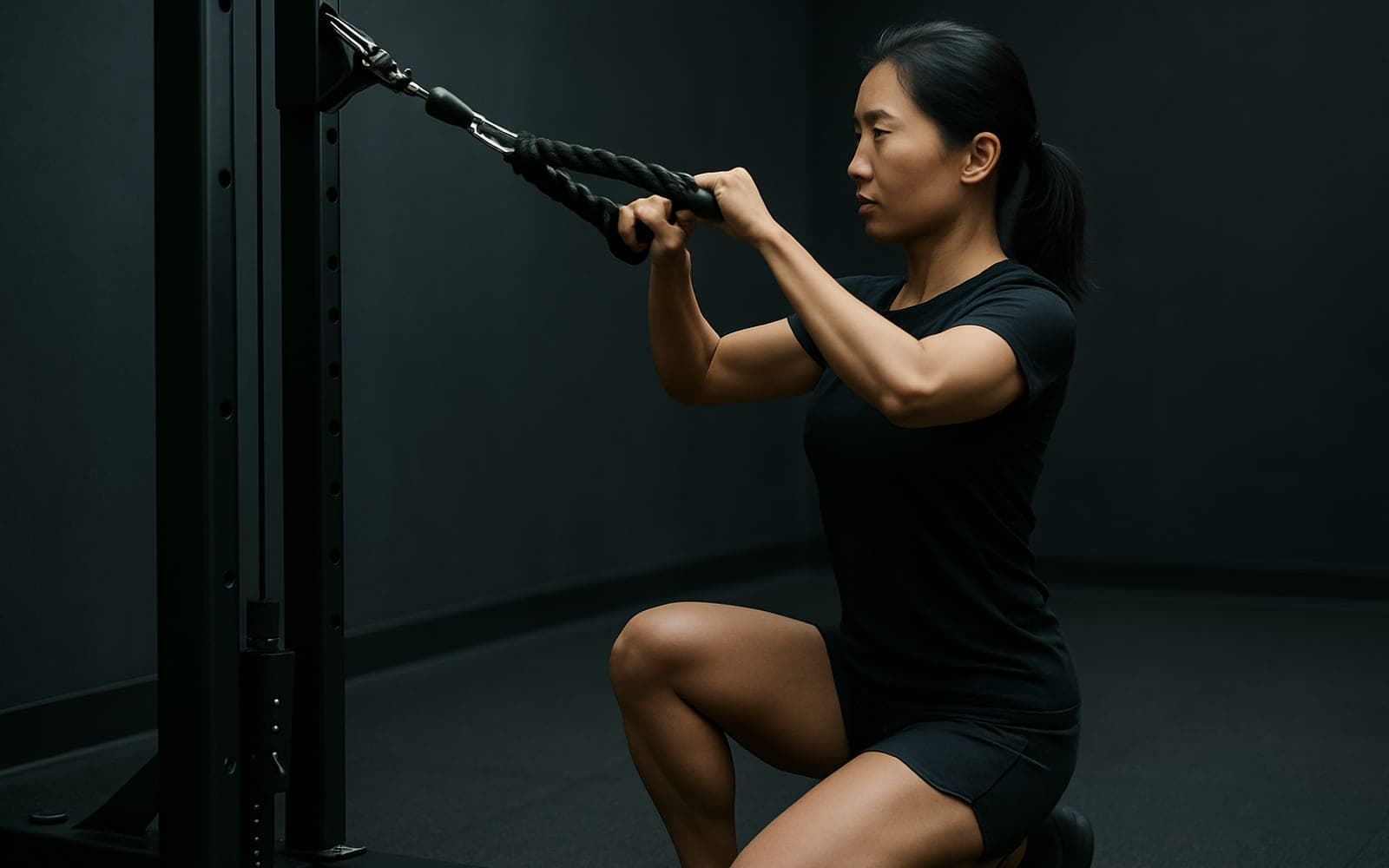
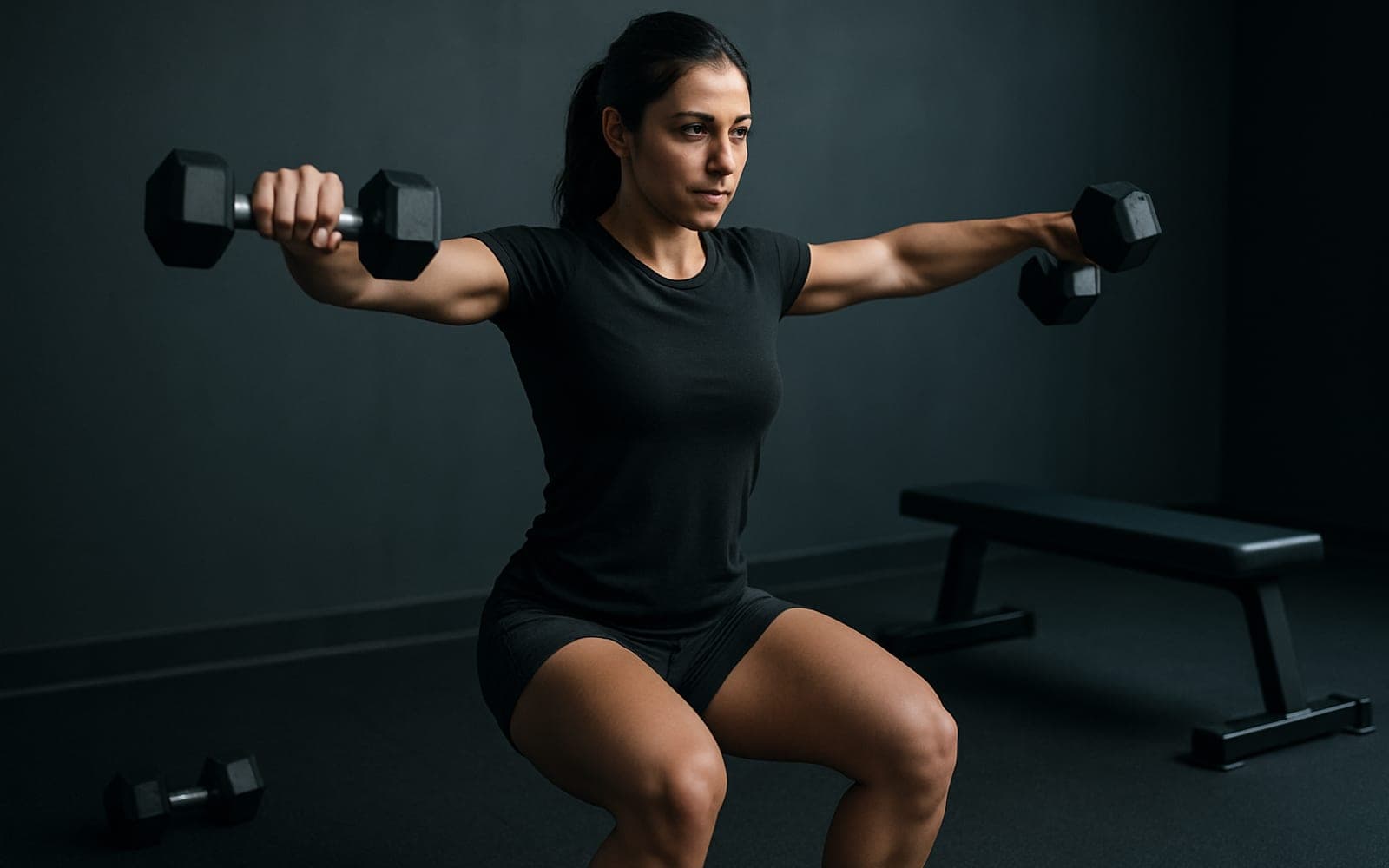
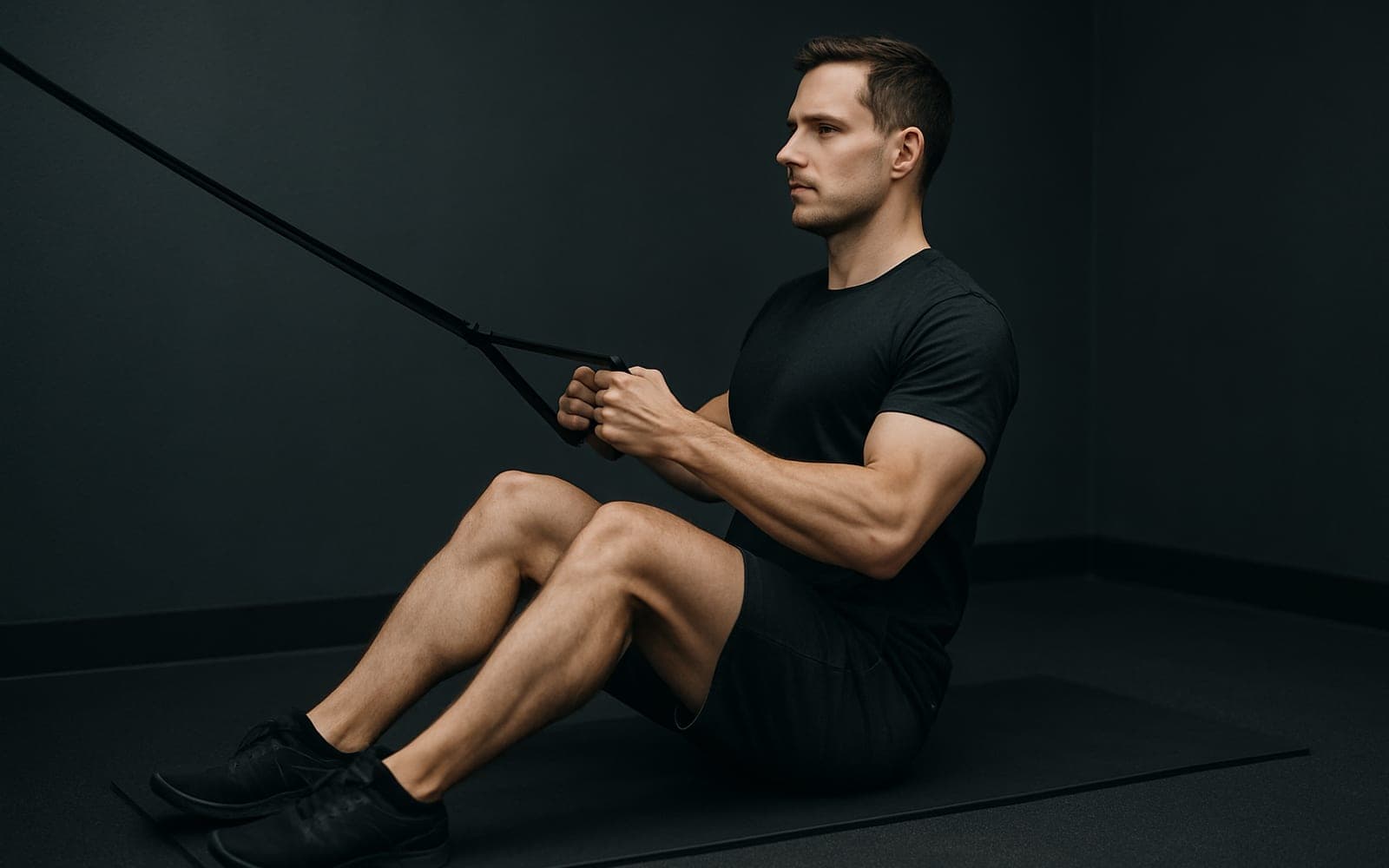
Face Pull, Lateral Raise, Band Row all train the same vertical pull pattern with different equipment, so any of them works when the machine is busy or your gym does not have it.
What are the most common upright row mistakes?
Grip too narrow and pulling too high (shoulder impingement risk); Using momentum. Lead with the elbows to pull the weight up toward the collarbone; keep it close to the body, then lower under control.
Can I do the upright row at home?
The upright row needs free weights equipment, which most home gyms do not have. The band row trains the same pattern with nothing more than your bodyweight or a band.