Sissy Squat
Activation
Muscles worked
Movement
Squat
Advanced · Bodyweight
Primary muscles
Secondary muscles
Movement pattern
Equipment category
How to perform
- 1
Set up
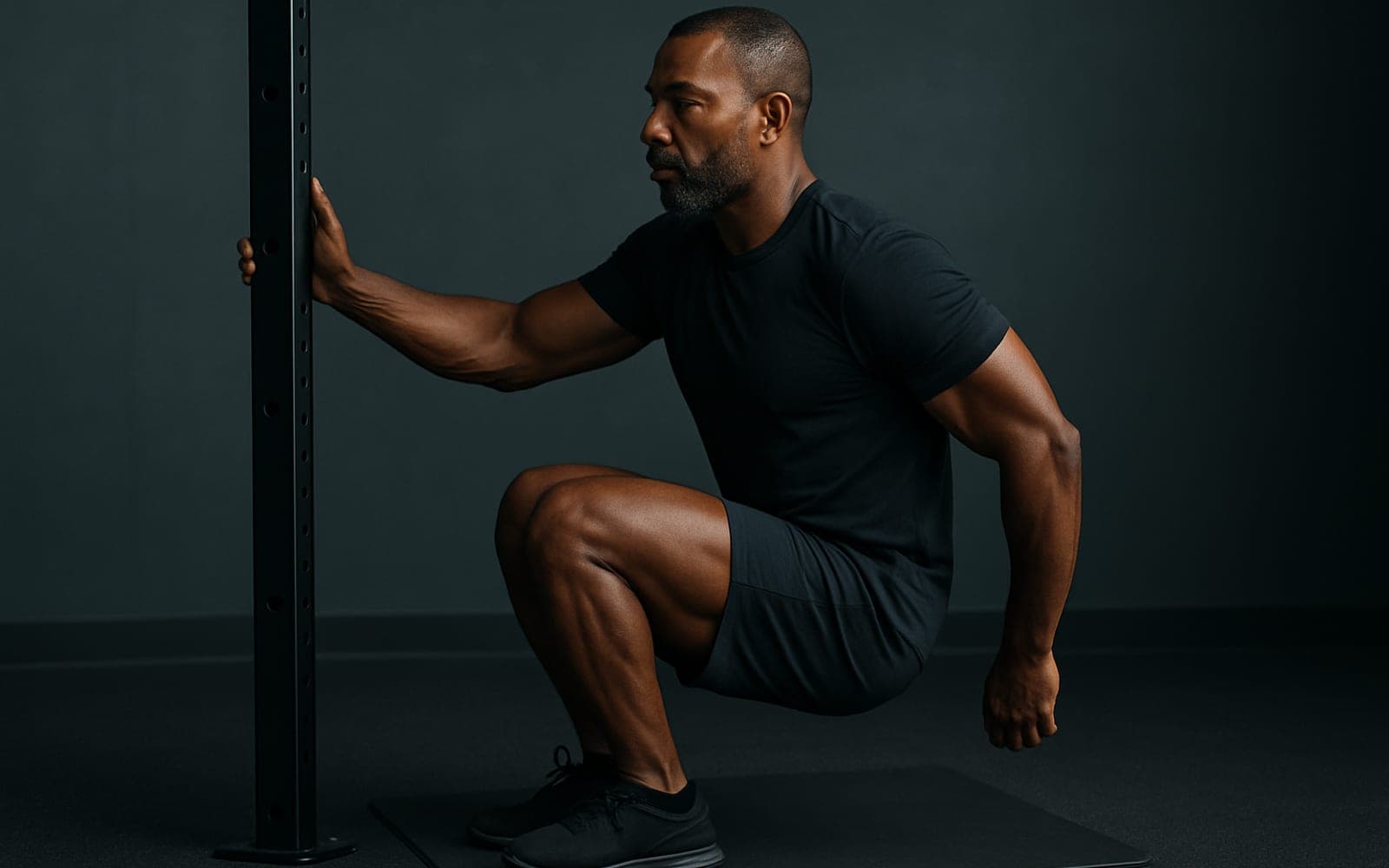
Stand tall holding a support for balance, heels raised or on a small plate.
- 2
Execute the movement
Keeping the hips extended, bend the knees to lean the torso and knees forward as one line, lowering until you feel a deep quad stretch, then return. Isolates the quads through knee flexion.
Common mistakes
- Bending at the hips (turns it into a squat)
- Going too deep before the knees are ready
Make it harder
Make it easier
Substitutions
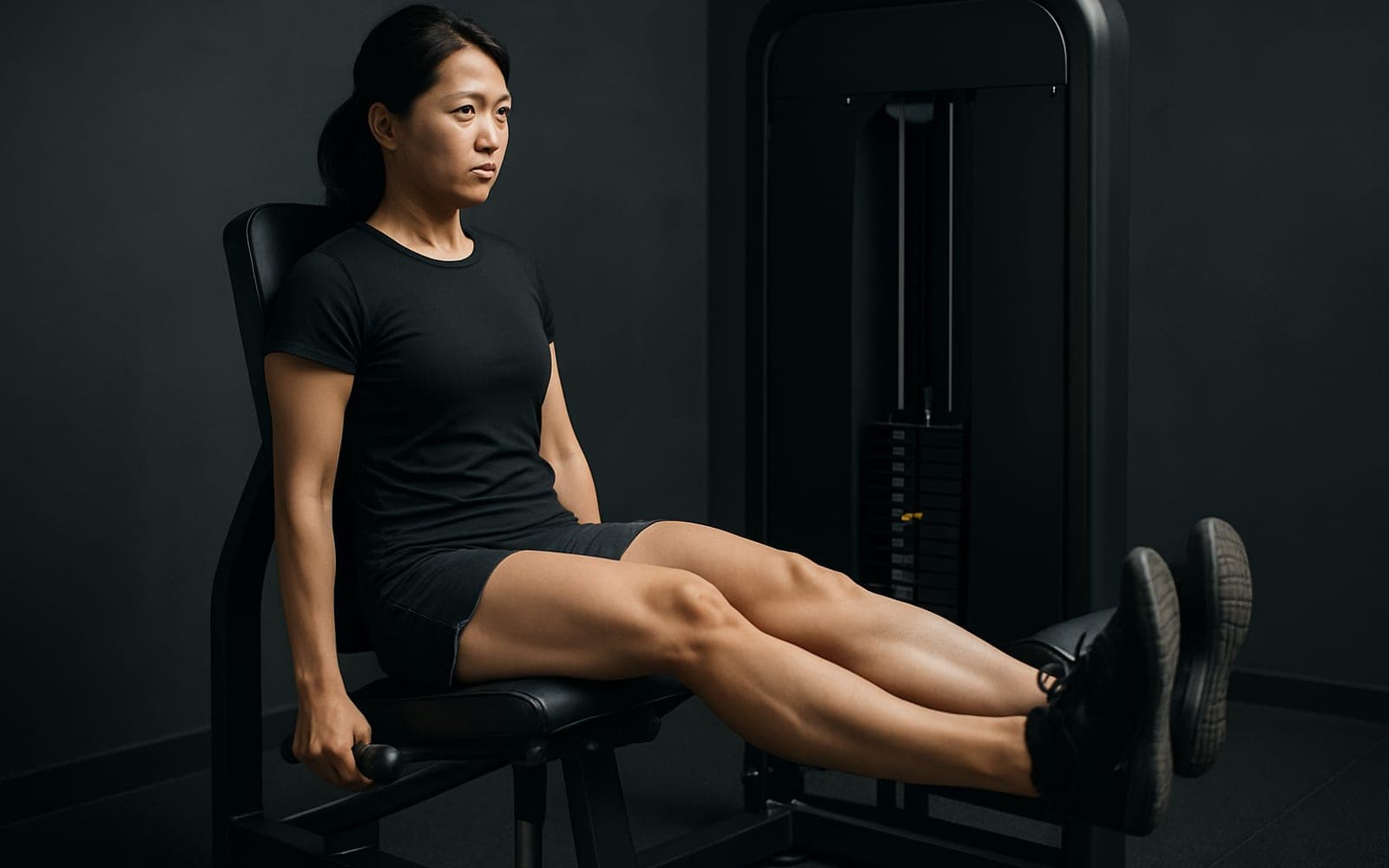
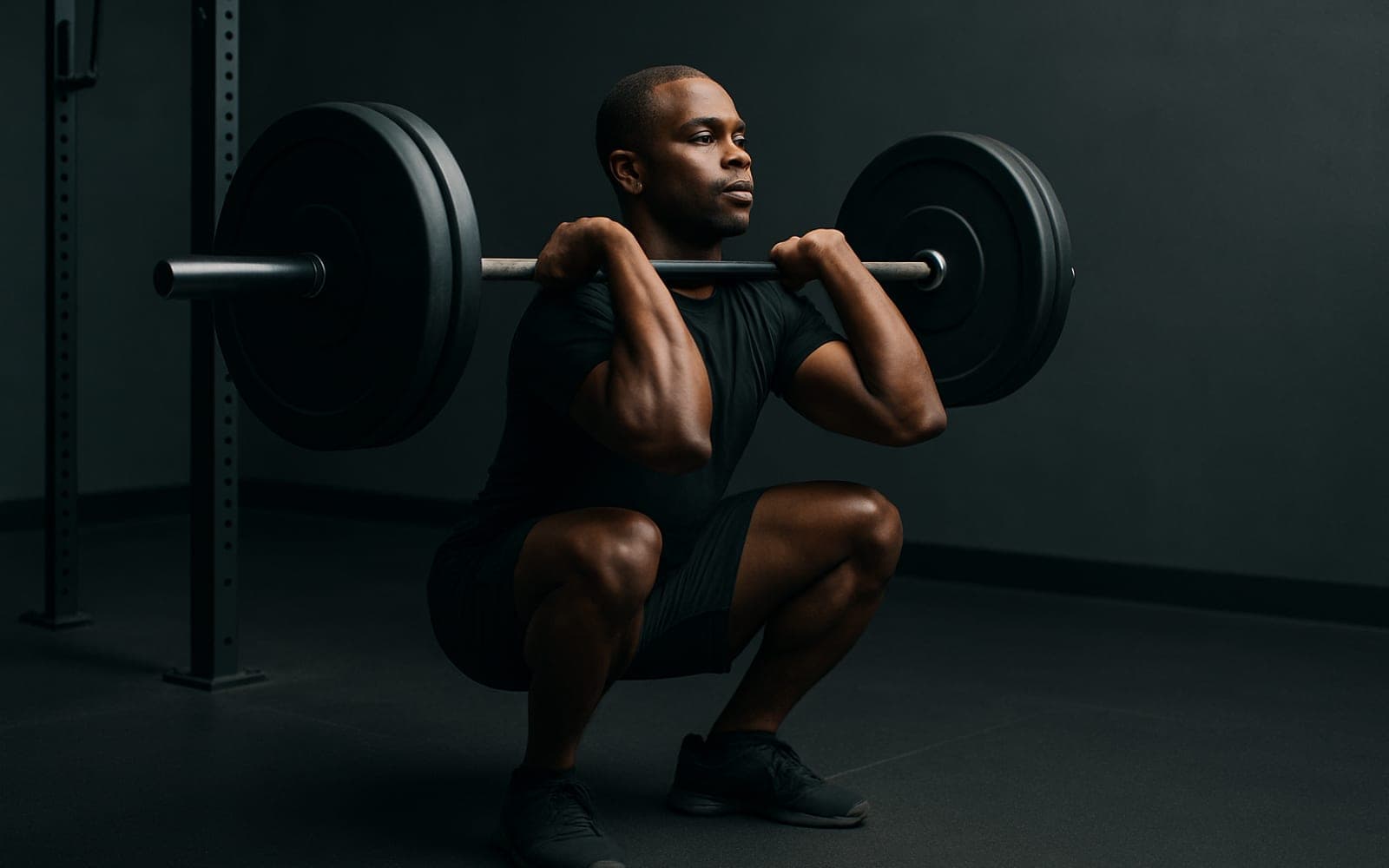
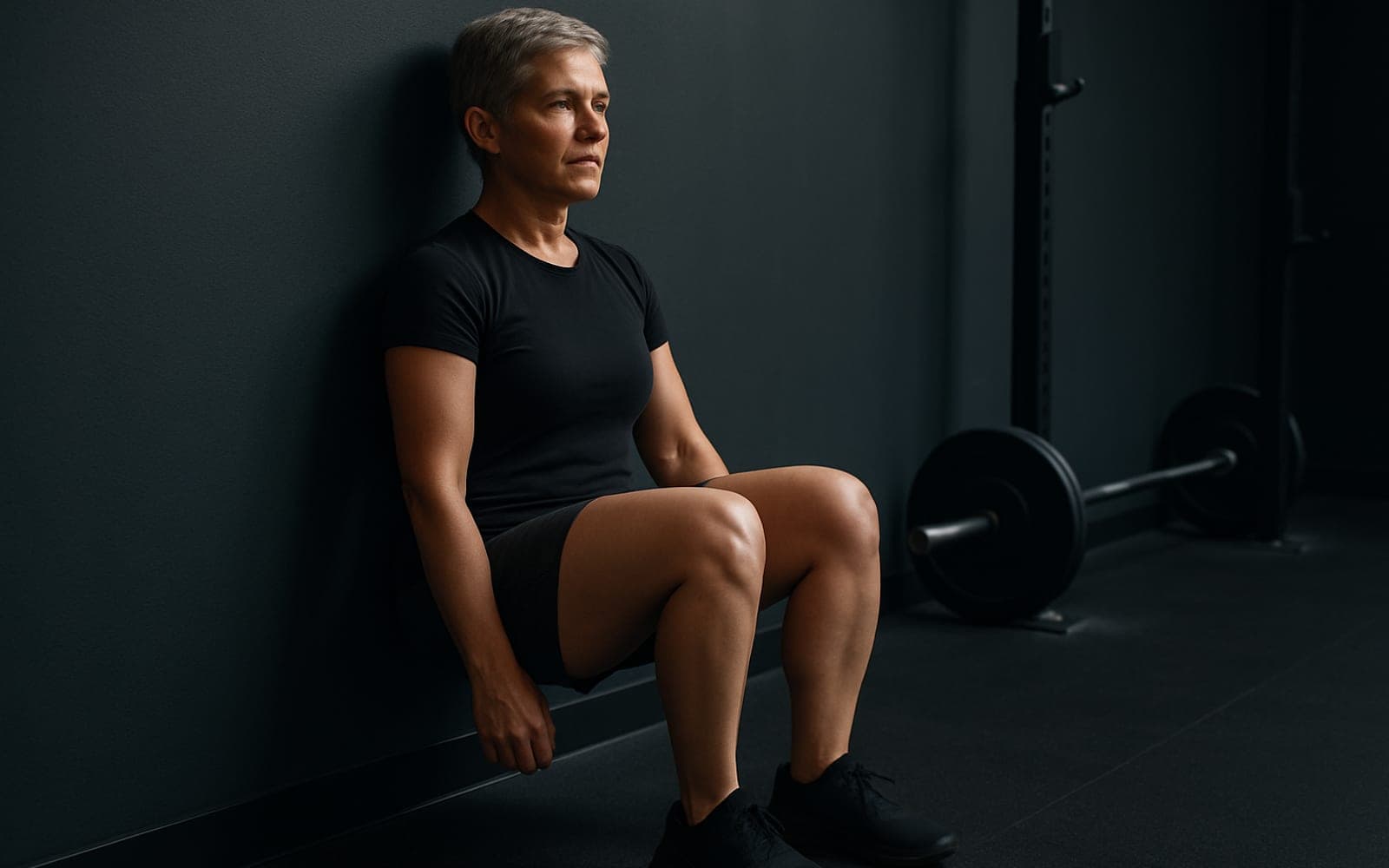
If a machine is busy or unavailable, these train the same pattern a different way.
Your progress over time
What to expect from training this consistently — everyone progresses at their own pace.
- 1
First few sessions
Learned strict body angle and foot placement; will feel intense quad stretch and likely limited depth while you build tolerance and balance — use bodyweight or light assistance.
- 2
Weeks 2–4
Improved range of motion and reduced discomfort; able to perform multiple controlled reps with better torso-hip alignment and begin adding small loads (weighted vest, light plate) for progressive overload.
- 3
Months 2–3
Noticeable hypertrophy and strength increase in the quads with consistent volume; able to handle moderate external load while maintaining form and recover between sessions more quickly.
- 4
3–6 months
Greater quad isolation and muscular endurance, capacity for heavier loading or higher-rep sets, and improved knee control under load — can include advanced variations (slow eccentrics, paused reps).
- 5
6+ months
Significant quad development and specific strength transfer to knee-dominant actions; able to safely implement heavy loaded variations, single-leg progressions, or use sissy squats as an advanced finisher in programming.
Benefits of the sissy squat
Highly isolates the quadriceps by minimizing hip contribution, making it effective for targeted quad hypertrophy.
Builds eccentric and concentric control of the knee extensors, improving strength through a deep range of motion.
Strengthens the core and hip flexor isometrically to maintain the extended-hip, forward-lean position throughout the movement.
Improves knee tracking and neuromuscular coordination for knee-dominant activities when performed with good technique.
Can be implemented as a low-space, equipment-minimal exercise (bodyweight to weighted vest) for progressive muscle-loading.
Serves as a valuable accessory for athletes or lifters seeking to emphasize quad size and finishers to induce local metabolic stress.
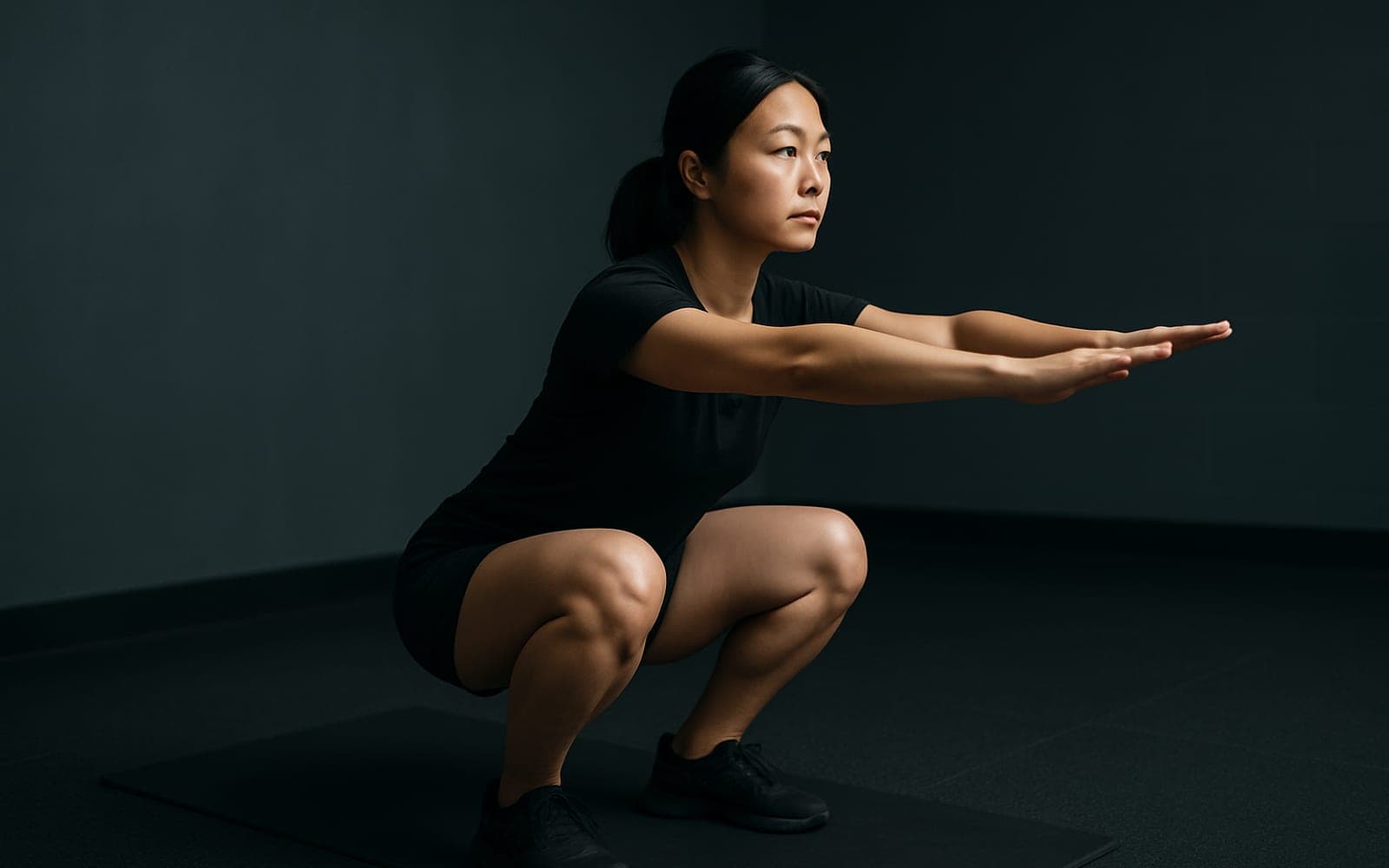
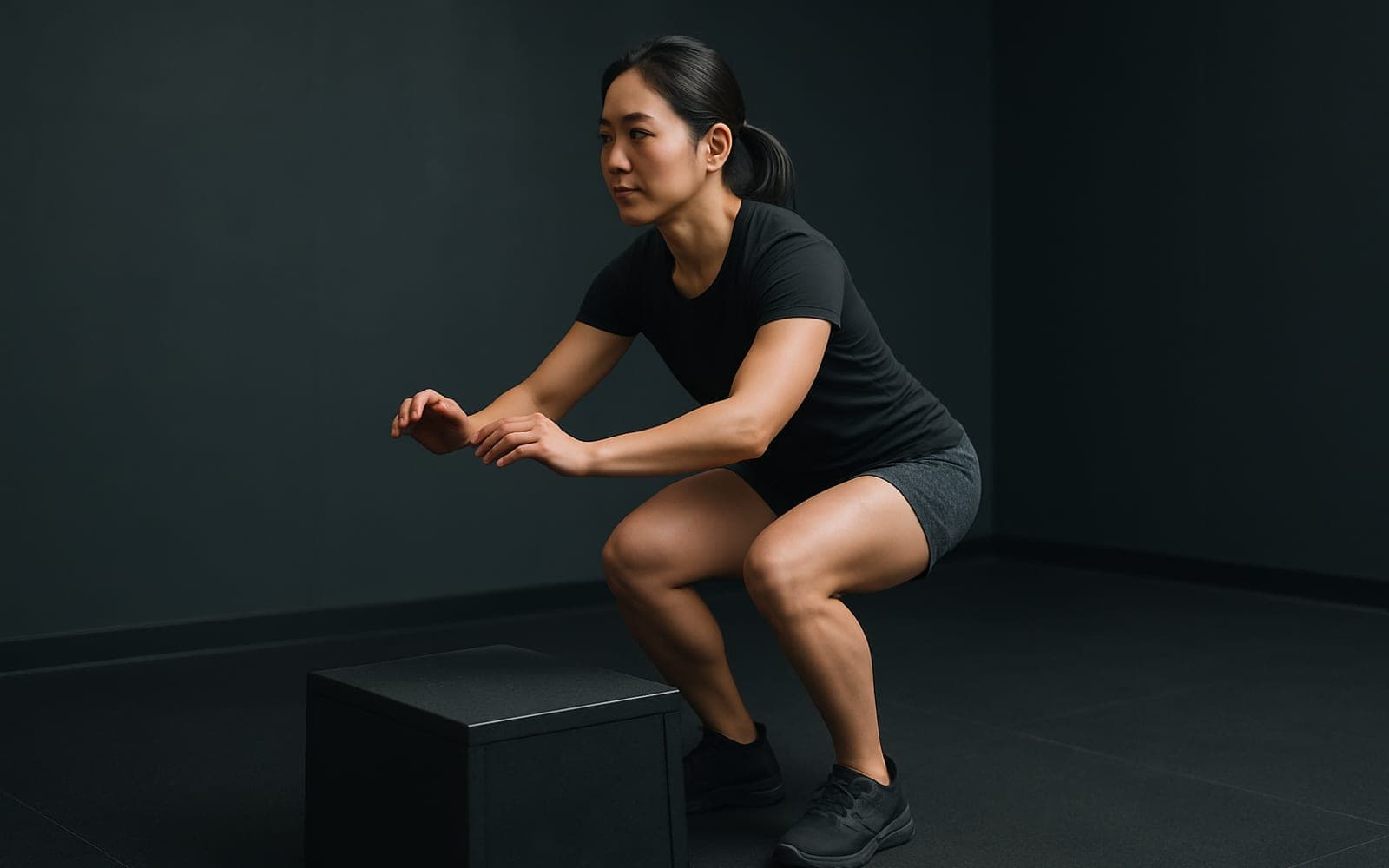
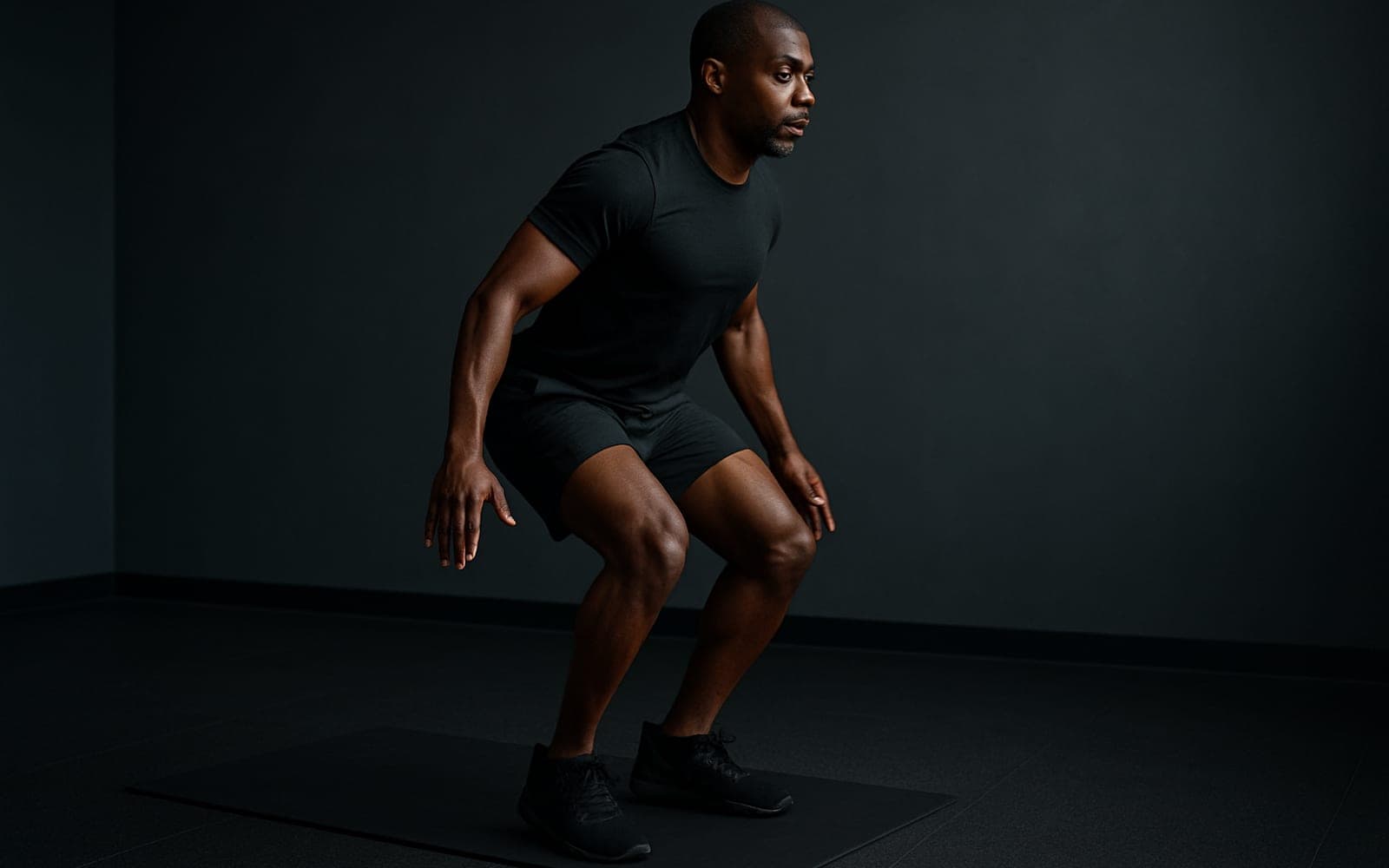
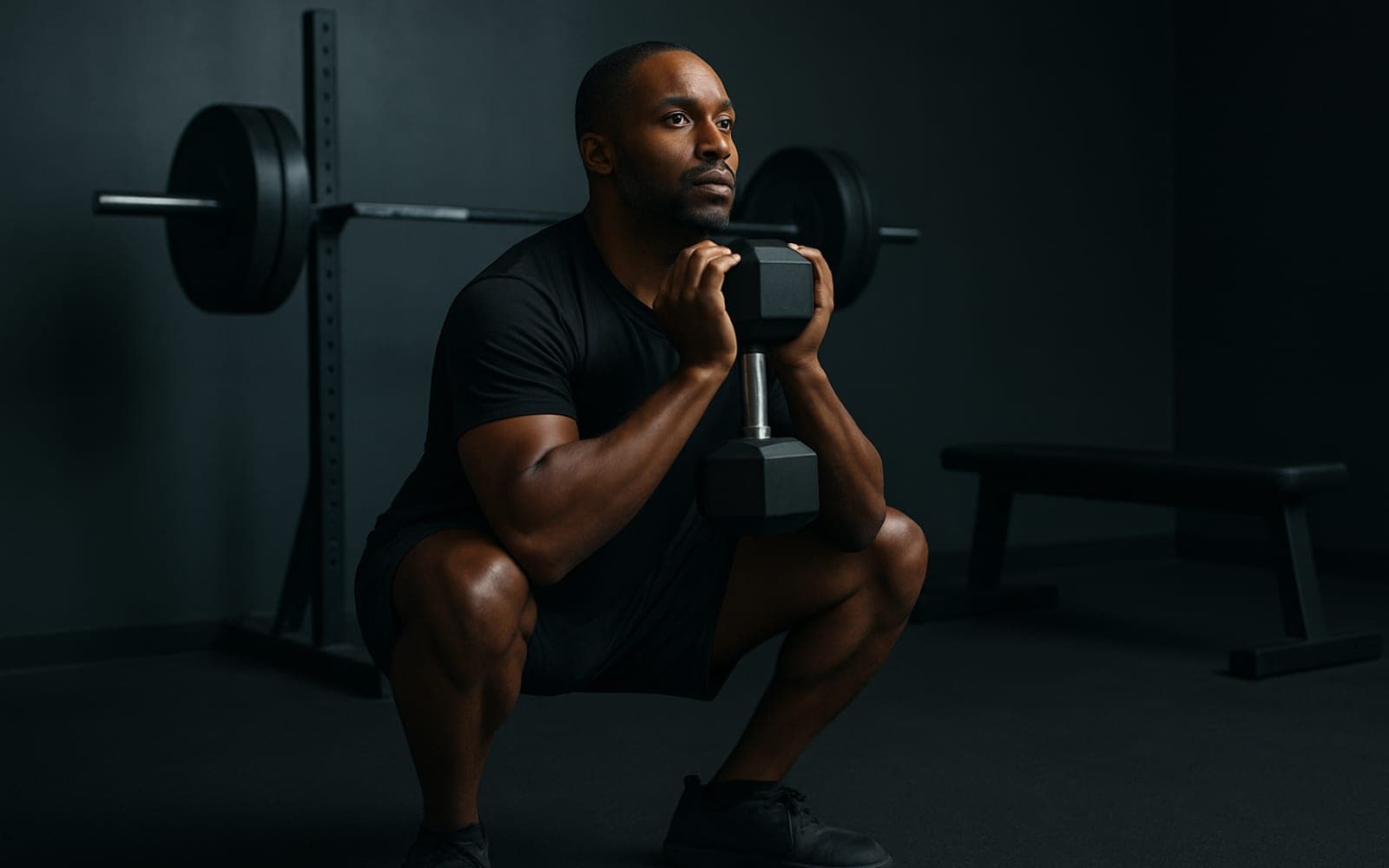
Exercises that pair with this
Same muscles or the same movement pattern — useful for building the rest of the session.

Sissy Squat — questions people ask
What muscles does the sissy squat work?
The sissy squat trains the quads as the primary target, with the hip flexors, core working as support. It is a squat pattern, so it also trains the coordination that pattern needs.
How many sets and reps of the sissy squat should I do?
Three sets of 8–12 reps with about 90 seconds of rest is a reliable default. Increase the weight once the last rep of every set still looks clean.
Is the sissy squat good for beginners?
Not as a first exercise. The sissy squat is an advanced movement. Use more hand support and a smaller range. It is also form-sensitive, so it is worth having a coach or an experienced lifter watch your first few sessions. If it feels like too much, build the pattern on the leg extension first.
What can I do instead of the sissy squat?
Leg Extension, Front Squat, Wall Sit all train the same squat pattern with different equipment, so any of them works when the machine is busy or your gym does not have it.
What are the most common sissy squat mistakes?
Bending at the hips (turns it into a squat); Going too deep before the knees are ready. Keeping the hips extended, bend the knees to lean the torso and knees forward as one line, lowering until you feel a deep quad stretch, then return. Isolates the quads through knee flexion.