Bodyweight Squat
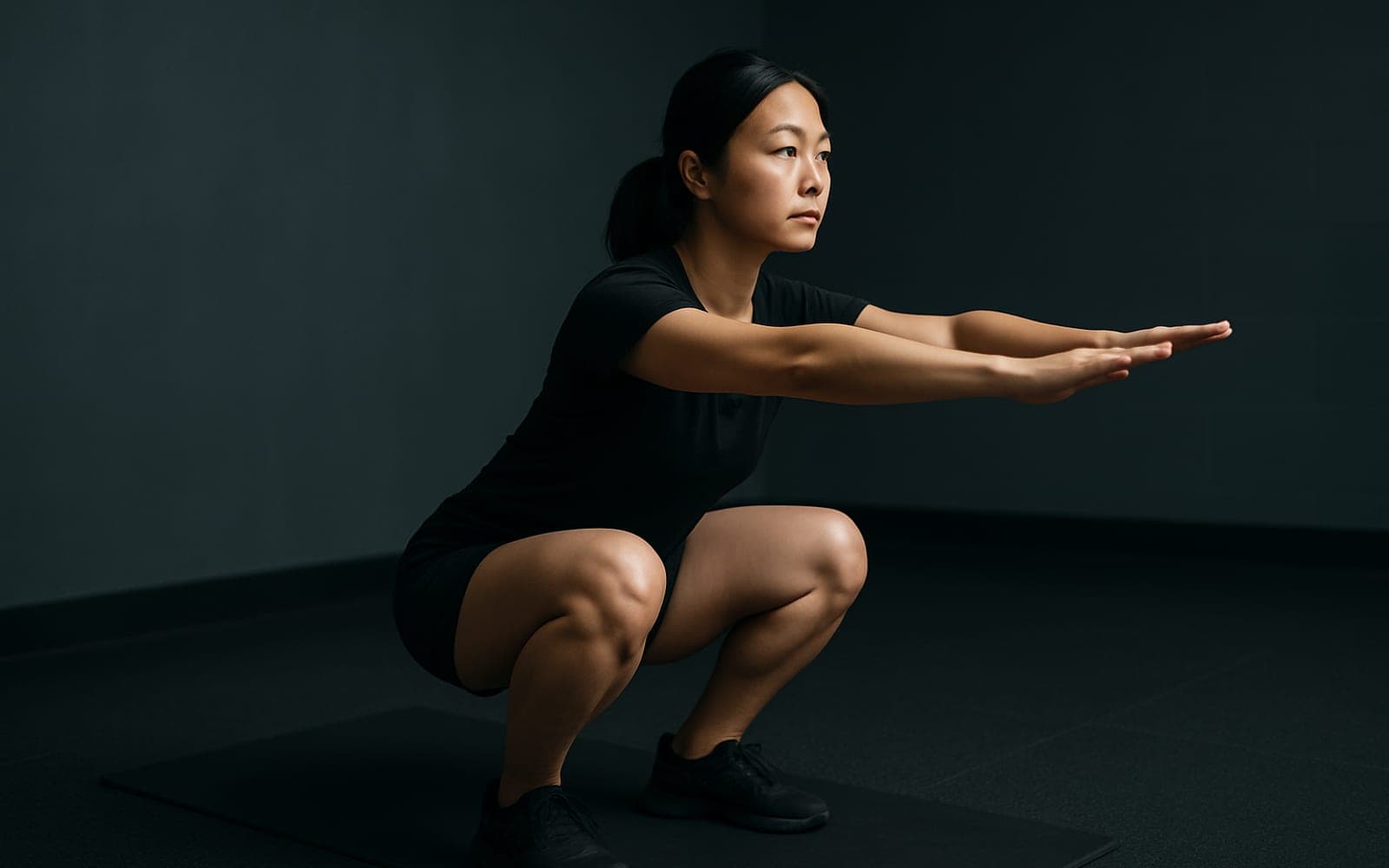
Activation
Muscles worked
Movement
Squat
Beginner · Bodyweight
Secondary muscles
Movement pattern
Equipment category
How to perform
- 1
Set up
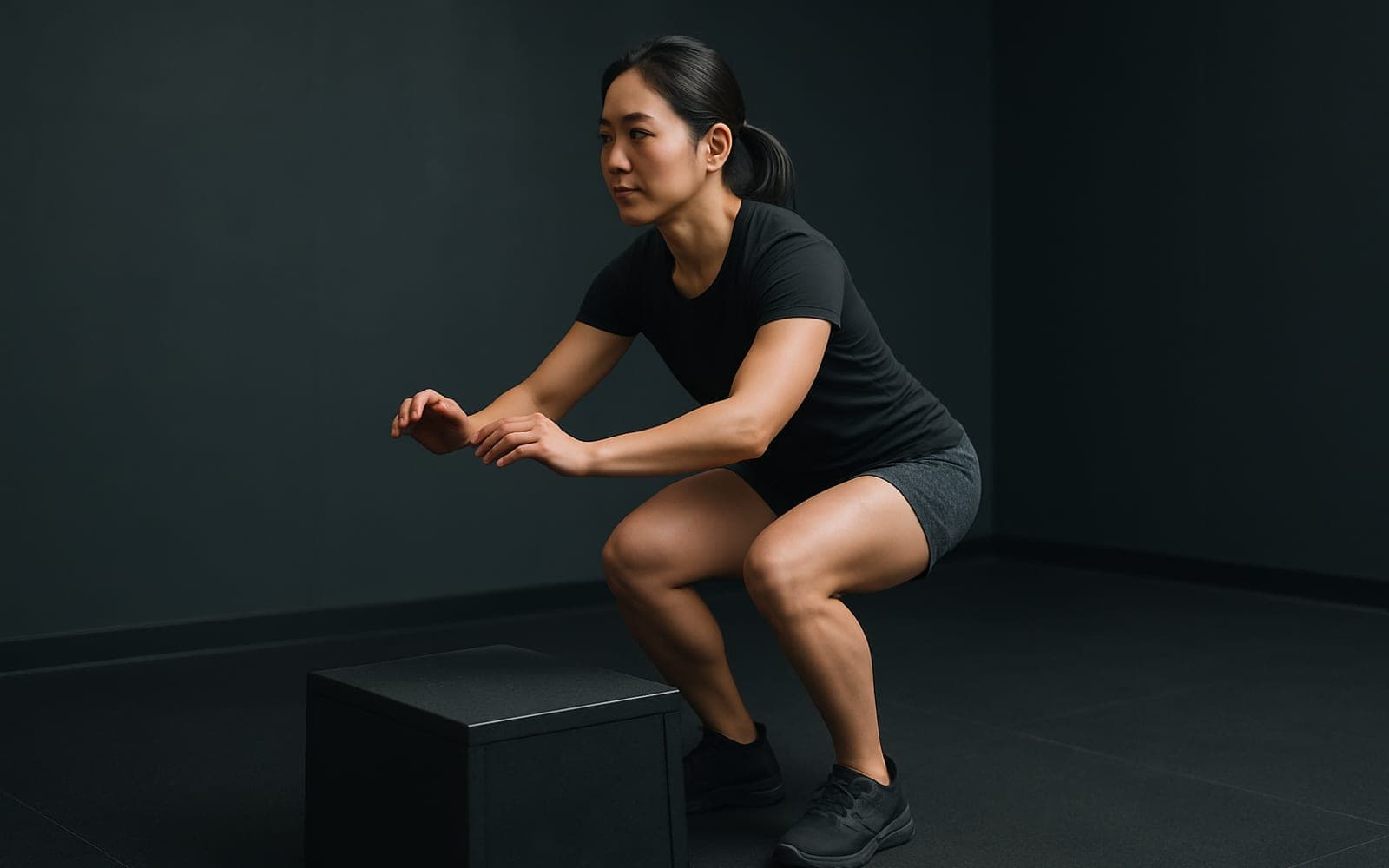
Feet shoulder-width, arms forward for balance.
- 2
Execute the movement
Sit back to a comfortable depth, stand tall.
Common mistakes
- Knees caving
Make it harder
Make it easier
Accessibility
Substitutions
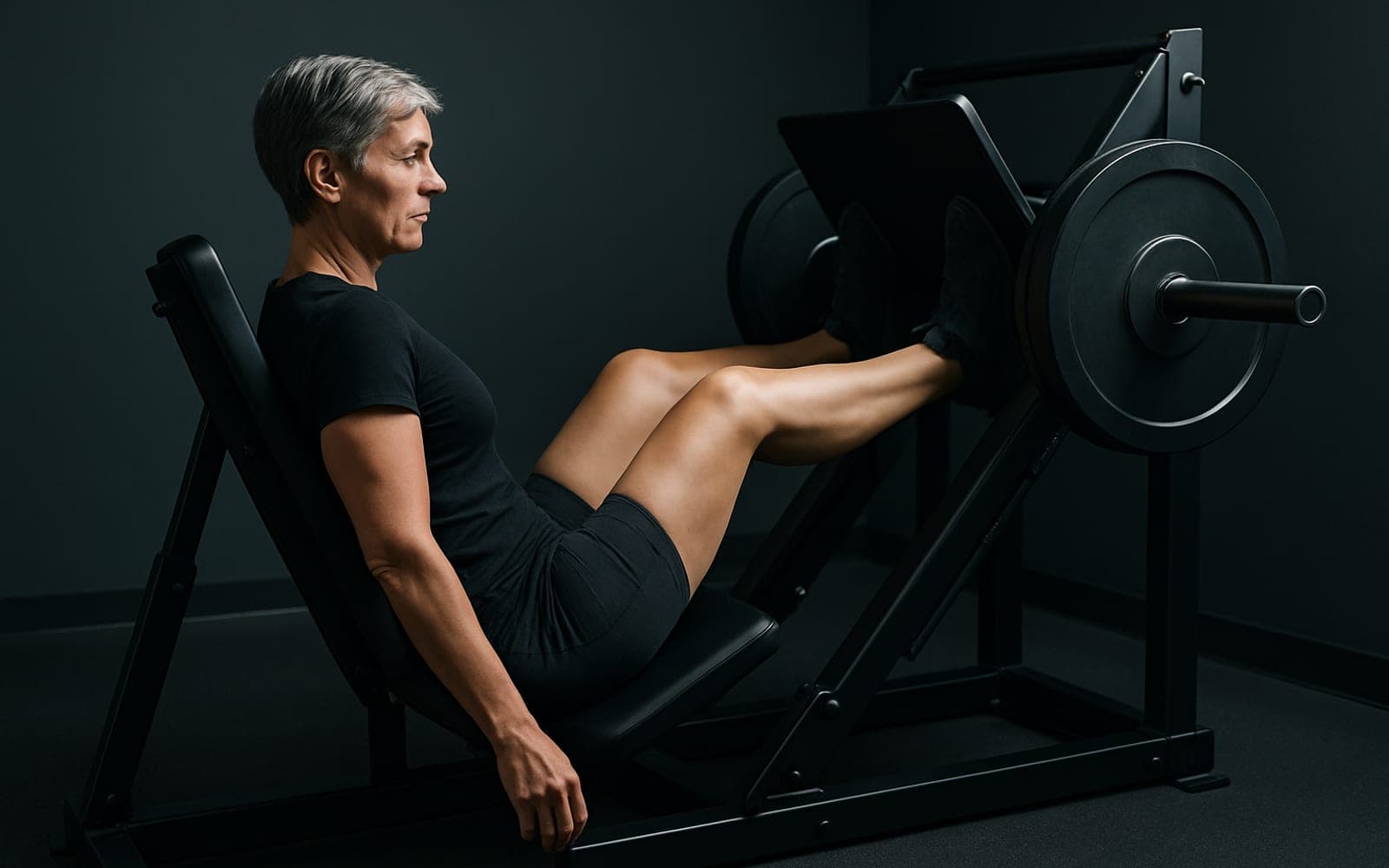
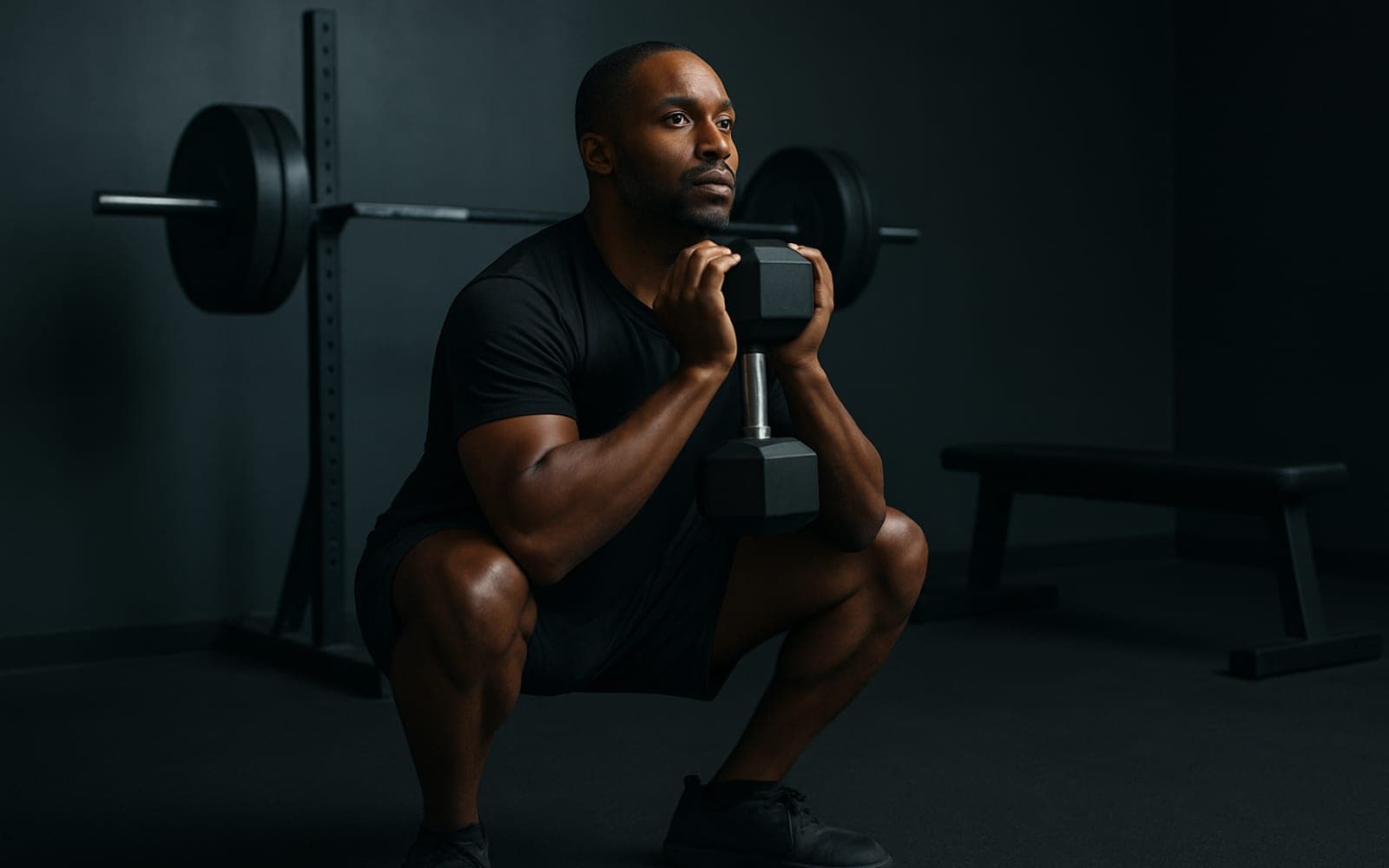
If a machine is busy or unavailable, these train the same pattern a different way.
Your progress over time
What to expect from training this consistently — everyone progresses at their own pace.
- 1
First session(s)
Learn the basic movement pattern: sit-back hip hinge, controlled descent to a comfortable depth, and stand tall; expect to build coordination and correct common faults (knees caving, heels rising) within a few practice sets.
- 2
Weeks 1–4
Notice improved muscular endurance in quads and glutes and be able to perform more continuous reps or longer sets (e.g., 3–4 sets of 12–20 reps) with cleaner technique and reduced soreness.
- 3
Months 1–3
See measurable improvements in movement quality (deeper, more stable squats), modest increases in lower-body muscle tone, and better carryover to daily tasks like stair climbing and standing from chairs; bodyweight conditioning supports calorie burn for weight-loss goals when paired with nutrition.
- 4
Months 3–6
Achieve higher volume and intensity (longer sets, added tempo work, single-leg progressions) with clear gains in muscular endurance and some increases in lower-body strength and lean mass, aiding overall metabolic rate.
- 5
6+ months
Maintain a robust, efficient squat pattern that supports functional fitness and can be progressed to loaded or more advanced variations; sustained practice contributes to long-term movement resilience, improved balance, and ongoing support for weight-management efforts.
Benefits of the bodyweight squat
Develops the primary lower-body muscles — quadriceps and glutes — improving ability to extend the hips and knees for daily activities like rising from a chair or climbing stairs.
Builds core stability and control because maintaining an upright torso throughout the squat engages the abdominals and lower back.
Improves joint mobility and squat depth over time, particularly at the hips and ankles, which enhances overall movement quality.
Increases muscular endurance of the lower body, which supports prolonged physical activity and can help raise daily calorie expenditure when performed in higher volumes.
Enhances balance and movement coordination by training the brain–muscle connection for a multi-joint, functional pattern.
Provides an accessible, low-equipment exercise that can be used for scalable progressions to support general fitness and weight-loss goals when combined with appropriate nutrition.
Exercises that pair with this
Same muscles or the same movement pattern — useful for building the rest of the session.

Bodyweight Squat — questions people ask
What muscles does the bodyweight squat work?
The bodyweight squat trains the quads and glutes as the primary target, with the core working as support. It is a squat pattern, so it also trains the coordination that pattern needs.
How many sets and reps of the bodyweight squat should I do?
Three sets of 8–12 reps with about 90 seconds of rest is a reliable default. Increase the weight once the last rep of every set still looks clean.
Is the bodyweight squat good for beginners?
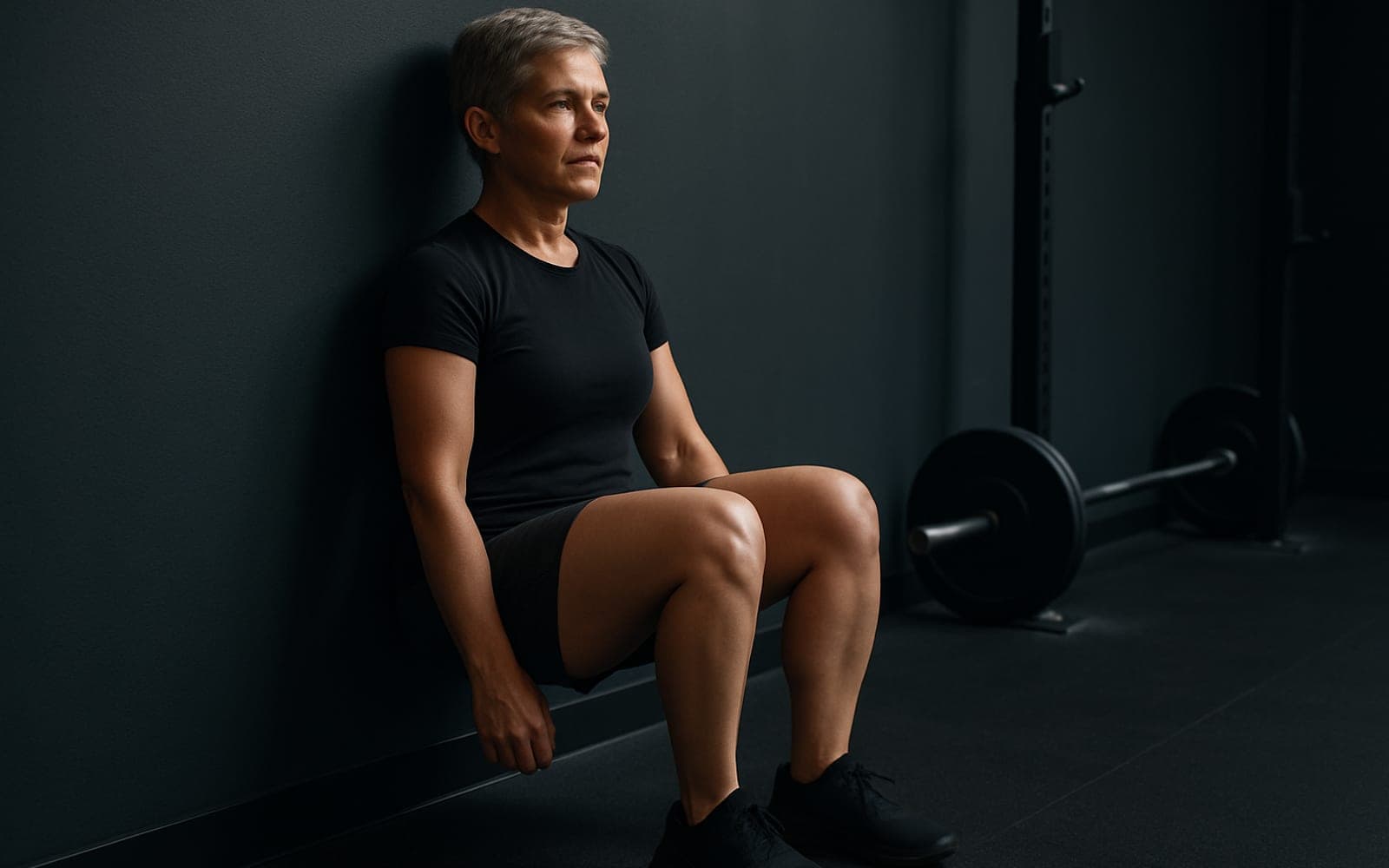
Yes. The bodyweight squat is a beginner-friendly movement. Squat to a chair. If it feels like too much, build the pattern on the leg press first.
What can I do instead of the bodyweight squat?
Leg Press, Goblet Squat all train the same squat pattern with different equipment, so any of them works when the machine is busy or your gym does not have it.
What are the most common bodyweight squat mistakes?
Knees caving. Sit back to a comfortable depth, stand tall.