Box Jump
Activation
Muscles worked
Movement
Squat
Intermediate · Bodyweight
Movement pattern
Equipment category
How to perform
- 1
Set up
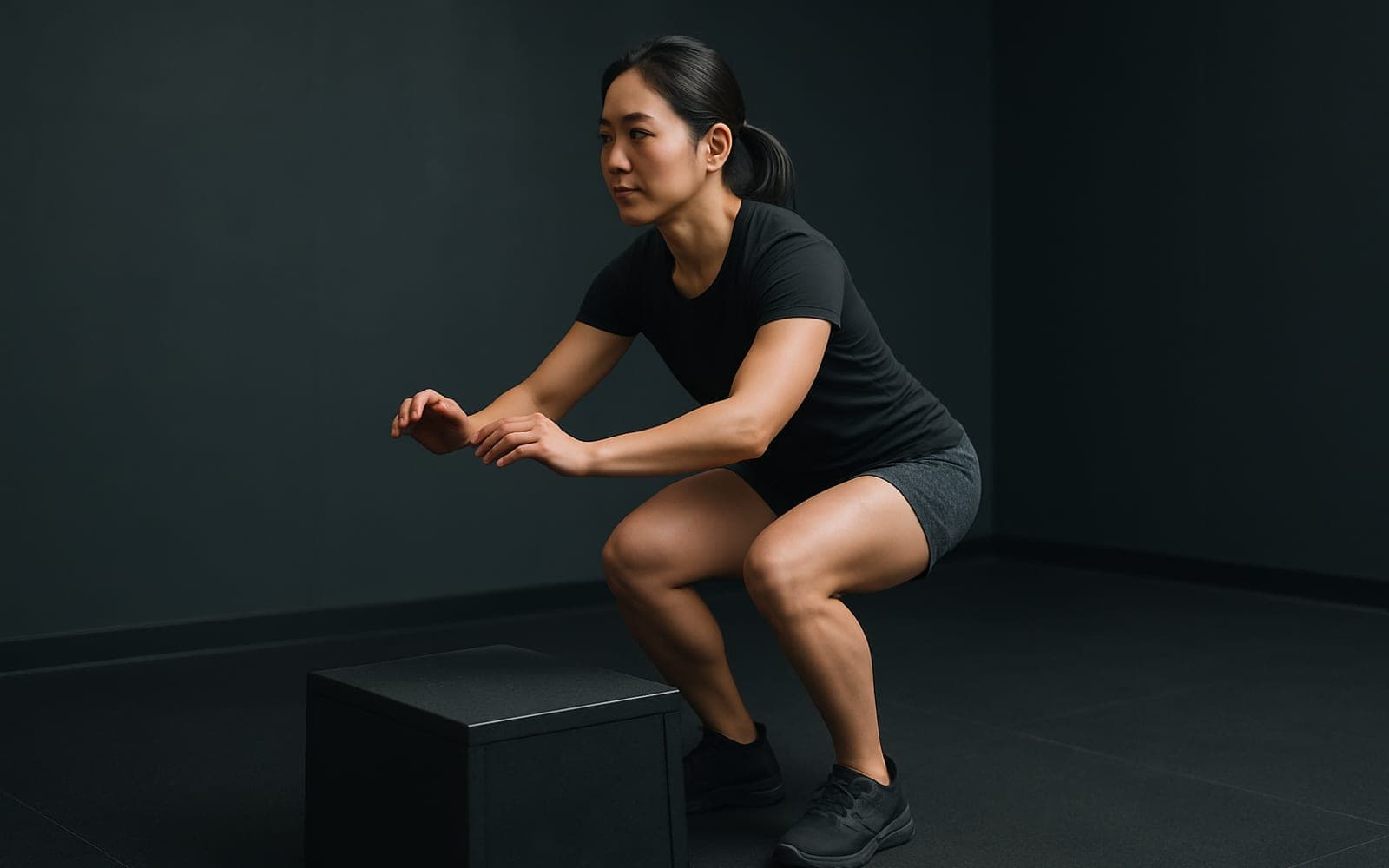
Stand a comfortable distance from a stable box at a height you can clear safely.
- 2
Execute the movement
Dip and swing the arms, jump up and land softly with both feet fully on the box and knees bent; stand tall, then step down (don't jump down).
Common mistakes
- Choosing too high a box
- Jumping down and stressing the knees
- Landing on the edge
Make it harder
Make it easier
Substitutions
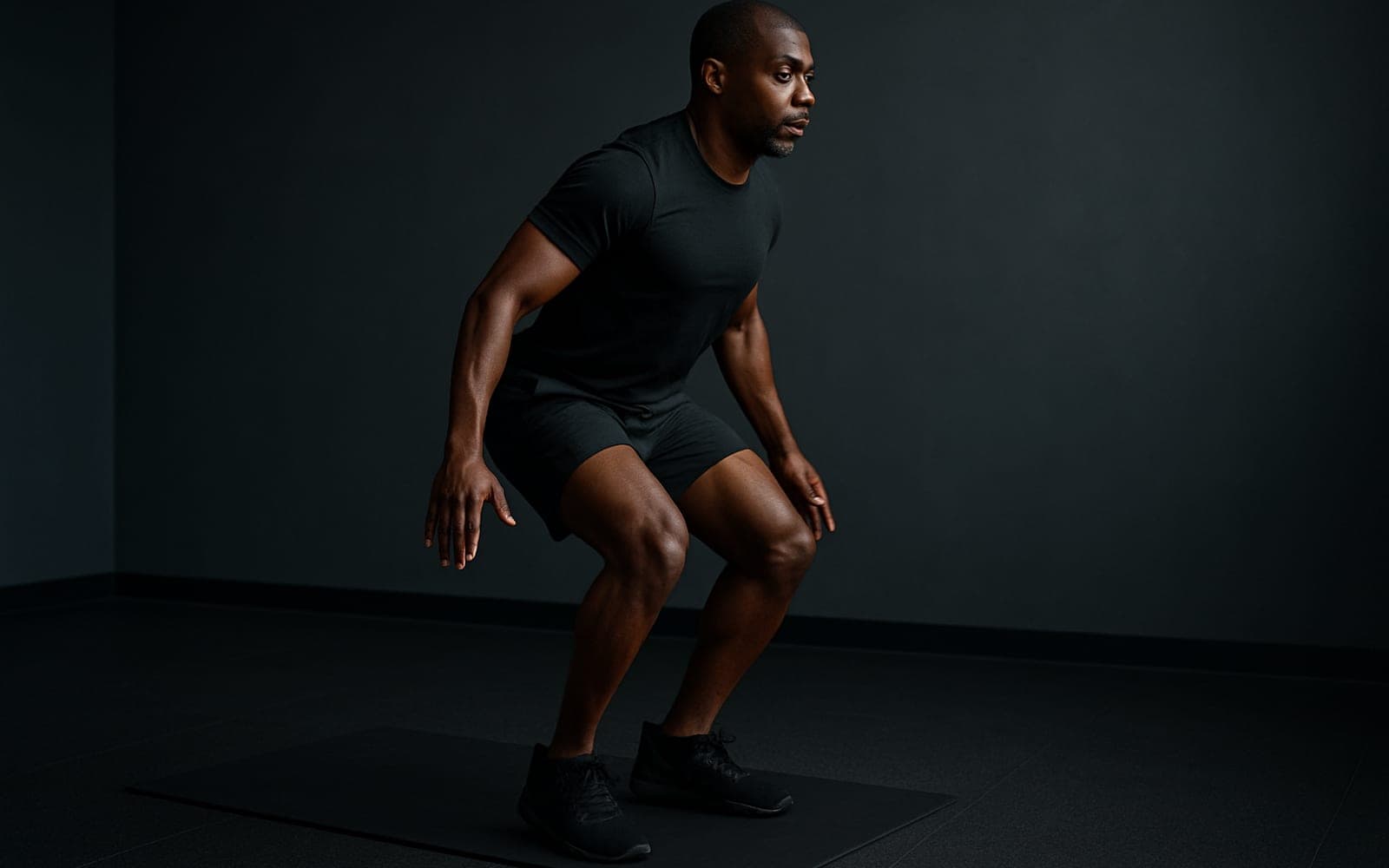
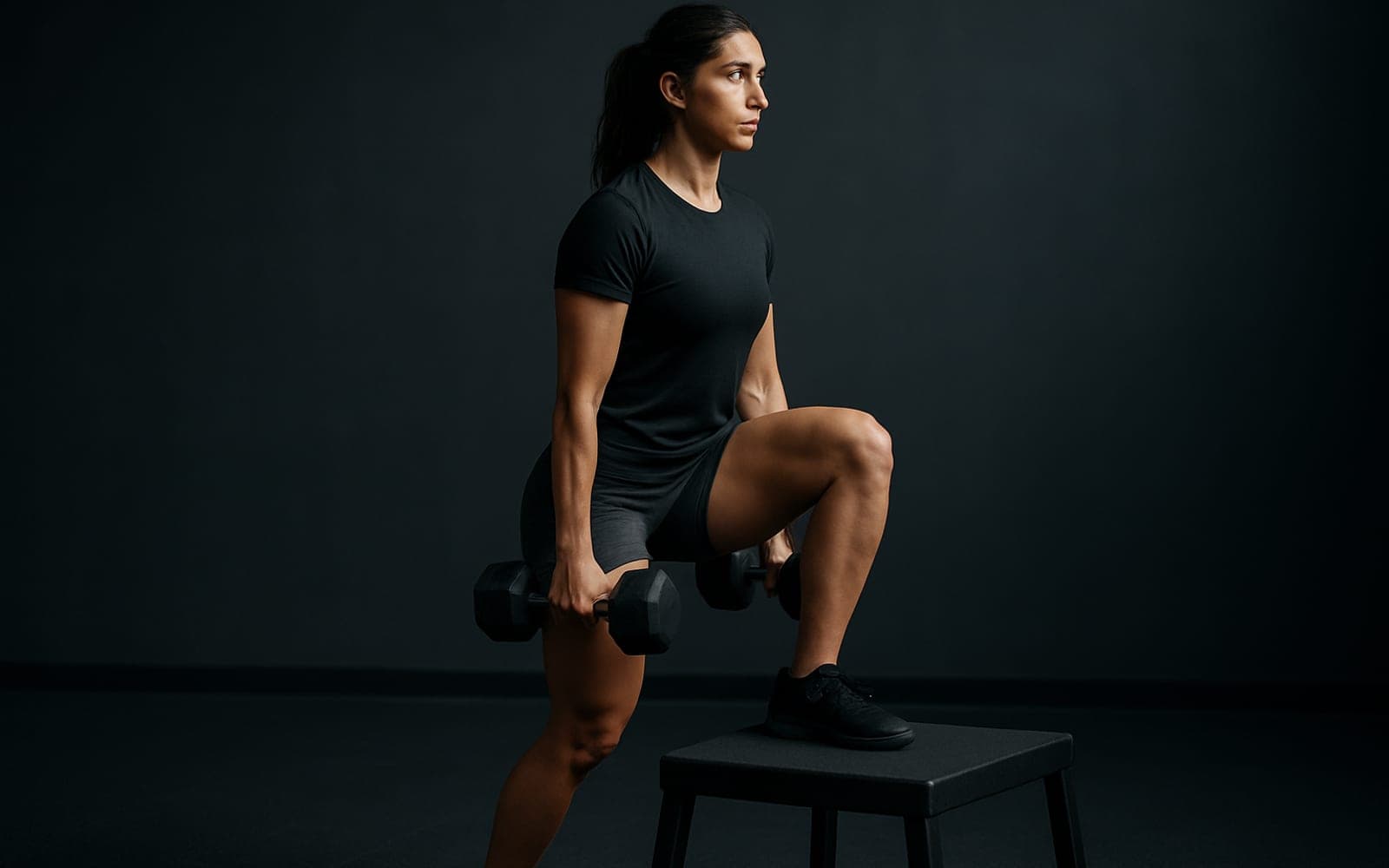
If a machine is busy or unavailable, these train the same pattern a different way.
Your progress over time
What to expect from training this consistently — everyone progresses at their own pace.
- 1
First few sessions
Learn safe setup and landing mechanics, practice dip-and-arm-swing timing onto a low box, and build confidence in stepping down rather than jumping off.
- 2
Weeks 2–4
Consistent practice increases coordination and reactive timing, allowing gradual increases in box height and more powerful, controlled takes-off and landings.
- 3
Months 2–3
Noticeable improvements in jump height and rate of force development, with better single-effort power and quicker ground contact times during repeated reps.
- 4
Months 4–6
Marked increase in lower-body explosive strength and plyometric tolerance, with clear carryover to sprint starts, acceleration, and change-of-direction performance.
- 5
6+ months
Able to perform higher and more complex plyometric variations (weighted jumps, depth-to-box progressions) with reliable technique and reduced fatigue-related form breakdown.
Benefits of the box jump
Develops explosive lower-body power primarily in the quads and glutes, improving vertical jump ability.
Enhances reactive strength and rate of force development for faster, more powerful athletic movements.
Improves coordination, timing, and whole-body sequencing through the dip, arm swing and explosive extension pattern.
Trains deceleration and soft-landing mechanics, promoting better eccentric control of the knees and hips during athletic tasks.
Transfers to real-world athletic skills such as sprint starts, bounding, and change-of-direction performance.
Challenges core stability and balance through single-impact landings, contributing to overall athletic robustness.
Exercises that pair with this
Same muscles or the same movement pattern — useful for building the rest of the session.



Box Jump — questions people ask
What muscles does the box jump work?
The box jump trains the quads and glutes as the primary target, with the calves, core working as support. It is a squat pattern, so it also trains the coordination that pattern needs.
How many sets and reps of the box jump should I do?
Three to five sets of 2–5 reps, fully rested between sets. Power work is about speed, so end the set the moment the bar slows down.
Is the box jump good for beginners?
It is a reasonable second step. The box jump asks for some control and body awareness. Use a low box or do step-ups. It is also form-sensitive, so it is worth having a coach or an experienced lifter watch your first few sessions. If it feels like too much, build the pattern on the jump squat first.
What can I do instead of the box jump?
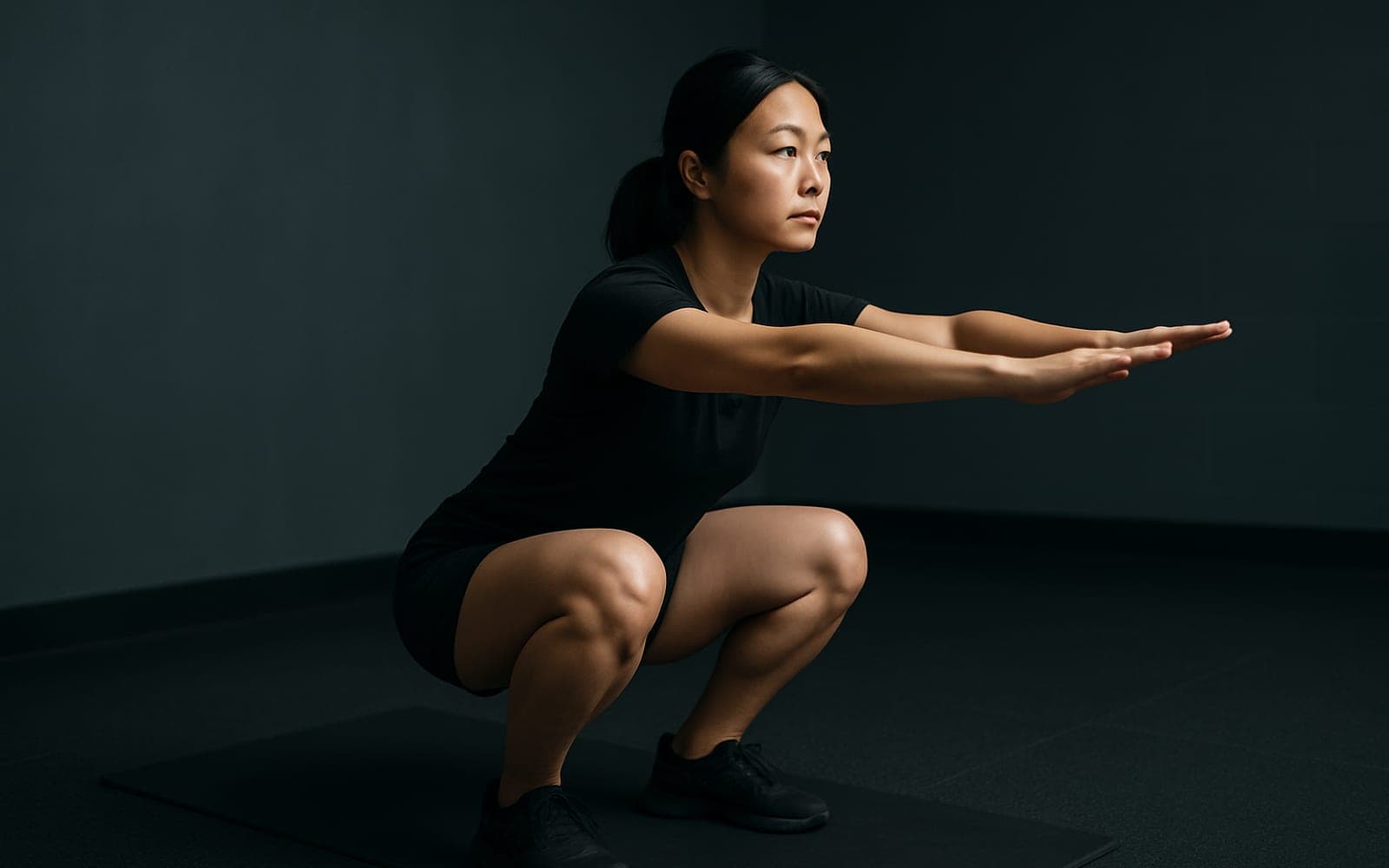
Jump Squat, Step-Up all train the same squat pattern with different equipment, so any of them works when the machine is busy or your gym does not have it.
What are the most common box jump mistakes?
Choosing too high a box; Jumping down and stressing the knees; Landing on the edge. Dip and swing the arms, jump up and land softly with both feet fully on the box and knees bent; stand tall, then step down (don't jump down).