Hollow Body Hold
Activation
Muscles worked
Movement
Core
Intermediate · Bodyweight
Primary muscles
Secondary muscles
Movement pattern
Equipment category
How to perform
- 1
Set up
Lie on your back, low back pressed flat into the floor.
- 2
Execute the movement
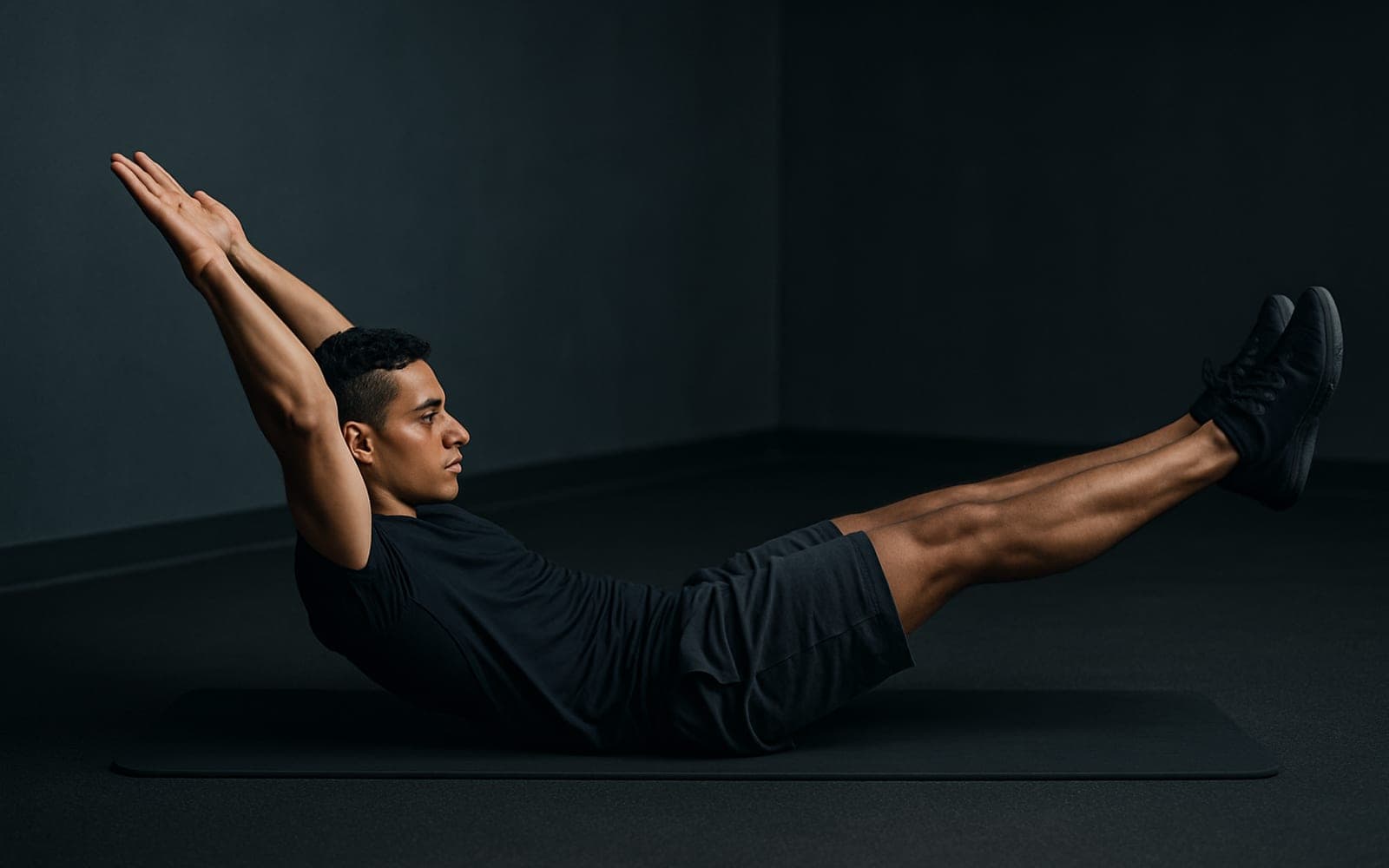
Lift the shoulders and legs off the floor into a shallow banana shape, keeping the lower back glued down; hold and breathe.
Common mistakes
- Lower back arching off the floor
- Holding too high (reduces tension)
Make it harder
Make it easier
Substitutions
If a machine is busy or unavailable, these train the same pattern a different way.

Your progress over time
What to expect from training this consistently — everyone progresses at their own pace.
- 1
First few sessions
Learn bracing and breathing while getting used to the hollow position; typical holds are 10–20 seconds with breaks, and you may feel localized abdominal burn and hip‑flexor tension.
- 2
Weeks 1–2
Build endurance and position awareness: holds lengthen to 20–45 seconds, technique improves (lower back stays glued down more consistently), and you can string multiple reps together with short rests.
- 3
Weeks 3–8
Noticeable increases in core endurance and control — holds of 45–90 seconds become attainable or you can perform harder progressions (one leg extended, toes higher) while maintaining form.
- 4
Months 2–4
Significant improvements in anti‑extension strength and midline stability that transfer to better performance in compound lifts and athletic movements; able to hold strict hollow for 60–120 seconds or perform dynamic variations (hollow rocks, weighted holds).
- 5
6+ months
High-level core control with durable endurance and technical mastery: solid base for advanced gymnastic core skills and improved transfer to sprinting, jumping and loaded lifts; progressions become skill work rather than strength deficits.
Benefits of the hollow body hold
Develops deep abdominals and rectus abdominis endurance, improving anti‑extension (resisting the back arch) capacity of the core.
Strengthens hip flexors and the front chain in a low‑load, high‑control way that supports running and kicking mechanics.
Improves midline stability and control, which transfers to safer, more efficient squats, deadlifts and overhead pressing.
Enhances body awareness and breathing coordination under tension, useful for athletic movements and gymnastic skills.
Builds muscular endurance without heavy loading, making it a low‑impact option for general fitness and conditioning.
Helps promote a more stable posture and better force transfer between upper and lower body during dynamic activities.
Exercises that pair with this
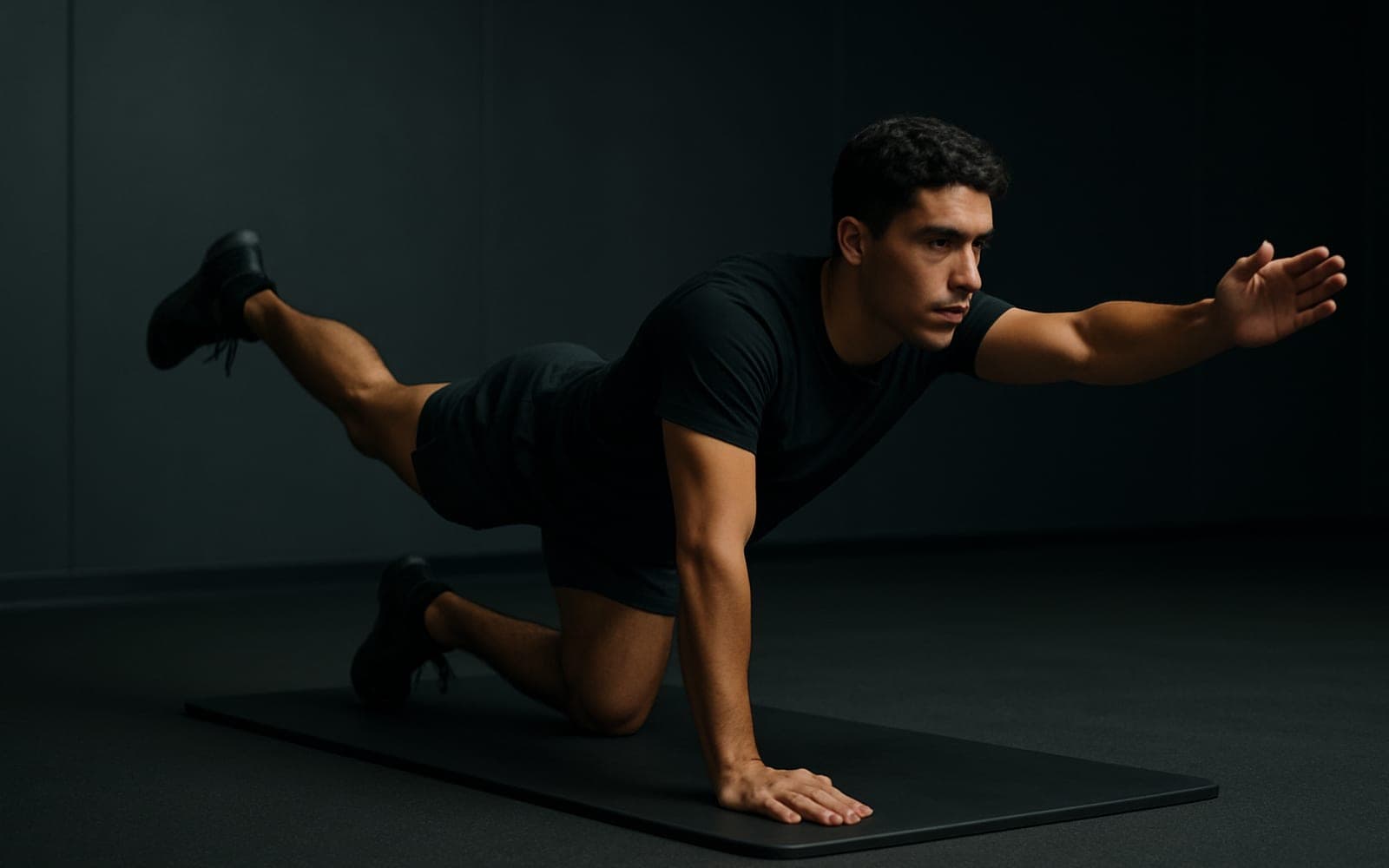
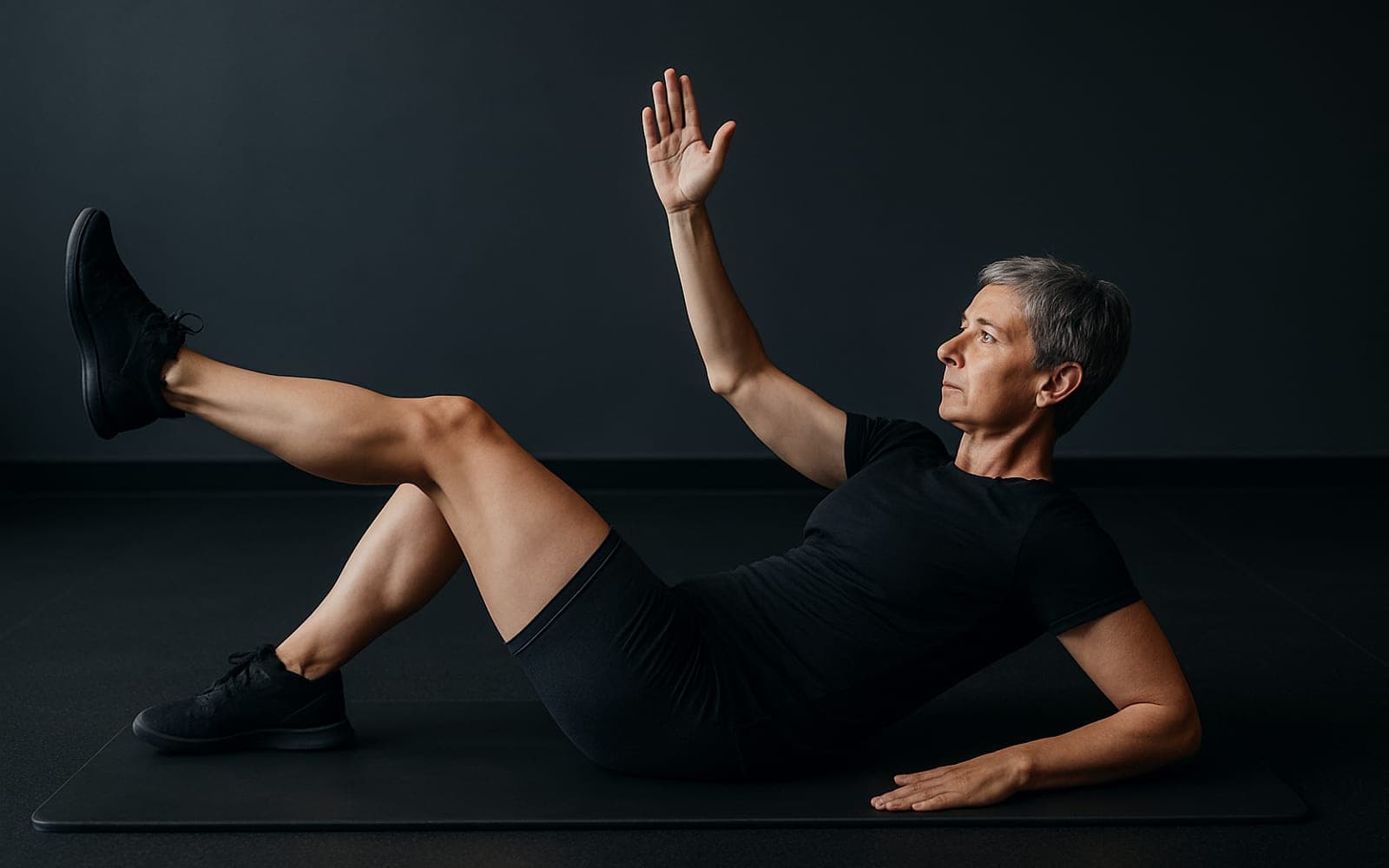
Same muscles or the same movement pattern — useful for building the rest of the session.


Hollow Body Hold — questions people ask
What muscles does the hollow body hold work?
The hollow body hold trains the core as the primary target, with the hip flexors working as support. It is a core pattern, so it also trains the coordination that pattern needs.
How many sets and reps of the hollow body hold should I do?
Two to four sets of 8–15 reps, or 20–45 second holds. Stop the set when your form breaks, not when the count runs out.
Is the hollow body hold good for beginners?
It is a reasonable second step. The hollow body hold asks for some control and body awareness. Tuck the knees or keep the feet higher. If it feels like too much, build the pattern on the plank first.
What can I do instead of the hollow body hold?
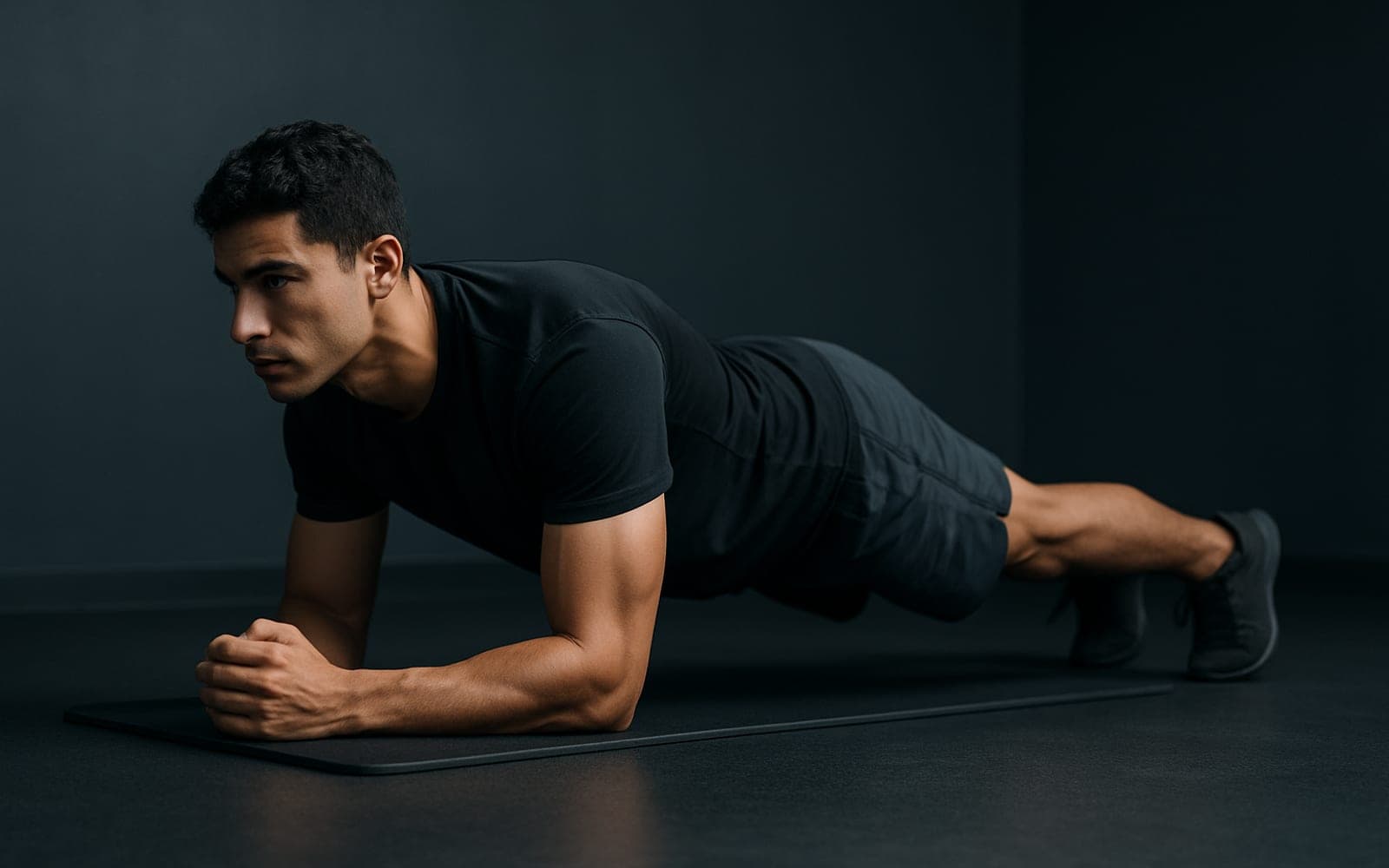
Plank, Core Stability (Machine/Anti-Rotation) all train the same core pattern with different equipment, so any of them works when the machine is busy or your gym does not have it.
What are the most common hollow body hold mistakes?
Lower back arching off the floor; Holding too high (reduces tension). Lift the shoulders and legs off the floor into a shallow banana shape, keeping the lower back glued down; hold and breathe.