Band Pulldown
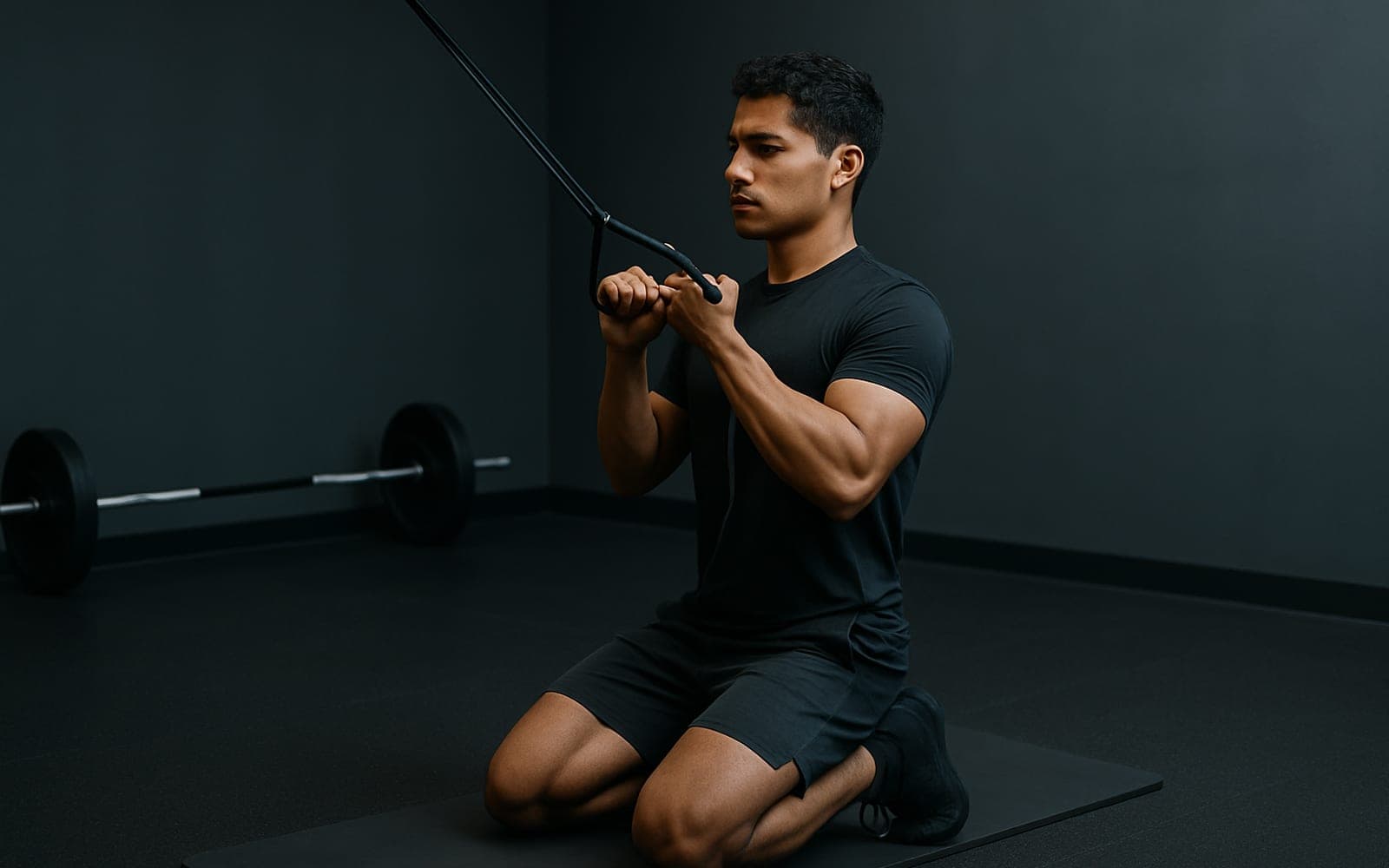
Activation
Muscles worked
Movement
Vertical Pull
Beginner · Bodyweight
Primary muscles
Secondary muscles
Movement pattern
Equipment category
How to perform
- 1
Set up
Anchor a band overhead; kneel below it.
- 2
Execute the movement
Pull the band down to the chest, control up.
Common mistakes
- Anchor too weak
Make it harder
Make it easier
Accessibility
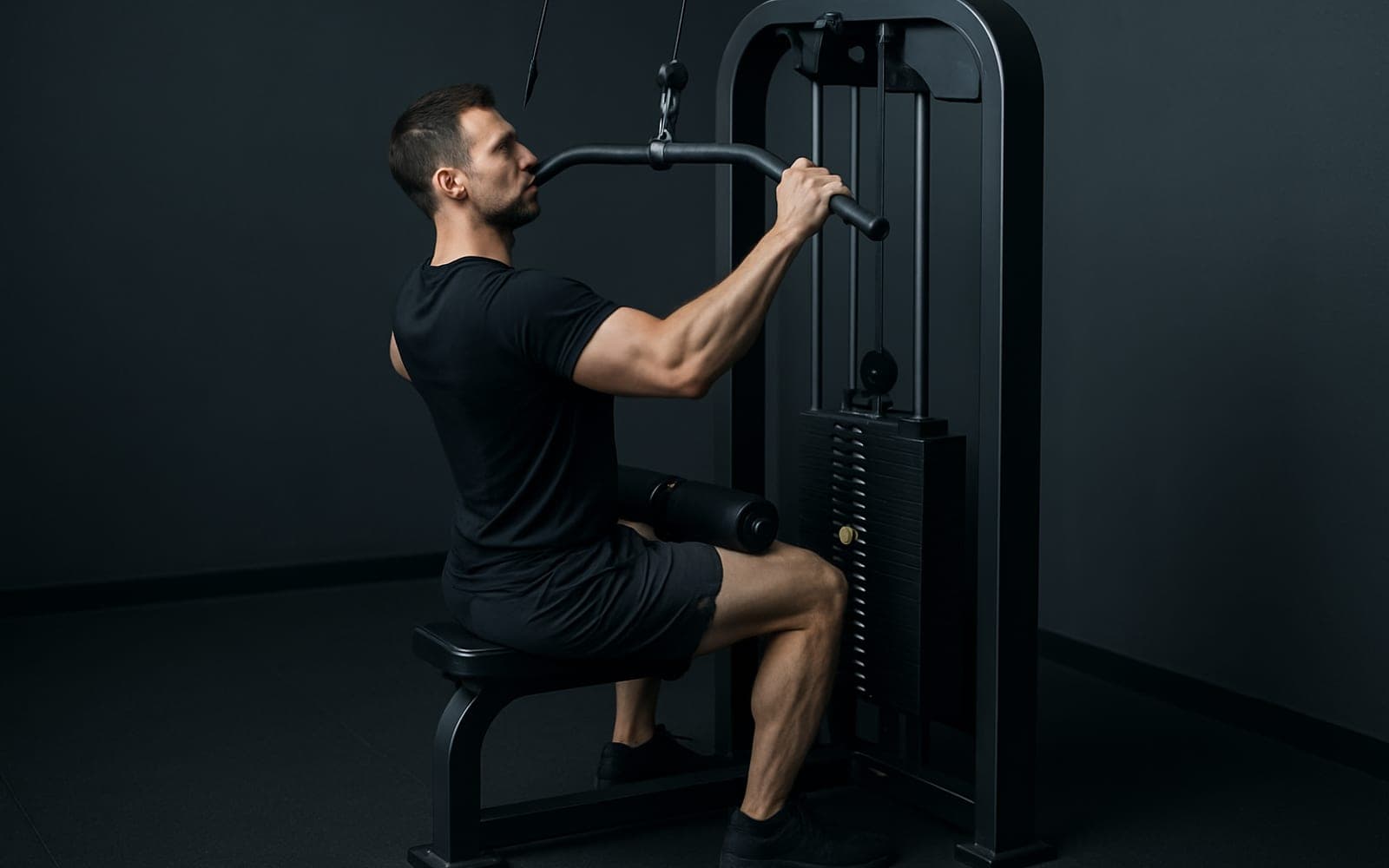
Substitutions
If a machine is busy or unavailable, these train the same pattern a different way.

Your progress over time
What to expect from training this consistently — everyone progresses at their own pace.
- 1
First few sessions
Learn the pattern: establish scapular depression/retraction and the path of the band with light resistance, improve coordination, and perform clean reps with controlled ascent and descent.
- 2
Weeks 1–4
Build endurance and movement quality: increase rep capacity, reduce reliance on the arms by engaging the lats more, and start using slightly heavier bands for progressive overload.
- 3
Months 2–3
Noticeable strength and size gains in the lats and better posture: handle substantially stronger band resistance for sets, improved eccentric control, and clearer carryover to other vertical pulling tasks.
- 4
Months 4–6
Solid functional pulling strength: ability to perform higher-volume or higher-resistance pulldowns, improved upper-back endurance, and more visible change in back thickness for many trainees.
- 5
6+ months
Sustained back strength and transfer to other skills: continued incremental load increases, improved performance on related movements (e.g., assisted or unassisted pull-ups/rows), and long-term posture and shoulder stability benefits when trained consistently.
Benefits of the band pulldown
Directly targets the latissimus dorsi to develop pulling strength and increase back width when performed progressively.
Reinforces scapular control and upper-back activation, which helps posture and shoulder positioning during daily tasks.
Provides biceps involvement as a secondary driver, improving elbow flexion strength for carrying and pulling activities.
Offers a low-impact, joint-friendly way to progressively overload vertical pulling without needing heavy weights or a machine.
Trains eccentric control on the return phase, improving muscle resilience and reducing reliance on momentum.
Is portable and adaptable, making it easy to add consistent pulling volume into a general fitness program anywhere.
Exercises that pair with this
Same muscles or the same movement pattern — useful for building the rest of the session.





Band Pulldown — questions people ask
What muscles does the band pulldown work?
The band pulldown trains the lats as the primary target, with the biceps working as support. It is a vertical pull pattern, so it also trains the coordination that pattern needs.
How many sets and reps of the band pulldown should I do?
Three sets of 8–12 reps with about 90 seconds of rest is a reliable default. Increase the weight once the last rep of every set still looks clean.
Is the band pulldown good for beginners?
Yes. The band pulldown is a beginner-friendly movement. Lighter band. If it feels like too much, build the pattern on the lat pulldown first.
What can I do instead of the band pulldown?
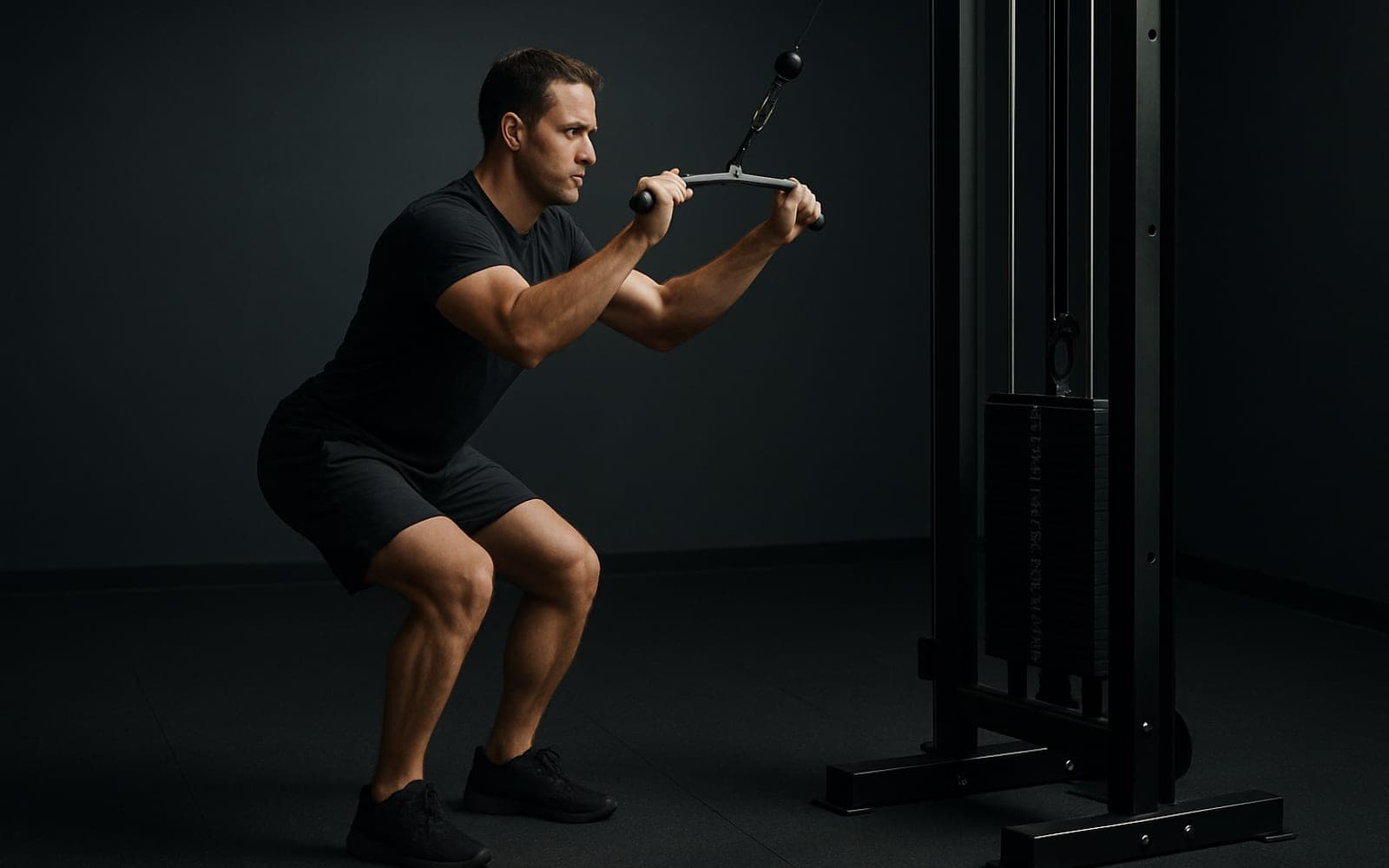
Lat Pulldown, Assisted Pull-Up all train the same vertical pull pattern with different equipment, so any of them works when the machine is busy or your gym does not have it.
What are the most common band pulldown mistakes?
Anchor too weak. Pull the band down to the chest, control up.