Reverse Lunge
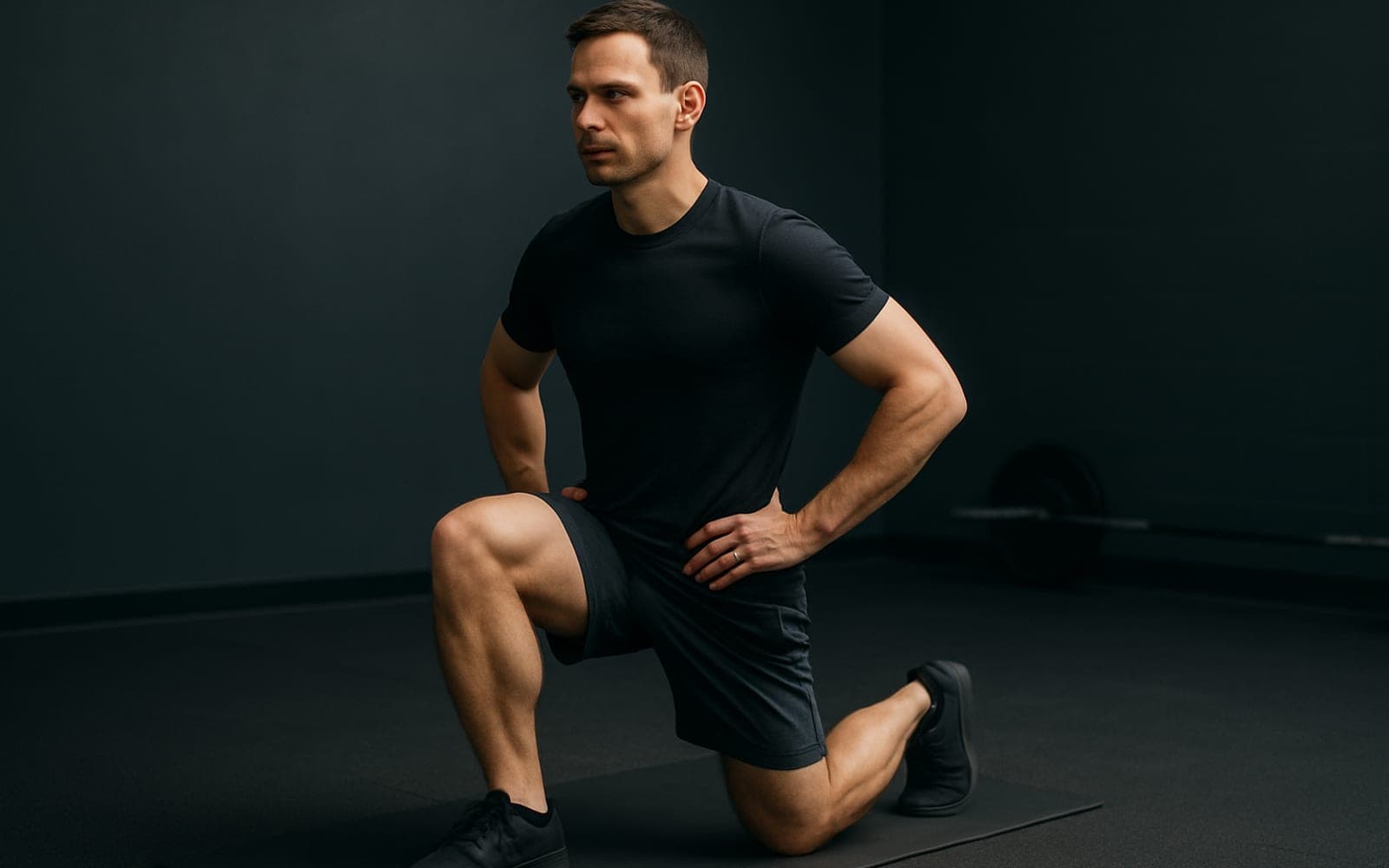
Activation
Muscles worked
Movement
Lunge
Beginner · Bodyweight
Secondary muscles
Movement pattern
Equipment category
How to perform
- 1
Set up
Stand tall, hands on hips or holding support.
- 2
Execute the movement
Step back, lower the knee, return to standing.
Common mistakes
- Short, unstable steps
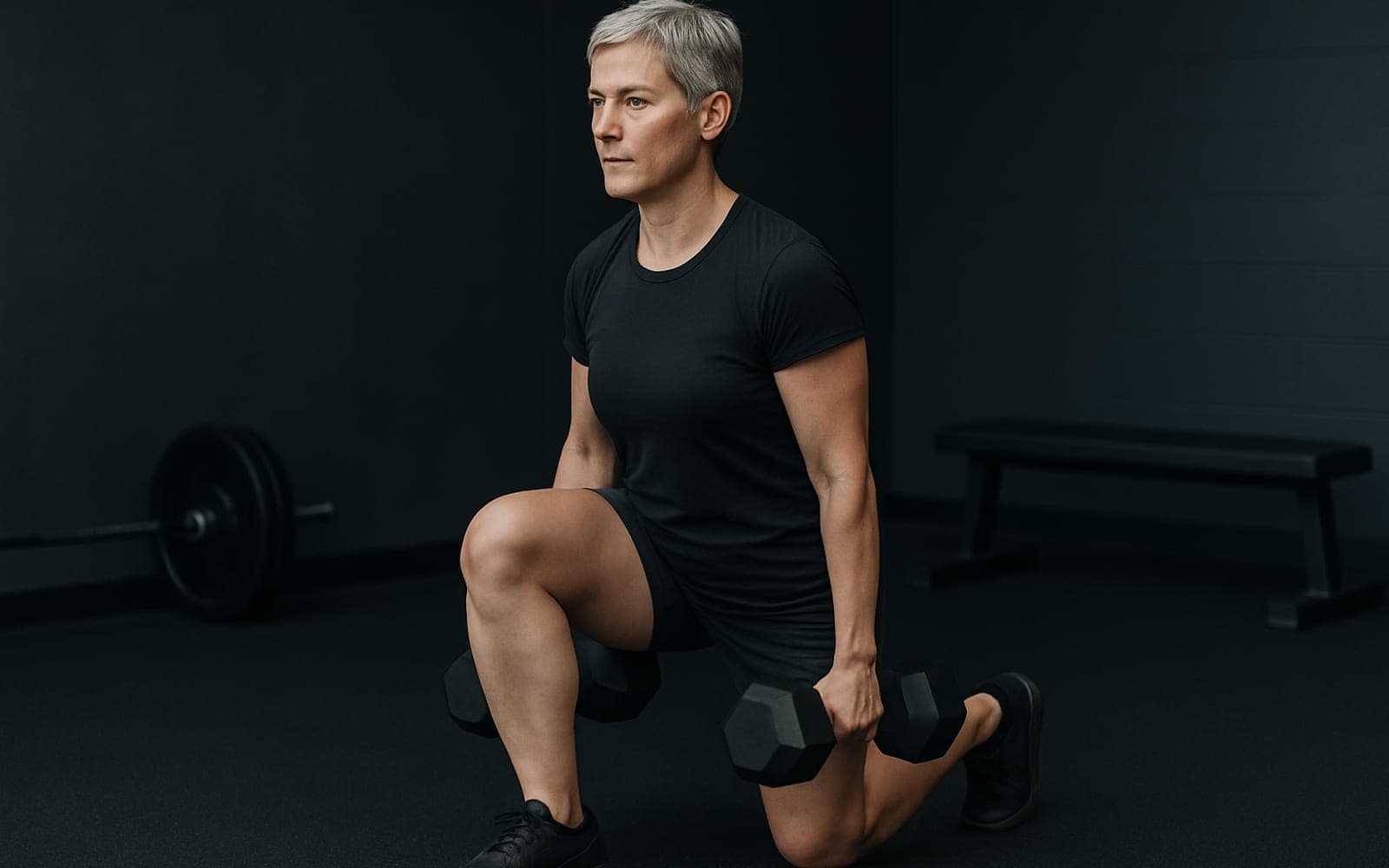
Make it harder
Make it easier
Accessibility
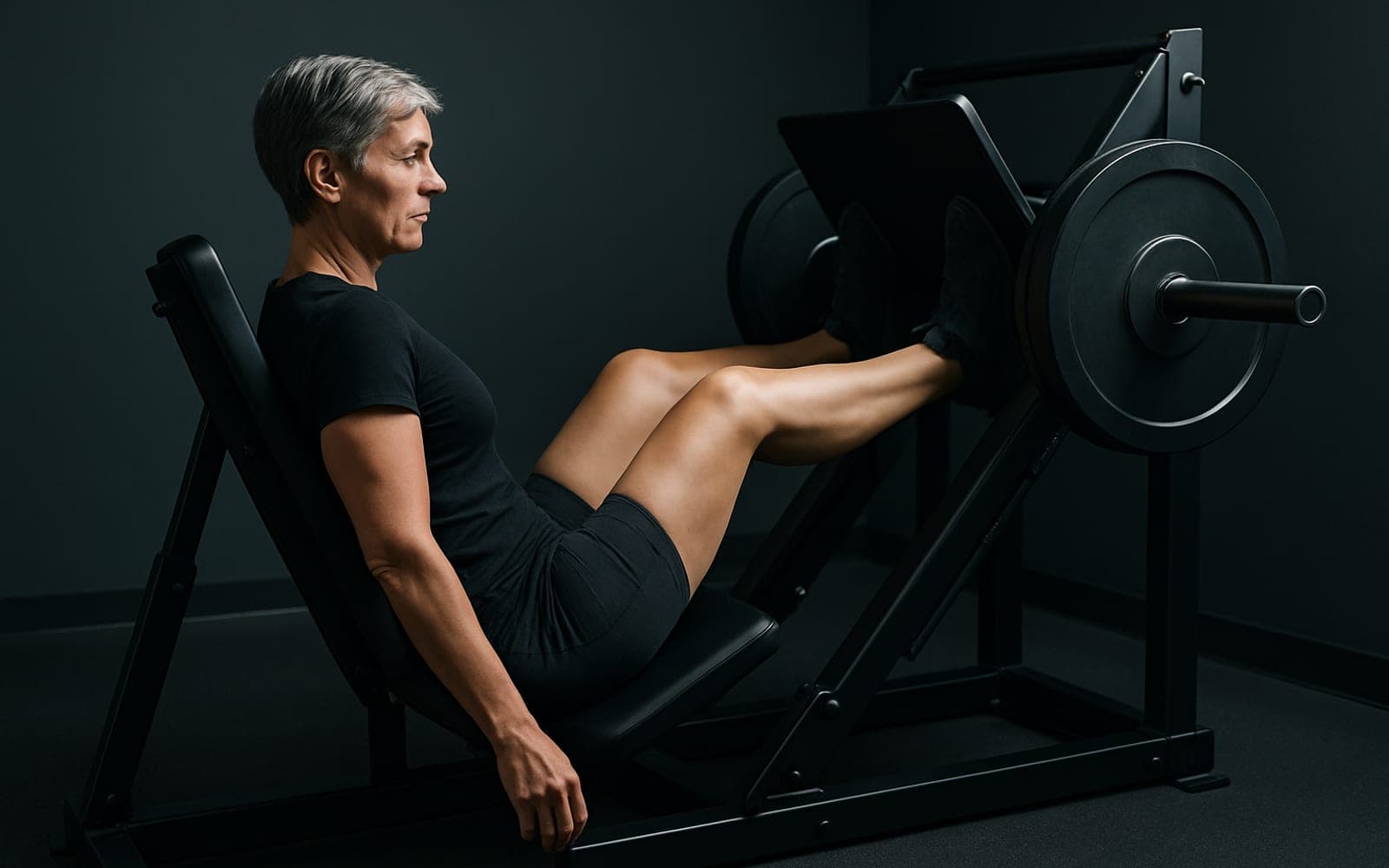
Substitutions
If a machine is busy or unavailable, these train the same pattern a different way.
Your progress over time
What to expect from training this consistently — everyone progresses at their own pace.
- 1
First few sessions
Learn movement cues and balance: comfortable stepping back, controlled knee descent, and safe return to standing with light bodyweight or very light load.
- 2
Weeks 2–4
Improved stability and technique: reduced wobble, deeper and more consistent lunges, ability to perform higher reps per leg (8–12) and begin adding light dumbbells.
- 3
Months 1–3
Noticeable strength and hypertrophy in quads and glutes: increased load tolerance, clearer muscular fatigue after sets, and improved single-leg control contributing to better walking and stair performance.
- 4
Months 3–6
Greater unilateral strength and endurance: ability to use moderate weights for multiple sets, improved balance under load, and more efficient calorie burn during workouts supporting weight-loss goals.
- 5
6+ months
Durable single-leg strength and movement quality: consistently heavier loading (relative to beginner level), robust joint control, and carryover to other activities like running, hiking, or weighted split-squat variations.
Benefits of the reverse lunge
Builds quadriceps strength by controlling knee extension during the return phase of the lunge.
Develops glute strength and hip extension on the front leg, improving posture and hip power.
Improves unilateral balance and single-leg stability, reducing side-to-side strength imbalances.
Engages core muscles to maintain upright torso and resist rotation, supporting better movement control.
Is calorie-friendly and scalable, so it can contribute to a higher workout intensity for weight-loss when combined with proper progression.
Requires minimal equipment and space, making it an accessible option for general fitness routines and home workouts.
Exercises that pair with this
Same muscles or the same movement pattern — useful for building the rest of the session.
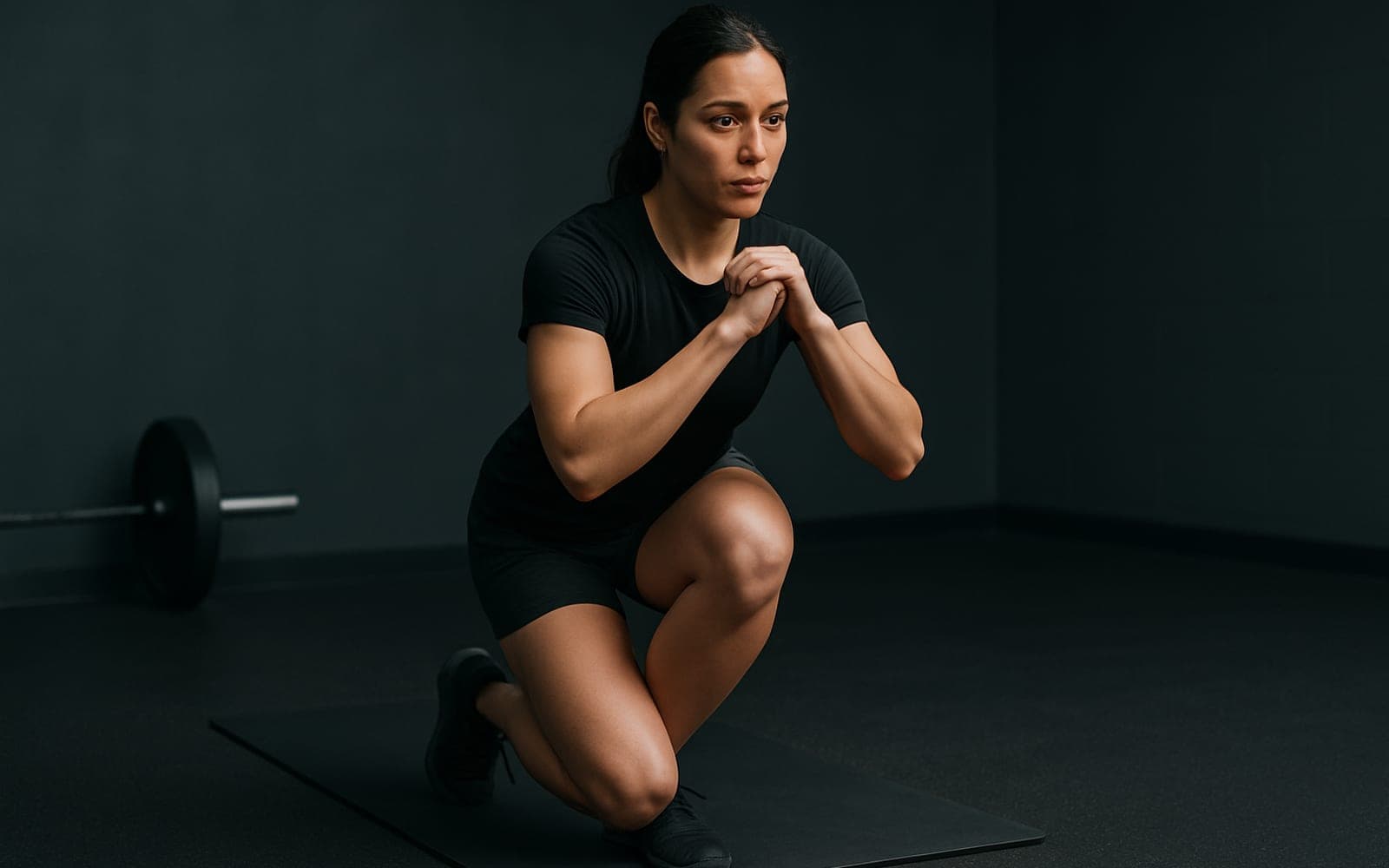
Reverse Lunge — questions people ask
What muscles does the reverse lunge work?
The reverse lunge trains the quads and glutes as the primary target, with the core working as support. It is a lunge pattern, so it also trains the coordination that pattern needs.
How many sets and reps of the reverse lunge should I do?
Three sets of 8–12 reps with about 90 seconds of rest is a reliable default. Increase the weight once the last rep of every set still looks clean.
Is the reverse lunge good for beginners?
Yes. The reverse lunge is a beginner-friendly movement. Hold a rail for balance. If it feels like too much, build the pattern on the leg press first.
What can I do instead of the reverse lunge?
Walking Lunge, Leg Press all train the same lunge pattern with different equipment, so any of them works when the machine is busy or your gym does not have it.
What are the most common reverse lunge mistakes?
Short, unstable steps. Step back, lower the knee, return to standing.