Pike Push-Up
Activation
Muscles worked
Movement
Vertical Push
Intermediate · Bodyweight
Primary muscles
Movement pattern
Equipment category
How to perform
- 1
Set up
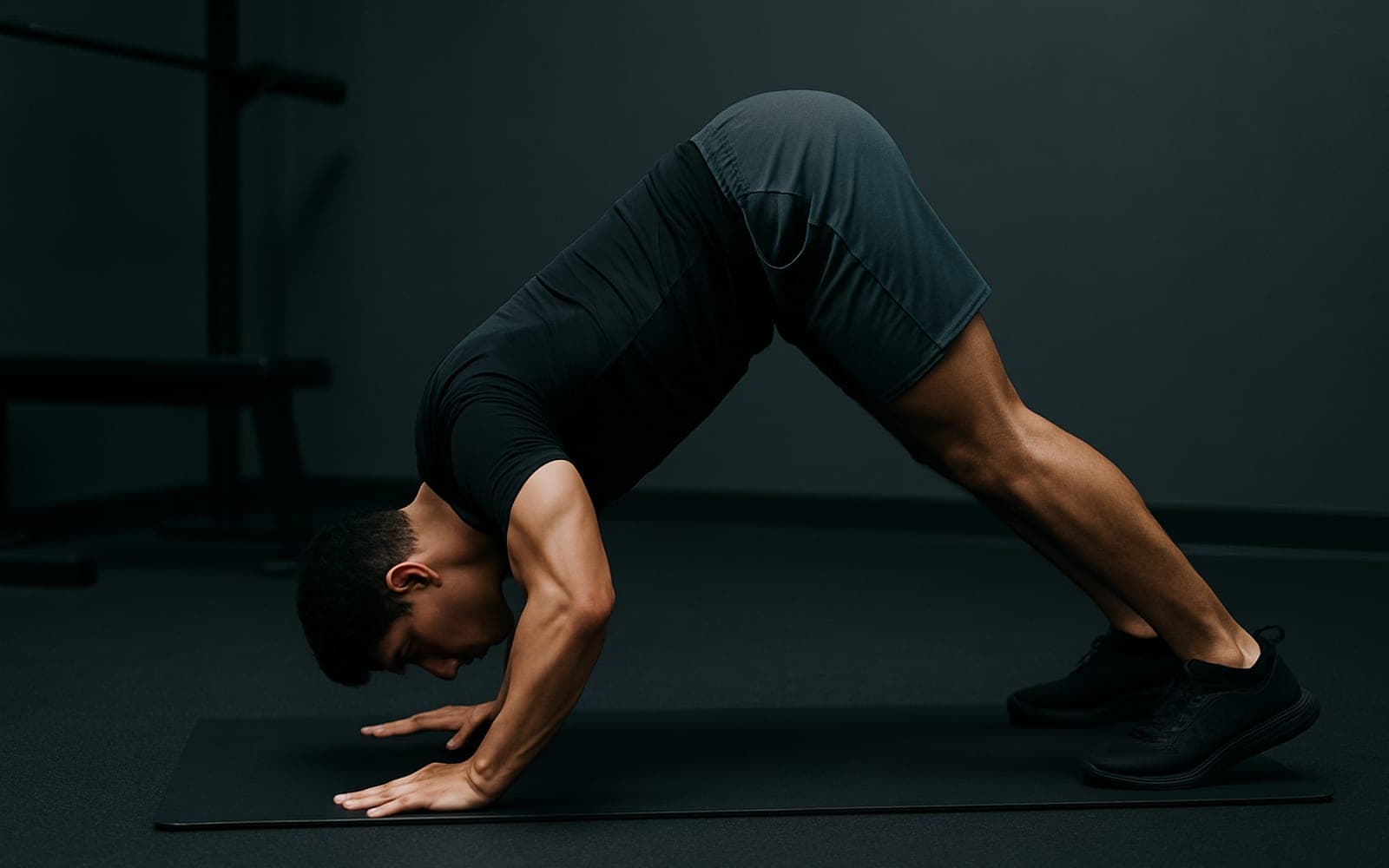
From a downward-dog position with hips high.
- 2
Execute the movement
Lower the crown of the head toward the floor, press back up.
Common mistakes
- Hips dropping into a push-up
Make it harder
Make it easier
Substitutions
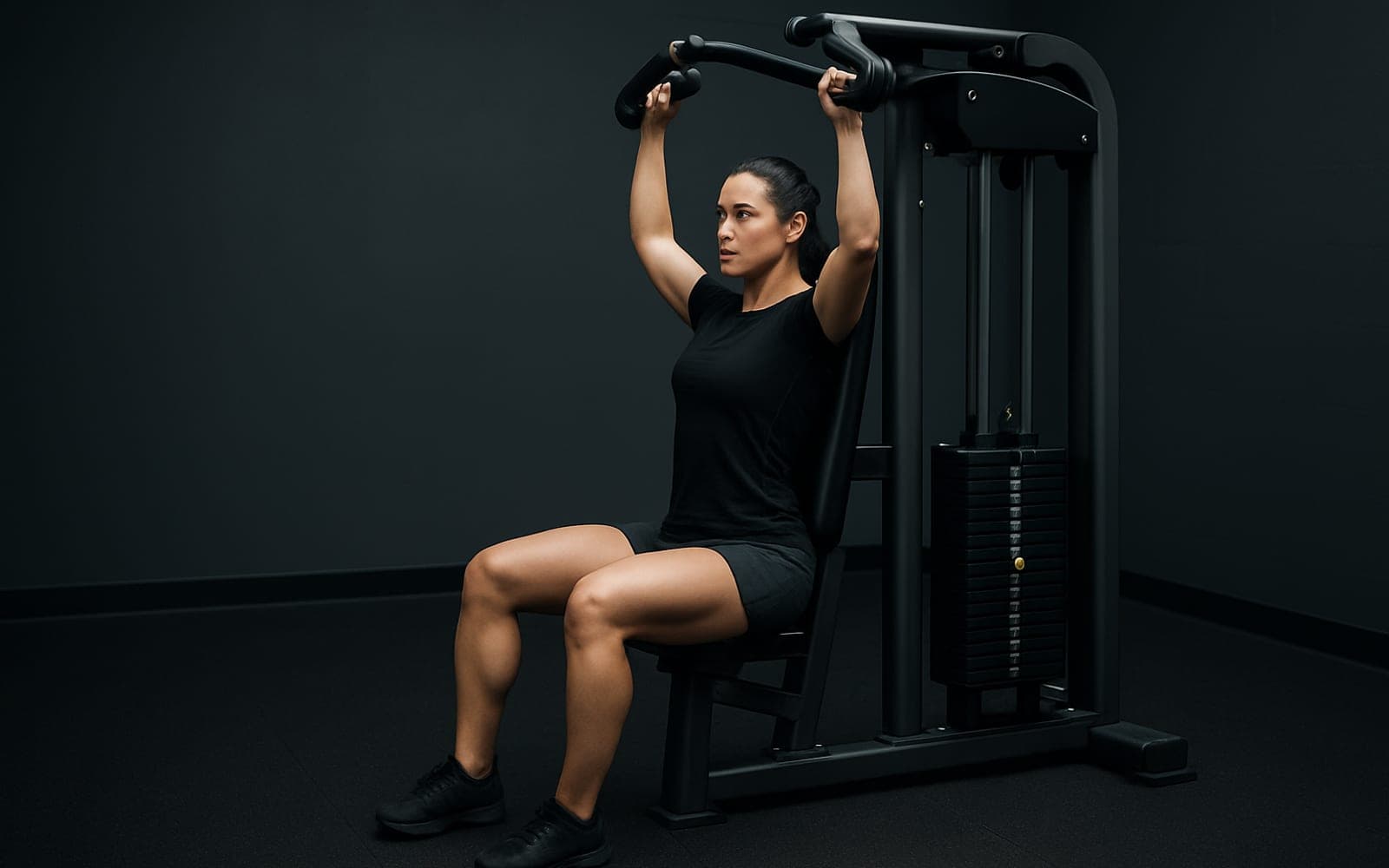
If a machine is busy or unavailable, these train the same pattern a different way.

Your progress over time
What to expect from training this consistently — everyone progresses at their own pace.
- 1
First few sessions
You learn the movement pattern: hip hinge to create the pike angle, head-first descent, and controlled scapular movement; expect limited range of motion and sets of low reps as you work on technique and wrist/shoulder comfort.
- 2
Weeks 2–4
Regular practice increases endurance and range of motion — you can complete more quality reps per set, reduce compensation from the trunk, and start to feel the shoulders and triceps getting stronger and less fatigued with submaximal volumes.
- 3
Months 2–3
Noticeable increases in shoulder strength and muscle tone: you can do multiple sets of higher-rep pike push-ups, handle steeper pike angles or short elevated-feet variations, and enjoy clearer carryover to overhead pressing work.
- 4
4–6 months
You can reliably perform full-range pike push-ups with challenging volume or elevated-feet progressions, show visible deltoid development, and use the exercise as a staple for upper-body pressing and shoulder hypertrophy.
- 5
6+ months
With consistent progression you can move toward advanced progressions (strict handstand push-up work or weighted/eccentric-loaded pike variations), and maintain durable, well-conditioned shoulders suited for general fitness and upper-body strength goals.
Benefits of the pike push-up
Directly targets the shoulder (especially the anterior and medial deltoids), promoting hypertrophy and pressing strength specific to vertical pushing.
Loads the triceps through actual pressing, improving lockout strength and arm muscle development without needing equipment.
Requires and trains core and hip-hinge tension to hold the pike angle, which improves trunk stability and transfer of force during upper-body work.
Improves overhead pressing skill and scapular control, helping movement quality for other vertical push variations and gymnastic-style presses.
Is scalable and equipment-free: you can progress by increasing volume, steepness (elevated feet), or moving toward handstand work, making it practical for general fitness and muscle-building goals.
Develops shoulder endurance and neuromuscular coordination, offering real-world carryover to tasks that require pressing or reaching overhead repeatedly.
Exercises that pair with this
Same muscles or the same movement pattern — useful for building the rest of the session.


Pike Push-Up — questions people ask
What muscles does the pike push-up work?
The pike push-up trains the shoulders as the primary target, with the triceps, core working as support. It is a vertical push pattern, so it also trains the coordination that pattern needs.
How many sets and reps of the pike push-up should I do?
Three sets of 8–12 reps with about 90 seconds of rest is a reliable default. Increase the weight once the last rep of every set still looks clean.
Is the pike push-up good for beginners?
It is a reasonable second step. The pike push-up asks for some control and body awareness. Reduce range or use the machine press. If it feels like too much, build the pattern on the machine shoulder press first.
What can I do instead of the pike push-up?
Machine Shoulder Press, Dumbbell Shoulder Press all train the same vertical push pattern with different equipment, so any of them works when the machine is busy or your gym does not have it.
What are the most common pike push-up mistakes?
Hips dropping into a push-up. Lower the crown of the head toward the floor, press back up.