Standing Calf Raise
Activation
Muscles worked
Movement
Isolation
Beginner · Bodyweight
Primary muscles
Secondary muscles
Movement pattern
Equipment category
How to perform
- 1
Set up
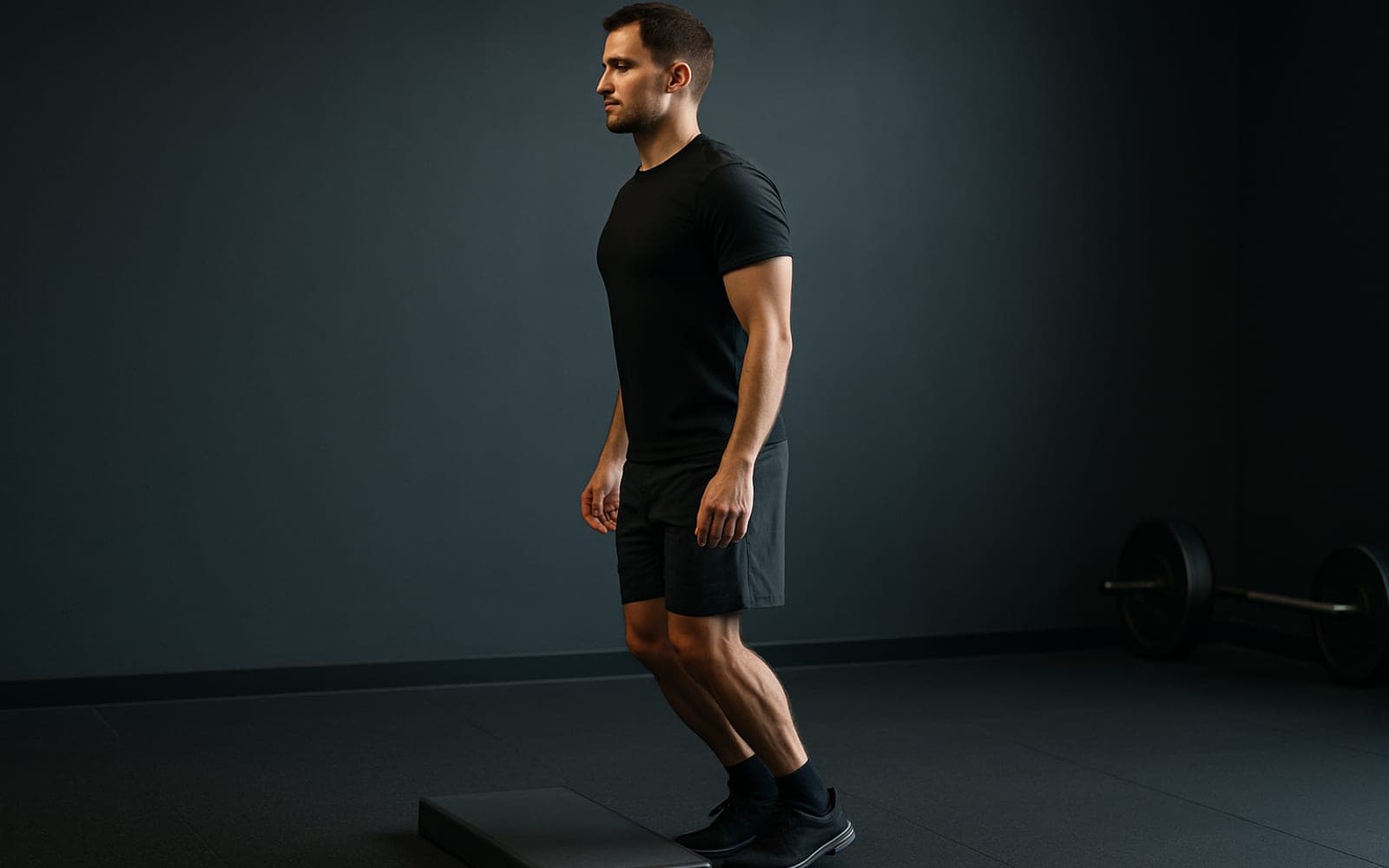
Stand on the edge of a step.
- 2
Execute the movement
Rise onto the toes, lower to a stretch.
Common mistakes
- Rushing
Make it harder
Make it easier
Accessibility
Substitutions
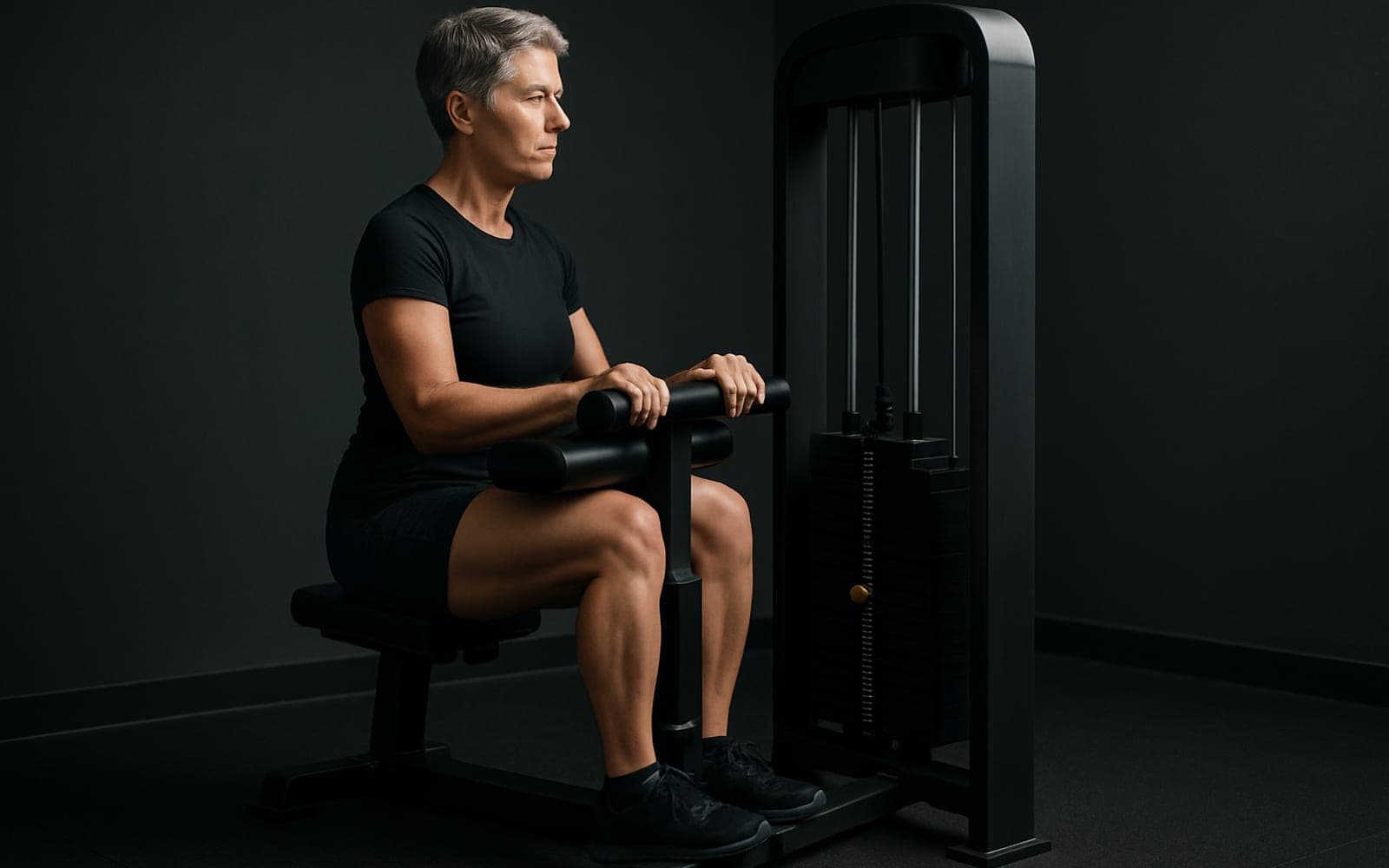
If a machine is busy or unavailable, these train the same pattern a different way.
Your progress over time
What to expect from training this consistently — everyone progresses at their own pace.
- 1
First few sessions
Learn the pattern (rise onto toes, lower to full stretch) with light load or bodyweight, focus on full range of motion and slow tempo; expect mild muscle soreness and better neuromuscular awareness.
- 2
Weeks 2–4
Improved control and greater tolerance for volume—you can increase sets/reps or resistance, feel reduced soreness, and begin to notice firmer calves and better single-leg balance.
- 3
Months 2–3
Measurable strength and size gains: ability to handle heavier loads for sets of 8–15, consistent improvement in single‑leg raises, and clearer carryover to walking, stairs, and brief running/jumping tasks.
- 4
Months 4–6
Solid hypertrophy and endurance in the calves with heavier loading schemes and progressive overload; improved ankle stiffness for more powerful push-offs and better fatigue resistance.
- 5
6+ months
Well-developed, durable calf musculature that is easier to maintain; progress slows so gains require varied loading, higher intensity, or different tempos to continue improving.
Benefits of the standing calf raise
Directly strengthens the gastrocnemius and soleus muscles to build calf strength and size.
Improves plantarflexion power for more effective push-off during walking, stair climbing, and short sprints or jumps.
Enhances single‑leg balance and standing stability by training the muscles that control the ankle.
Increases calf muscular endurance, making prolonged standing and repeated lower‑leg activity less tiring.
Low‑impact, beginner‑friendly isolation exercise that’s easy to scale and integrate into general fitness routines.
Provides visible shape and tone to the lower leg, which can improve functional confidence and exercise variety.
Exercises that pair with this
Same muscles or the same movement pattern — useful for building the rest of the session.
Standing Calf Raise — questions people ask
What muscles does the standing calf raise work?
The standing calf raise trains the calves as the primary target. It is a isolation pattern, so it also trains the coordination that pattern needs.
How many sets and reps of the standing calf raise should I do?
Three sets of 8–12 reps with about 90 seconds of rest is a reliable default. Increase the weight once the last rep of every set still looks clean.
Is the standing calf raise good for beginners?
Yes. The standing calf raise is a beginner-friendly movement. Both legs, no load. If it feels like too much, build the pattern on the seated calf raise first.
What can I do instead of the standing calf raise?
Seated Calf Raise all train the same isolation pattern with different equipment, so any of them works when the machine is busy or your gym does not have it.
What are the most common standing calf raise mistakes?
Rushing. Rise onto the toes, lower to a stretch.