Skull Crusher (Lying Triceps Extension)

Activation
Muscles worked
Movement
Isolation
Intermediate · Free Weights
Primary muscles
Secondary muscles
Movement pattern
Equipment category
How to perform
- 1
Set up
Lie on a bench with an EZ-bar or dumbbells held above the chest, arms vertical.
- 2
Execute the movement
Keeping the upper arms still, bend at the elbows to lower the weight toward the forehead/behind the head, then extend back up.
Common mistakes
- Letting the elbows drift and turning it into a press
- Flaring the elbows wide
Make it harder
Make it easier
Substitutions
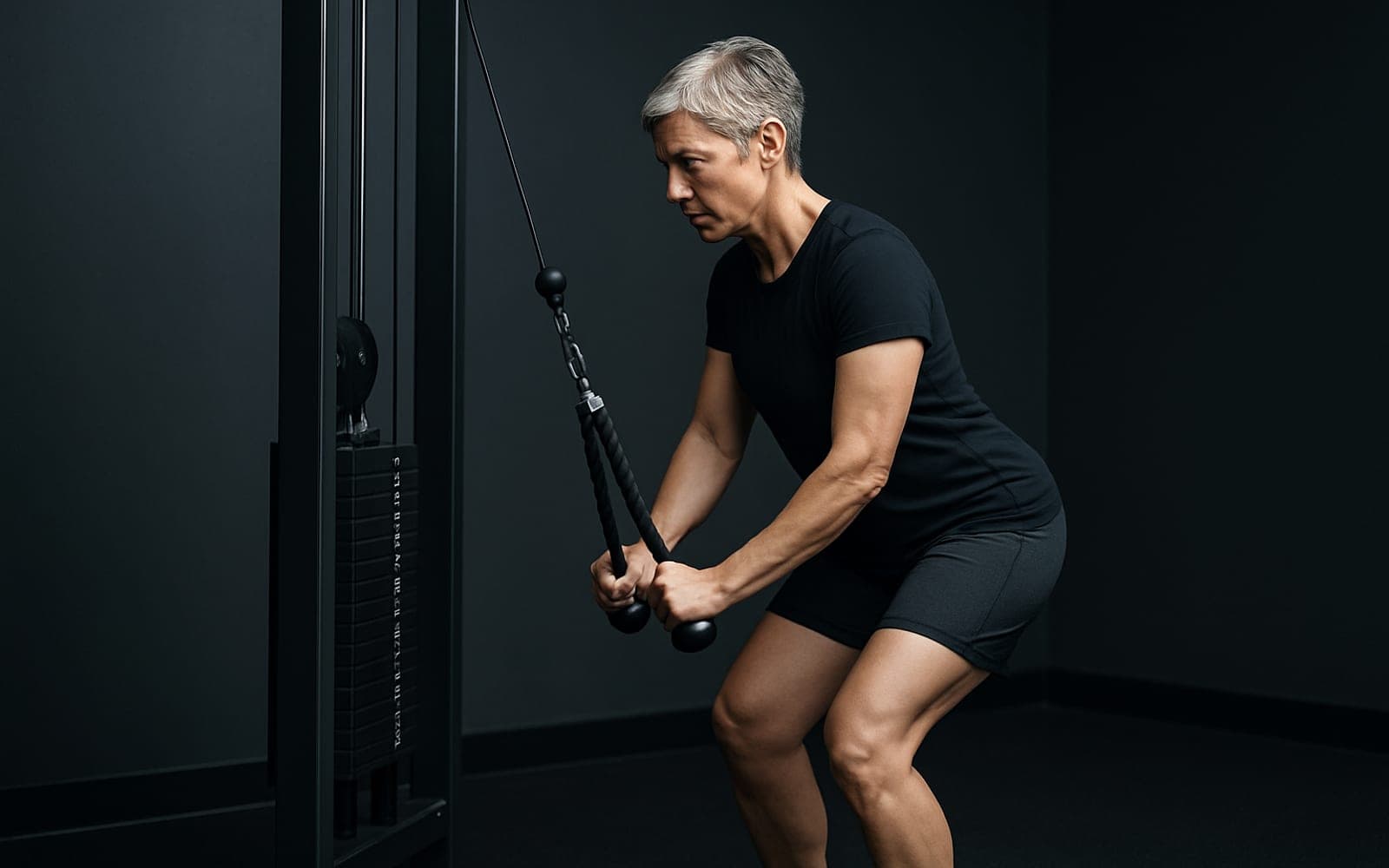
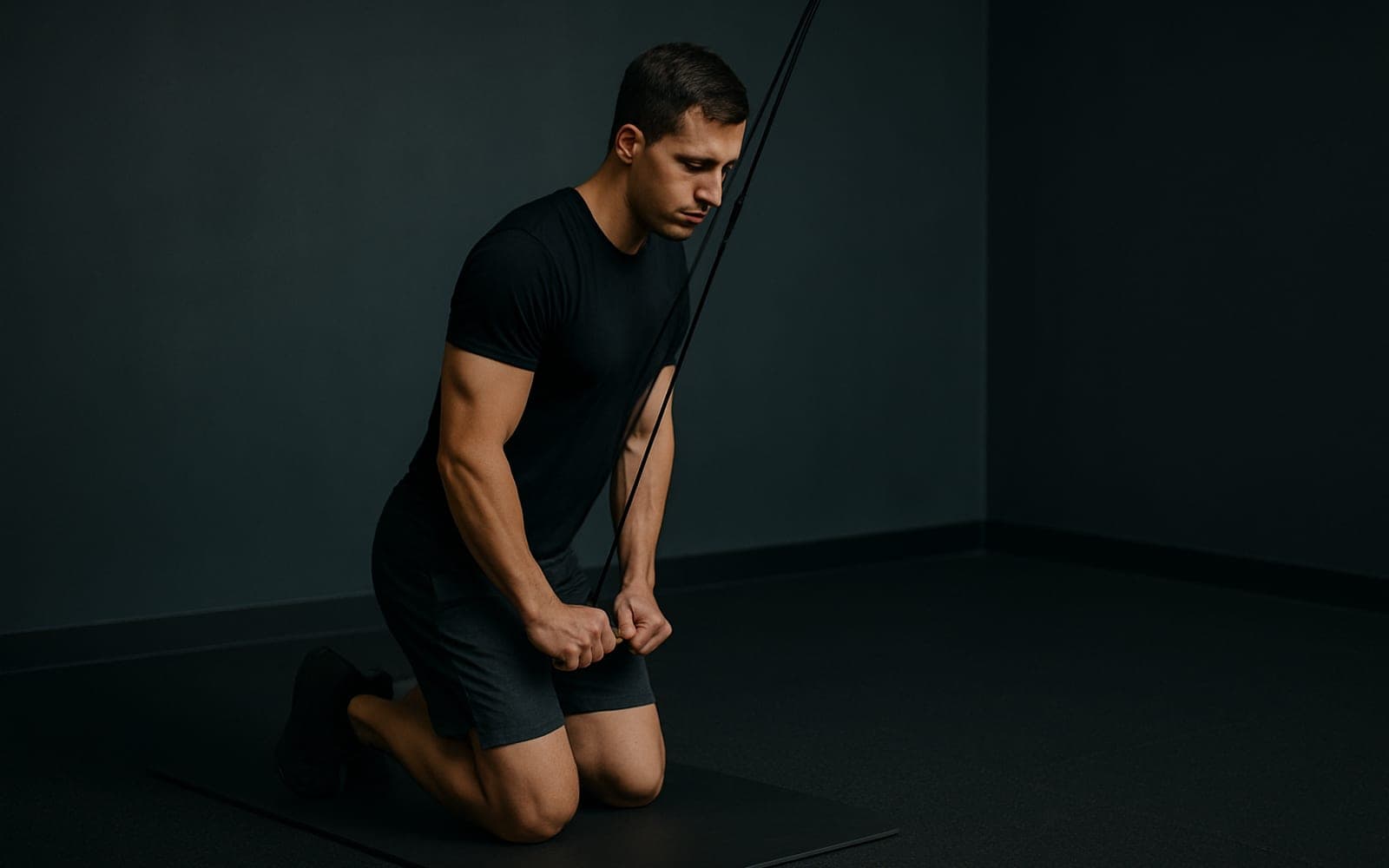
If a machine is busy or unavailable, these train the same pattern a different way.

Your progress over time
What to expect from training this consistently — everyone progresses at their own pace.
- 1
First few sessions
Learn proper setup and technique: stable bench position, consistent upper-arm angle, and controlled eccentric lowering to protect the elbow and create a reliable movement groove.
- 2
Weeks 2–6
Notice cleaner repetitions with reduced elbow shoving and improved range of motion; you can complete full working sets with moderate weight and less forearm fatigue.
- 3
Months 2–4
Visible increases in triceps size and local muscular endurance as you progressively overload with more sets, reps, or slightly higher loads while maintaining strict form.
- 4
Months 4–6
Meaningful strength improvements in elbow extension: heavier working sets and better transfer to pressing movements (improved lockout strength) while still controlling the eccentric.
- 5
6+ months
Solid, sustainable triceps development and neuromuscular efficiency: you can use skull crushers as a primary isolation movement in a hypertrophy block and manage heavier loads with low injury risk when warmed up and executed correctly.
Benefits of the skull crusher (lying triceps extension)
Directly targets the triceps brachii, especially the long head when performed with the elbows positioned slightly behind the head, for focused hypertrophy.
Improves elbow-extension strength and lockout capacity, which carries over to better performance on pressing movements like bench press and overhead press.
Develops single-joint isolation control and muscular endurance in the elbow extensors, supporting higher-quality arm training overall.
Teaches eccentric control of the elbow joint, which helps reduce uncontrolled momentum and lowers risk of tendon irritation when progressed sensibly.
Allows precise load and volume manipulation for hypertrophy phases, making it easier to fatigue the triceps without taxing the shoulders or spine.
Can improve aesthetics and upper-arm size, contributing to balanced upper-limb proportions when combined with compound pressing and brachialis/biceps work.
Exercises that pair with this
Same muscles or the same movement pattern — useful for building the rest of the session.






Skull Crusher (Lying Triceps Extension) — questions people ask
What muscles does the skull crusher (lying triceps extension) work?
The skull crusher (lying triceps extension) trains the triceps as the primary target. It is a isolation pattern, so it also trains the coordination that pattern needs.
How many sets and reps of the skull crusher (lying triceps extension) should I do?
Three sets of 8–12 reps with about 90 seconds of rest is a reliable default. Increase the weight once the last rep of every set still looks clean.
Is the skull crusher (lying triceps extension) good for beginners?
It is a reasonable second step. The skull crusher (lying triceps extension) asks for some control and body awareness. Use lighter dumbbells or a cable version. If it feels like too much, build the pattern on the dip first.
What can I do instead of the skull crusher (lying triceps extension)?
Cable Triceps Extension, Band Triceps Pressdown, Dip all train the same isolation pattern with different equipment, so any of them works when the machine is busy or your gym does not have it.
What are the most common skull crusher (lying triceps extension) mistakes?
Letting the elbows drift and turning it into a press; Flaring the elbows wide. Keeping the upper arms still, bend at the elbows to lower the weight toward the forehead/behind the head, then extend back up.
Can I do the skull crusher (lying triceps extension) at home?
The skull crusher (lying triceps extension) needs free weights equipment, which most home gyms do not have. The dip trains the same pattern with nothing more than your bodyweight or a band.