Incline Dumbbell Curl
Activation
Muscles worked
Movement
Isolation
Intermediate · Free Weights
Primary muscles
Secondary muscles
Movement pattern
Equipment category
How to perform
- 1
Set up
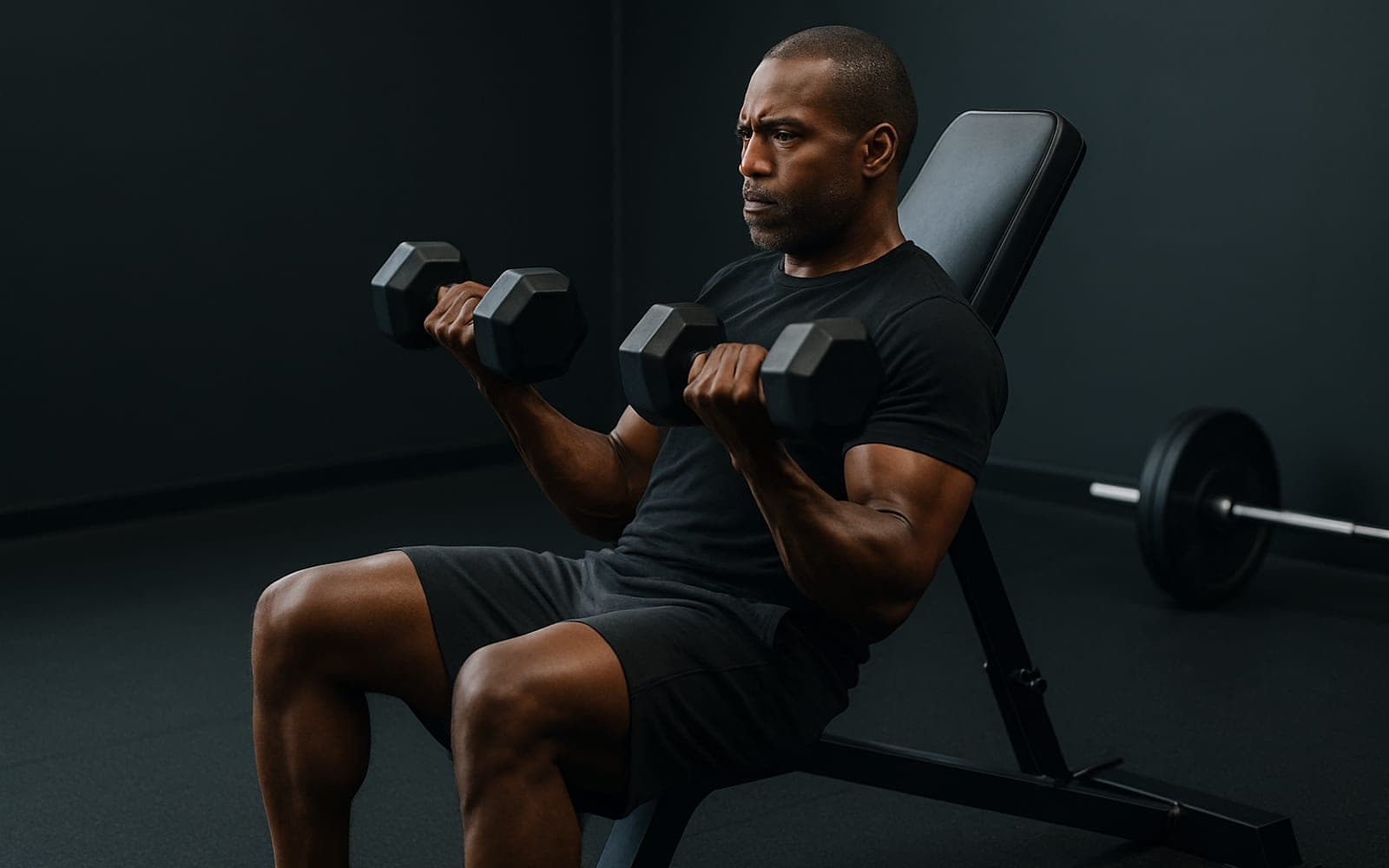
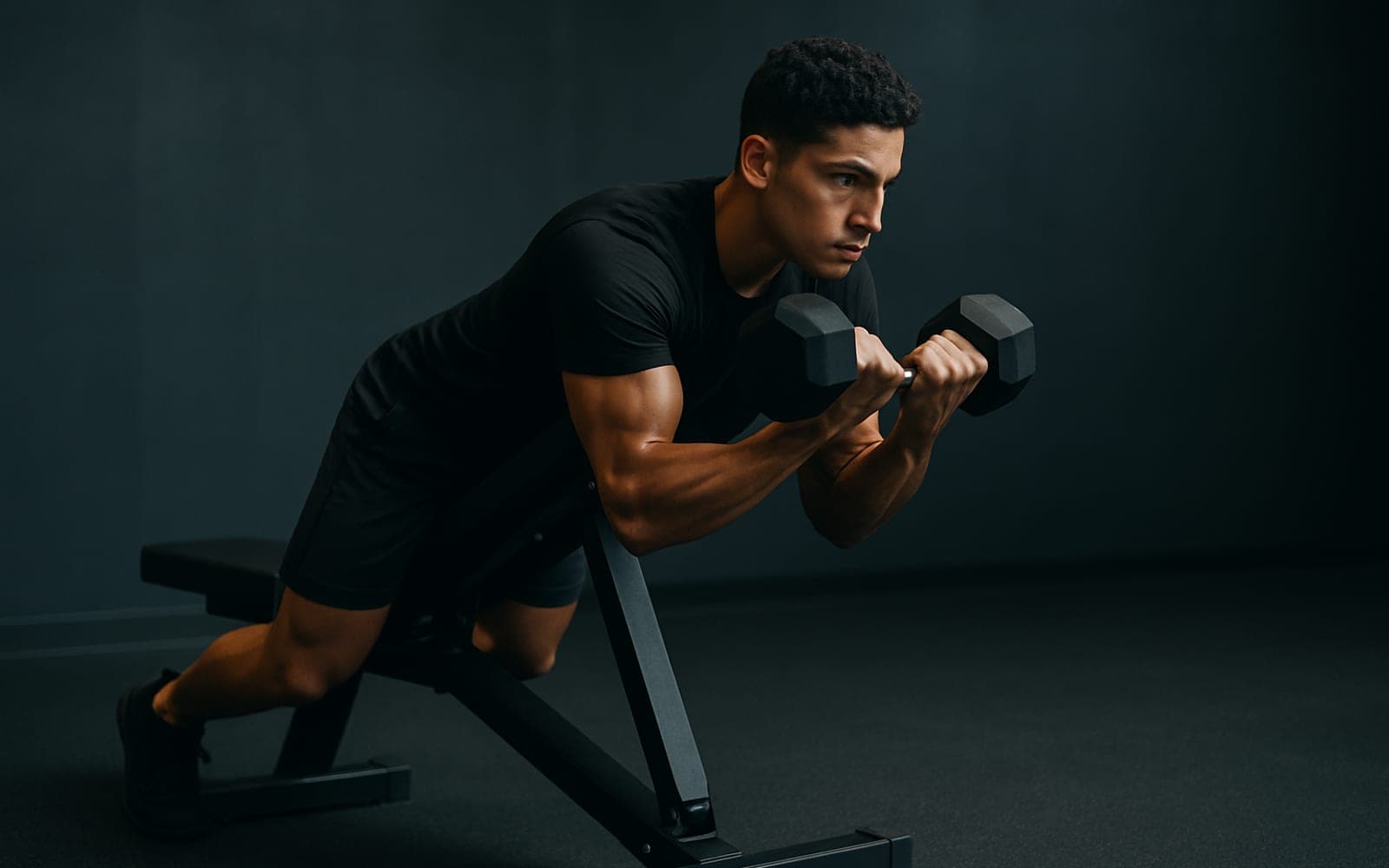
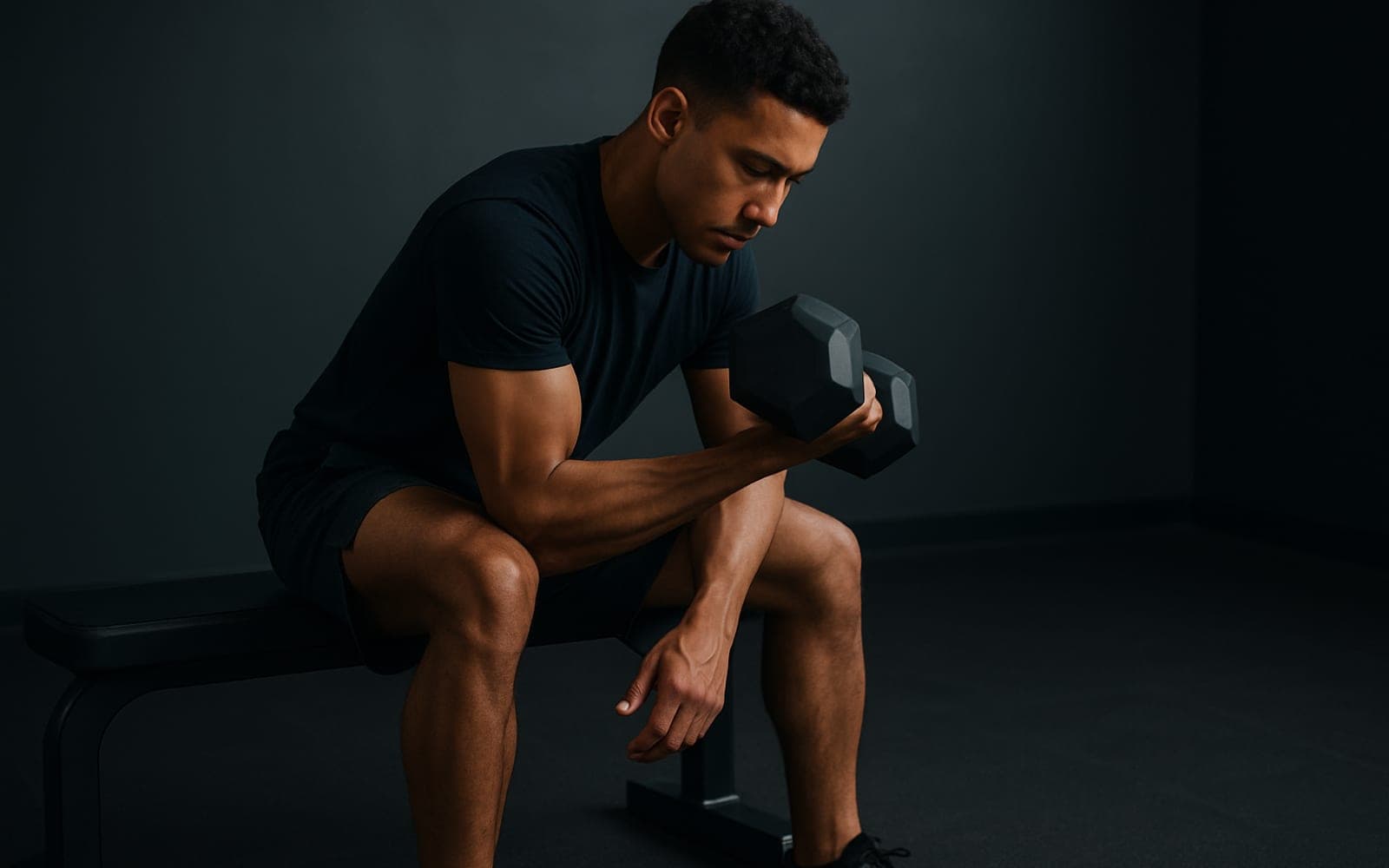
Sit back on an incline bench (~45–60°), arms hanging straight down with dumbbells.
- 2
Execute the movement
Curl the dumbbells up without moving the elbows forward; lower slowly to a full stretch. The incline maximizes the stretch on the biceps.
Common mistakes
- Swinging the elbows forward
- Cutting the stretch short
Make it harder
Make it easier
Substitutions
If a machine is busy or unavailable, these train the same pattern a different way.
Your progress over time
What to expect from training this consistently — everyone progresses at their own pace.
- 1
First few sessions
You learn the set-up and groove: controlled eccentric lowering, keeping elbows back on the bench, and feeling a stronger stretch in the biceps with light–moderate weight; expect some muscle soreness as neuromuscular coordination and tendon loading adapt.
- 2
Weeks 2–6
Eccentric control and mind–muscle connection improve, allowing you to increase load or reps modestly while maintaining strict form and a full range of motion.
- 3
Months 2–4
Consistent progressive overload produces visible hypertrophy in the biceps (especially the long head) and measurable improvements in curl strength; sets become more productive and recovery more predictable.
- 4
Months 4–6
Notable increases in arm size and peak appearance are achievable for many trainees; you can handle heavier dumbbells for strict reps and use techniques like slow eccentrics or paused reps to squeeze further growth.
- 5
6+ months
With continued progressive programming and variation, the incline dumbbell curl remains an effective isolation tool for maintaining and refining biceps size and peak; gains slow but can be optimized with periodized volume, intensity, and recovery strategies.
Benefits of the incline dumbbell curl
Places the biceps under a longer stretch than flat curls, preferentially loading the long head to improve peak and shape.
Emphasizes strict elbow position, reducing momentum and increasing isolated biceps tension for more efficient hypertrophy stimulus.
Strengthens the elbow flexion pattern in a mechanically challenging position, which transfers to other pulling and curling movements.
Engages the brachialis and forearm flexors as secondary movers, contributing to thicker upper-arm and improved forearm development.
Allows easy loading progression and variation (tempo, pauses, eccentric focus) to drive continued muscle growth without heavy spinal loading.
Can be used as a focused finisher or part of a volume block to target lagging biceps while minimizing cheating and shoulder involvement.
Exercises that pair with this
Same muscles or the same movement pattern — useful for building the rest of the session.
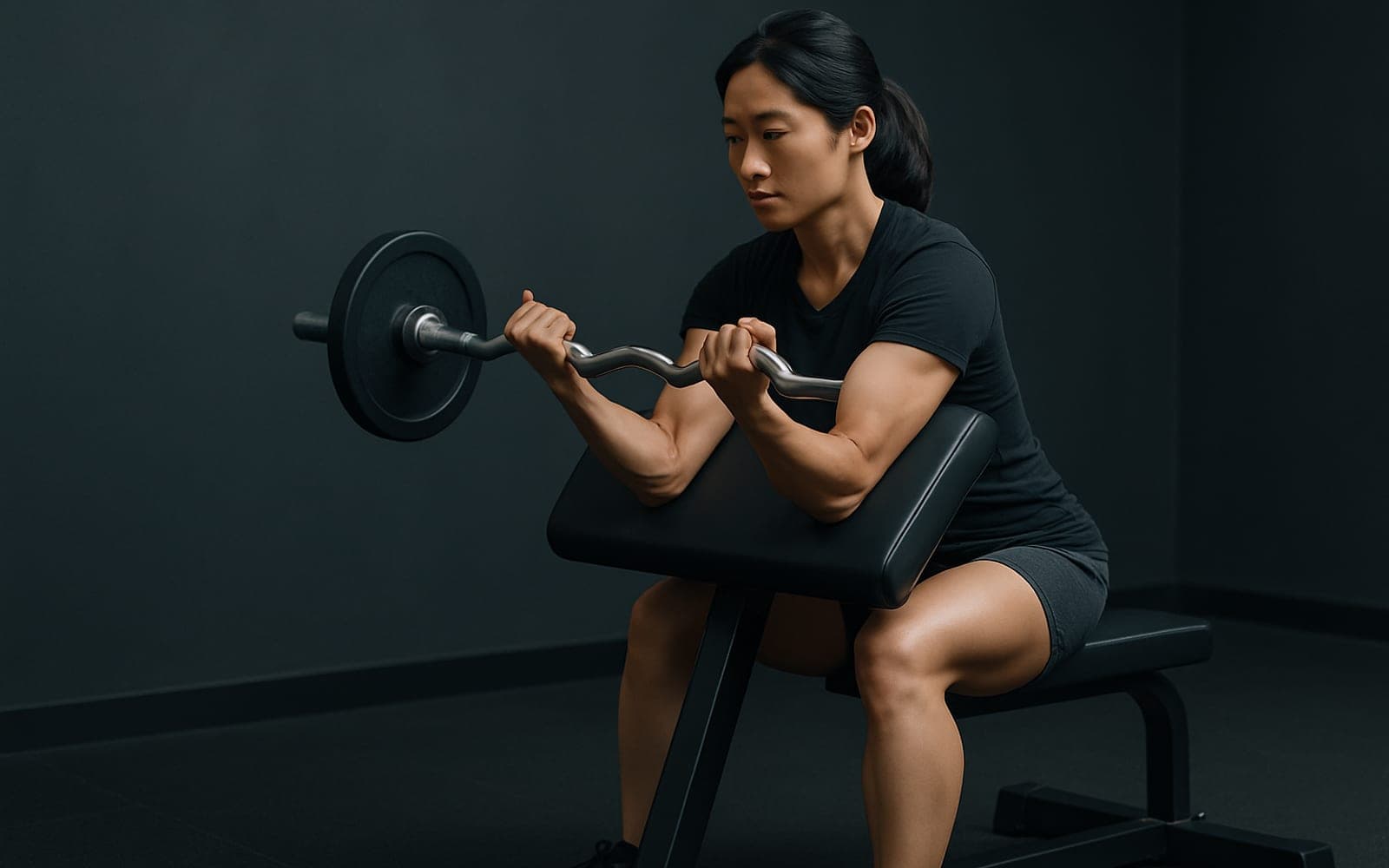
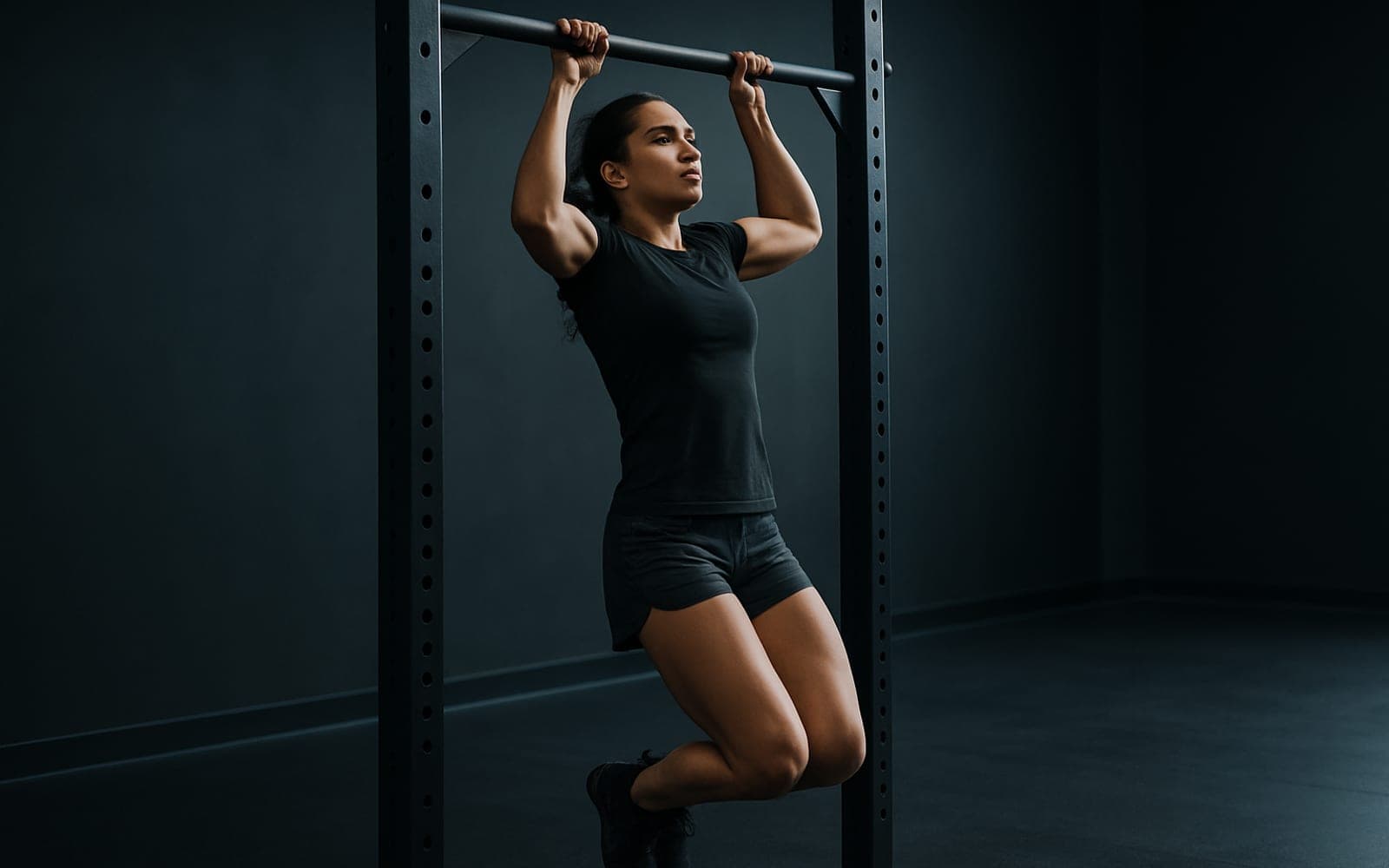
Incline Dumbbell Curl — questions people ask
What muscles does the incline dumbbell curl work?
The incline dumbbell curl trains the biceps as the primary target, with the forearms working as support. It is a isolation pattern, so it also trains the coordination that pattern needs.
How many sets and reps of the incline dumbbell curl should I do?
Three sets of 8–12 reps with about 90 seconds of rest is a reliable default. Increase the weight once the last rep of every set still looks clean.
Is the incline dumbbell curl good for beginners?
It is a reasonable second step. The incline dumbbell curl asks for some control and body awareness. Lighten the weight. If it feels like too much, build the pattern on the supported biceps curl first.
What can I do instead of the incline dumbbell curl?
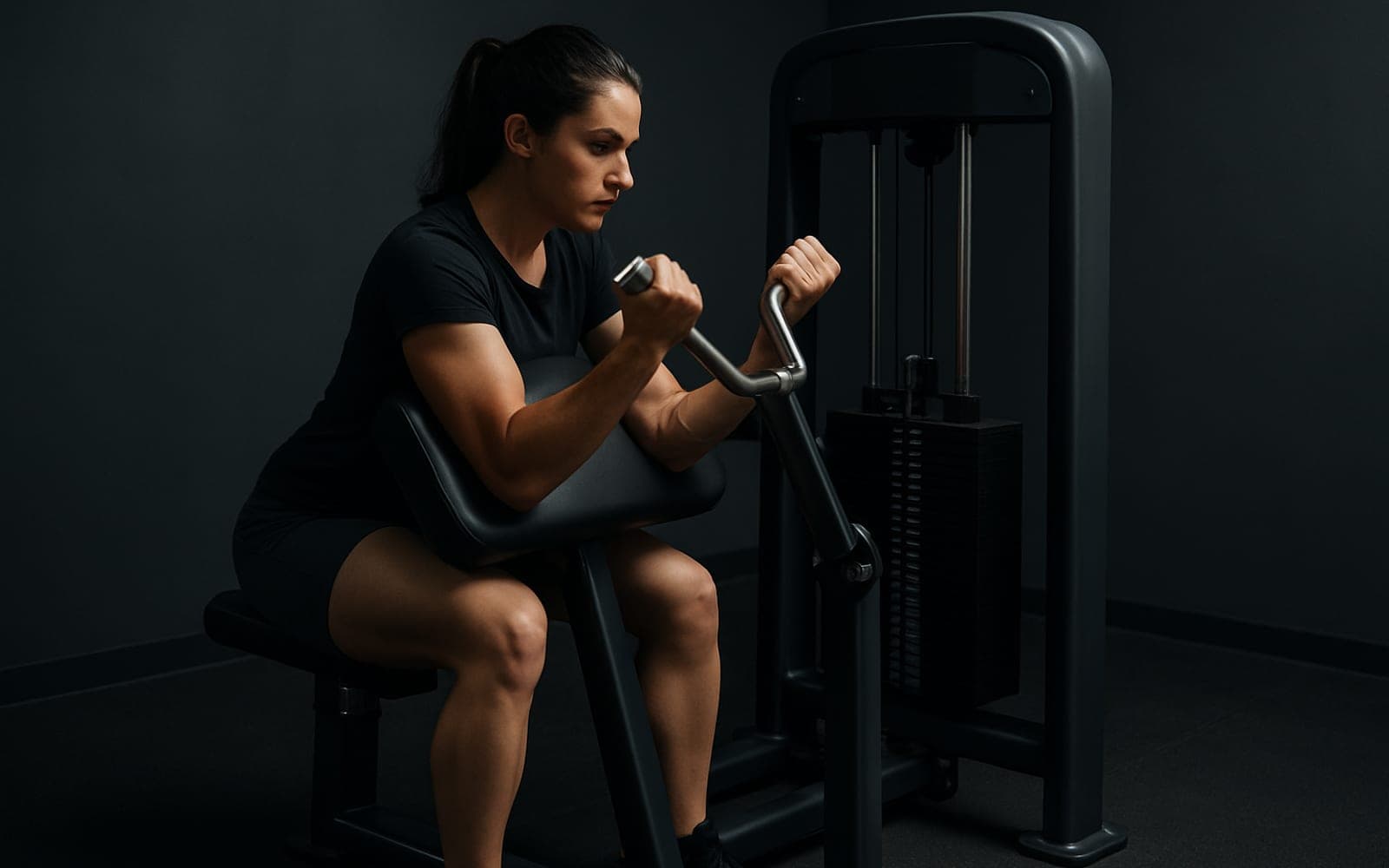
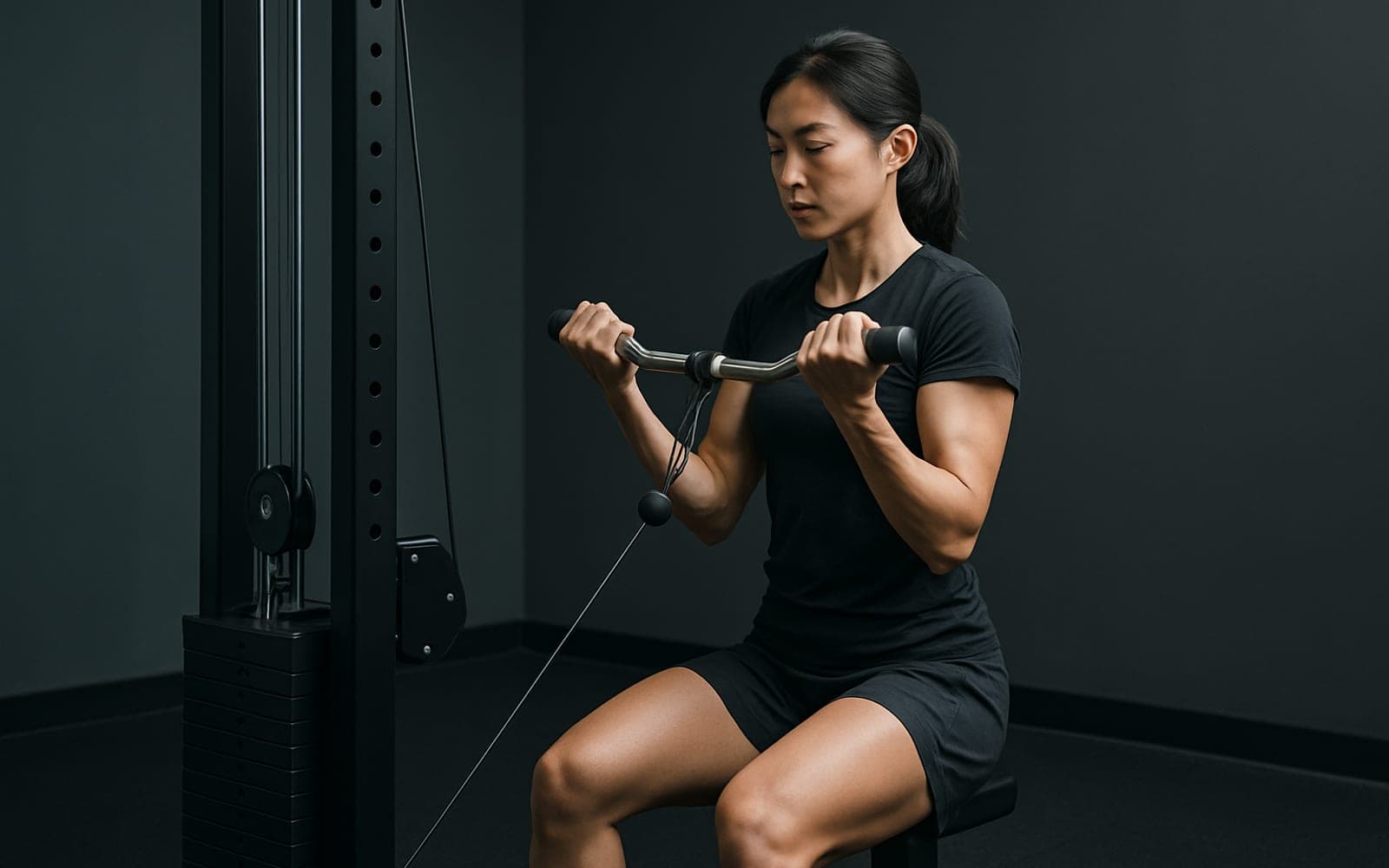
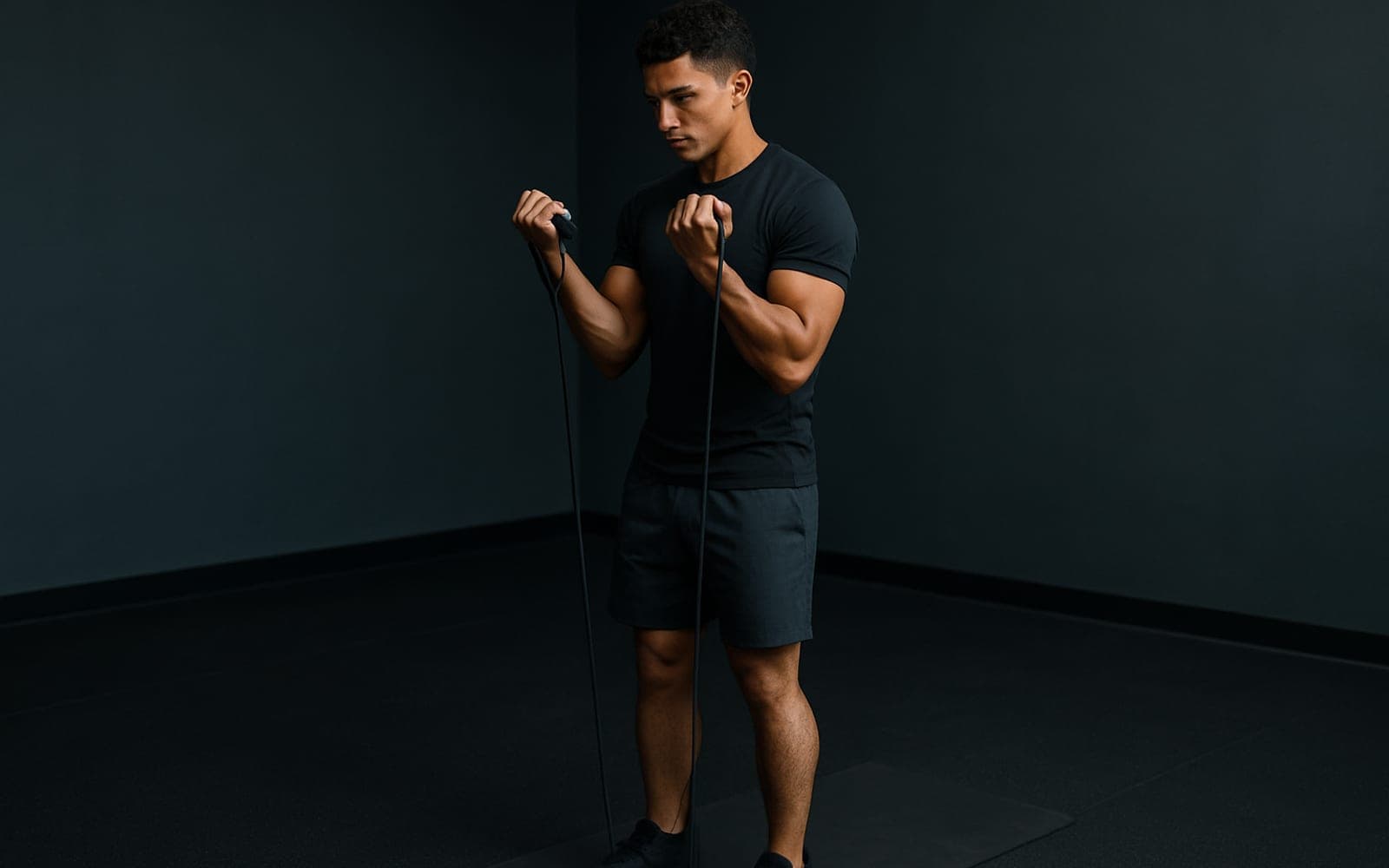
Supported Biceps Curl, Cable Curl, Band Curl all train the same isolation pattern with different equipment, so any of them works when the machine is busy or your gym does not have it.
What are the most common incline dumbbell curl mistakes?
Swinging the elbows forward; Cutting the stretch short. Curl the dumbbells up without moving the elbows forward; lower slowly to a full stretch. The incline maximizes the stretch on the biceps.
Can I do the incline dumbbell curl at home?
The incline dumbbell curl needs free weights equipment, which most home gyms do not have. The band curl trains the same pattern with nothing more than your bodyweight or a band.